
You do not need to order an expensive whole fish to eat well on Co To. The more useful approach is to try a few identifiable local dishes, choose portions that fit your group and understand whether a price is per kilogram, per plate or part of a large shared set.
For a first meal, start with cooked squid or another clearly priced seafood dish, rice and vegetables. Use a noodle bowl or simple breakfast when you want a smaller portion. Save a beach barbecue for an evening when you have confirmed the venue, weather, menu and return transport.

Local names that make a menu easier to use
| Vietnamese name | What it means | A practical way to order |
|---|---|---|
| Mực | Squid, a prominent Co To specialty. | Ask for the portion and cooking method: hấp for steamed, nướng for grilled. |
| Bề bề | Mantis shrimp. | Check size, weight and whether the portion suits one person or sharing. |
| Ốc móng tay | Razor clams. | Ask about a cooked plate rather than assuming the price is per individual clam. |
| Tu hài | A locally familiar clam. | Clarify whether the quote is by piece, portion or weight. |
| Nộm sứa | Prepared jellyfish salad. | Ask about the other ingredients; it can include meat, prawns or peanuts. |
| Bún hải sản | Seafood noodle soup. | A useful single-serving meal, with the actual seafood depending on the kitchen. |
The names help you discuss a meal; they are not a promise that every item is available on every day. Choose from what the kitchen can identify and prepare well rather than insisting on a long specialty list.
Squid: fresh, dried and one-sun-dried are different purchases
Mực tươi is fresh squid. Steaming, stir-frying and grilling create different dishes, so describe how you want it cooked and ask whether the quoted plate includes vegetables or another accompaniment.
Mực khô is dried squid, while mực một nắng is squid dried for a shorter period. Do not treat the latter as an indefinitely shelf-stable souvenir. Ask the seller for proper storage and transport instructions before buying anything that needs a cold chain.
At dinner, squid can be one shared dish rather than the entire meal. For two people, combine a moderate portion with rice and vegetables first. You can add food after seeing the amount, which is easier than trying to reduce an already agreed live-seafood order.
A real town restaurant lead
Sứa Palace at Golden Coto Hotel, 124 Nguyễn Du, Khu 2, publishes breakfast, shared set meals and separate beach-barbecue options. Its breakfast examples include seafood noodles, seafood porridge and beef pho. Ask which are being served and whether breakfast is included with your room or purchased separately.
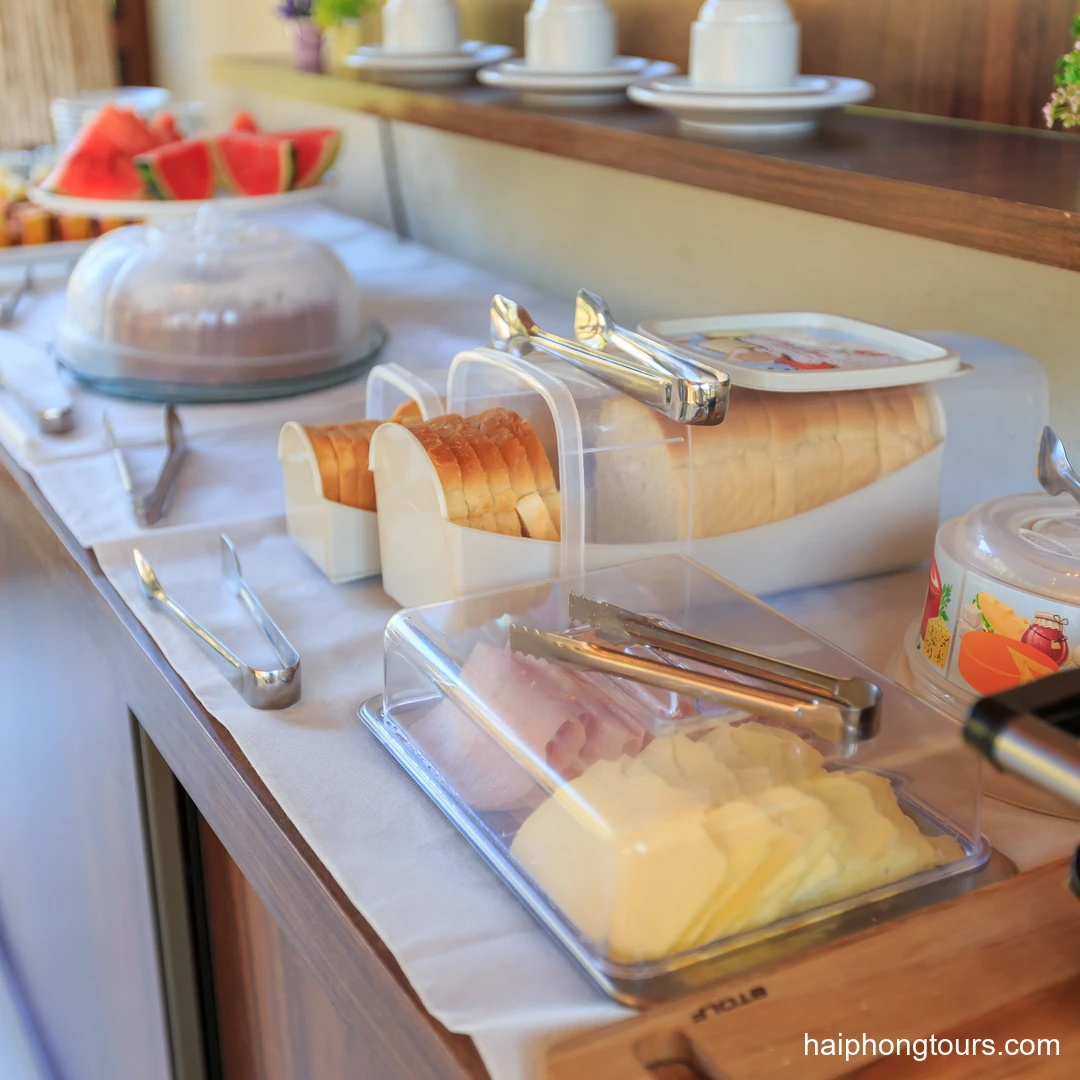
The published shared-menu formats illustrate why the number of diners matters:
| Published reference format | What the arithmetic means |
|---|---|
| 150,000 VND per person, designed for a table of eight | That table format totals 1,200,000 VND. |
| 200,000 VND per person, designed for a table of six | That table format also totals 1,200,000 VND. |
These are menu references, not a current price guarantee or a promise that two travelers can order the same spread at two times the per-person figure. Ask for a two-person adaptation or an à la carte order, and confirm the total before cooking.
A large hotel restaurant can be useful for a group that needs an arranged meal. For a quiet dinner, ask whether a celebration or karaoke event is planned nearby. The restaurant’s capacity and your preferred atmosphere are separate considerations.
Beach dinners are a separate booking
Golden Coto distinguishes its hotel dining from a barbecue venue on the town beach. Do not assume “dinner at the hotel” means a table on the sand. Confirm the actual place, included transport and what happens if wind or rain changes the setup.
On the Hong Van side, Coto Eco Lodge in Hồng Hải advertises meal services and arranged beach barbecues. This is a property to ask about a specific dinner, not evidence that an outdoor buffet runs every evening or accepts unannounced visitors.
For any beach meal, establish the start time, minimum group, individual versus shared portions, drinks and return ride. Ask where the meal moves in bad weather and whether you can cancel if the replacement is not what you booked.
Do not add an evening boat transfer simply for dinner unless the provider confirms the complete outward and return arrangement. A mainland-side or offshore photograph in a promotion may not show the place where your meal will actually be served.
How to order live seafood without an unclear bill
- Choose the species and size. Point to the actual item or ask the server to identify it, rather than accepting an unspecified “special seafood” recommendation.
- Confirm the pricing unit. Per kilogram, per piece and per plate are different calculations.
- See the weight when buying by weight. Ask for the total before the item goes to the kitchen.
- Choose the cooking method. Establish whether preparation, sauces or extra ingredients cost more.
- Check the rest of the meal. Rice, vegetables, drinks and additional services should be clear before you settle the bill.
A useful question is “Tổng cộng bao nhiêu tiền?”, meaning “How much is the total?” Ask the server to write the agreed amount if spoken numbers are confusing. You do not need to negotiate aggressively; clarity is the objective.
For a solo traveler, a noodle bowl, rice plate or a modest cooked dish is often more practical than a whole animal priced by weight. Ask for one person’s portion rather than allowing a group-style order to develop around you.
A simple two-night food plan
Arrival day
Choose an uncomplicated lunch after the boat, especially if the crossing was tiring. In the evening, order one familiar cooked seafood dish with rice and vegetables. This gives you time to understand portion sizes before committing to a larger meal.
The full island day
Have breakfast before your excursion and establish whether lunch is included in the ticket. A small-island boat product may list lunch separately even when another tour from the same company includes it. Read the meal line for your actual booking.
Use the evening for a pre-arranged barbecue or another specialty you genuinely want to try. If the day was physically demanding, an ordinary indoor dinner may be more enjoyable than a late group event.
Departure morning
Eat early enough to finish before the hotel’s pier-transfer time. Ask about a simple takeaway only if the kitchen can provide it and the boat arrangements allow it. A ferry departure is not the time to begin a leisurely shared seafood lunch.
Vegetarian food, allergies and children
Tell the kitchen exactly what you do not eat. “Không thịt, không cá, không hải sản” asks for no meat, fish or seafood, but you should also discuss fish sauce, oyster sauce, stock and shared cooking. A vegetable-looking dish can still contain animal ingredients.
For a serious allergy, use a clear written explanation in Vietnamese and ask whether the kitchen can prevent cross-contact. If the answer is uncertain, choose a safer meal arrangement rather than interpreting a polite nod as a guarantee. Island seafood restaurants are not automatically equipped to handle every dietary requirement.
For children or anyone wanting a less elaborate meal, ask about plain rice, eggs, vegetables, soup or another simple dish the kitchen can actually prepare. Agree an early serving time if the adults are planning a larger evening meal.
Choose thoroughly cooked food and sealed or appropriately treated drinking water. There is no requirement to eat raw seafood or accept health claims about a rare marine ingredient in order to appreciate local cuisine.
Food gifts and a lighter footprint
Buy from an identifiable producer or shop that can explain the product and its storage. Keep the label and receipt, and check your next destination’s rules before carrying seafood or other animal products across an international border.

Bring a reusable bottle and avoid unnecessary disposable packaging. Co To’s tourism program emphasizes reducing plastic waste; a picnic or beach dinner should not leave bags, cups or food scraps behind.
Your accommodation area affects how easily you can eat. Compare Co To town, Hong Van and Van Chay bases before booking a quiet room far from the meals you want. For excursions, the small-island boat guide explains why landing stops and lunch inclusions need separate attention.
Want help fitting Co To into your trip without overcomplicating meals and transport? Contact us with your dates, group size, dietary needs and preferred accommodation area. We can discuss the practical shape of the stay; the restaurant should confirm its menu and dietary arrangements directly.