
A bicycle, a winter coat and letters home can explain a wartime transport network more clearly than another display of large weapons. The Company 915 memorial in Thai Nguyen commemorates 60 youth volunteers killed during the bombing of the Luu Xa area on 24 December 1972. It is a place for remembrance and personal stories, not simply a railway-themed photo stop.
For a first visit, allow approximately an hour, longer if you arrange detailed interpretation. This is a planning suggestion rather than a fixed tour length. Choose the memorial if you want to understand the people who repaired roads and moved supplies through Thai Nguyen during the war.
Go to the memorial, not the working railway
Use the destination name Khu di tích lịch sử Đại đội 915, Gia Sàng, Thái Nguyên. The local tourism portal identifies the memorial in Gia Sang and lists admission as free. The site includes a commemorative building and an exhibition of photographs, documents and personal objects.
Luu Xa is central to the history, but that does not mean a visit to the active railway station is part of the visitor route. Give a driver the memorial’s full name and entrance pin. Do not wander onto tracks or industrial land looking for a historical viewpoint.

Plan a daytime visit and arrange the intended arrival through the memorial or your local host. A tourism database’s all-day placeholder is not reliable evidence that exhibition rooms stay open around the clock. If English interpretation is important, make that an explicit arrangement; the existence of local guiding staff does not establish the language available on every date.
The story to understand before entering
Company 915 belonged to Youth Volunteer Unit 91 of the former Bac Thai area. Formed in 1972, it repaired damaged transport routes and helped move wartime supplies, including cargo passing through Luu Xa. Many members were teenagers. The fatal Christmas Eve bombing struck people involved in this logistics work.
This background helps distinguish the site from a battlefield museum. The central subject is the human cost of maintaining roads, communications and supply movements. The number 60 identifies the youth volunteers commemorated here; it should not be presented as a complete casualty count for every person killed in the wider attack.
A useful question for an interpreter is how a day’s work was organised: where supplies arrived, how workers communicated and what happened when transport links were damaged. That leads naturally from the memorial names to the objects in the exhibition.
Follow people through the objects
The provincial government’s photographic record identifies a bicycle numbered 4259 belonging to squad leader Luu Xuan Thanh, used for communications work. It also shows belongings and family letters associated with Nguyen The Cuong, a winter coat linked to Bui Thi Loan, and locomotive 1037, connected with wartime goods transport.
Choose two or three objects rather than rushing to photograph every case. With the bicycle, think about the distance between a message and its recipient when ordinary transport was disrupted. With a letter, consider what a family knew about a young person’s work. The locomotive gives scale to the cargo story; the personal possessions bring it back to individual lives.
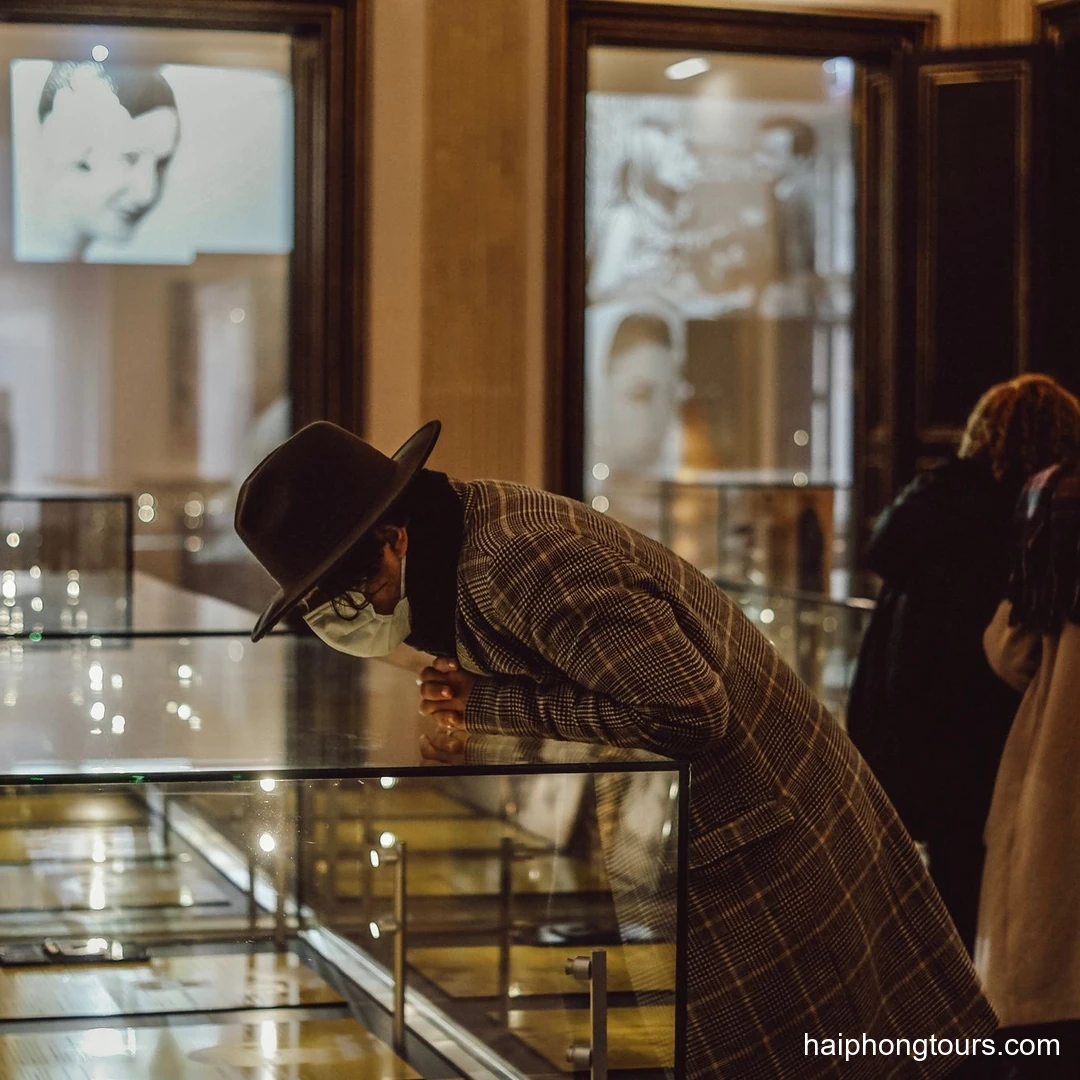
The portrait display deserves particular care. Some commemorative frames contain a person’s name and life dates rather than a surviving photograph. That absence is part of the story, not an incomplete exhibit to pass quickly. Let an interpreter explain what is known rather than filling gaps with imagined biographies.
A measured route through the visit
- Begin with the memorial space. Establish who is being remembered and whether a ceremony is taking place.
- Move into the exhibition. Follow a small number of named people and objects, using the chronology to connect them.
- Look at the larger transport exhibit if accessible. Understand its role rather than climbing on it for a photograph.
- Leave a quiet pause before departure. A memorial visit does not need to finish with a group entertainment activity.
This is an editorial sequence, not a claim that the grounds operate a one-way circuit. Staff instructions and commemorative groups take priority. If an exhibition section is unavailable, decide whether a shorter memorial visit meets your purpose instead of trying to enter a closed building.
Respect remembrance without feeling obliged to perform a ritual
Families, former volunteers, school groups and official delegations may be present. Wear modest clothing, keep voices low in the commemorative building and avoid interrupting an offering or speech. A foreign visitor can observe respectfully without copying a ritual they do not understand.
Ask before photographing worshippers or a family at close range. Follow the rules for indoor photography, and do not touch personal possessions or display cases. If incense is being used, give people making offerings space rather than positioning yourself beside them for a portrait.

For children, focus on one person’s age, work and belongings. There is no need to provide graphic detail or turn casualty figures into a quiz. A short, well-explained visit can be more meaningful than expecting a young child to follow every historical panel.
Pair it with the right Thai Nguyen visit
The Viet Bac Armed Forces Museum is a separate institution with a wider military collection. It can complement the memorial for a visitor strongly interested in war history, but the two sites should have separate transport and opening arrangements.
For a more varied day, choose the Vietnam ethnic cultures museum in Thai Nguyen instead. That shifts the afternoon toward houses, clothing and everyday cultural life. Do not assume that admission arrangements or a guide at one institution cover the other.
If travelling onward after the memorial, keep enough time for lunch and the actual transfer. A meaningful hour here is preferable to squeezing it between two distant attractions and arriving while a ceremony is already under way.
Would a history-focused Thai Nguyen stop improve your northern journey? Contact us with your route, available time and interpretation needs. We can help assess the transport sequence while the memorial remains responsible for its own visitor arrangements.