
Treat swimming on a Daiichi VIP1 trip as an optional decision at the actual stop. The useful questions are whether the area is permitted, whether the crew is opening the activity, how you enter and leave the water, and whether the conditions suit your swimming ability. A photograph of clear water or someone jumping from a boat cannot answer those questions for your travel day.
For arrival arrangements, use the Bến Bèo boarding guide. For transfers and departure planning, use the VIP1 schedule guide. This page concentrates on the water activity itself.
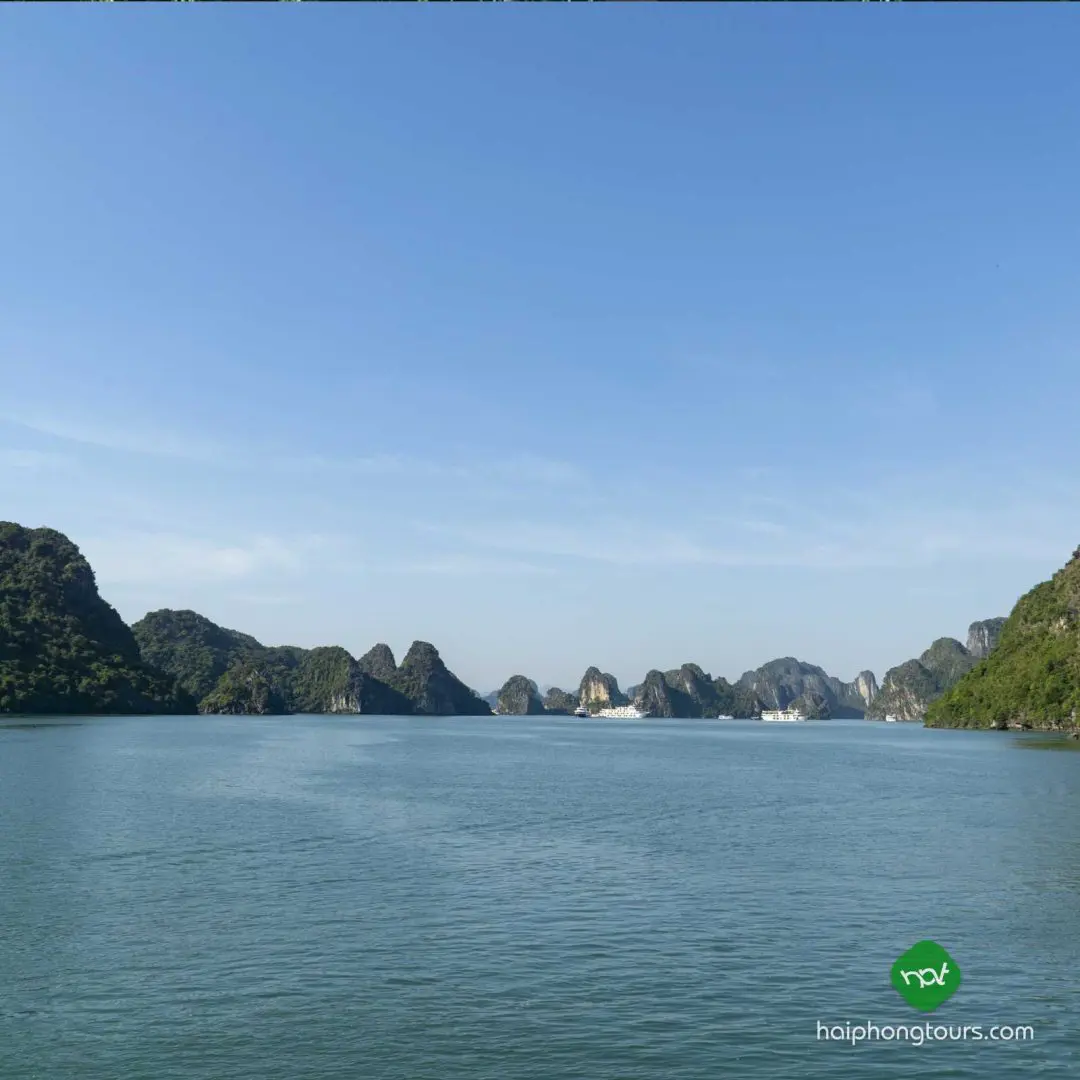
Where swimming is permitted matters
Hải Phòng’s bay-management rules, effective from 12 January 2026, restrict visitors’ water recreation to permitted areas and require compliance with safety instructions. The rules also limit boats to approved routes, pickup points and anchorages. A quiet-looking cove is therefore not automatically somewhere passengers may enter the water.
Wait for an explicit invitation and briefing from the crew at the stop. Establish the boundary, exit point and recall signal before entering. If you cannot identify where you will climb out, or the instructions are unclear, remain dry while the crew resolves that point. Following other passengers is not a substitute for receiving the briefing yourself.
Keep a planned beach name separate from a guaranteed swimming opportunity. A route can still be worth taking for its scenery and other booked activities when a particular water stop is unavailable.
Lifejackets apply to the boat journey too
A Cát Hải directive published in June 2026 requires every passenger to wear a lifejacket correctly from boarding and throughout the bay visit. It instructs crews not to depart with passengers who refuse, and to explain jacket use, rescue-equipment locations and escape arrangements before departure. Dangerous-weather warnings or inadequate safety conditions also prevent departure.
Get the jacket fitted before the boat moves, rather than leaving it on a chair for later. For children, provide their approximate weight when arranging the trip so the equipment question is specific. At the water activity, follow the crew’s instructions for the appropriate flotation equipment; a jacket being present somewhere aboard does not establish that it fits you.
The American Red Cross advises checking the jacket’s size or weight label, straps and condition. Use equipment appropriate to the activity; an inflatable toy cannot replace it or adult supervision.
Judge the water at the stop, not from the weather icon
RNLI swimming guidance emphasizes knowing the entry and exit points, tides and currents before entering. It advises staying out when conditions are too rough, entering slowly and avoiding a jump or dive into unfamiliar water. Colder water can affect breathing and swimming ability, so warm air alone is not a useful test of your readiness.
Apply that guidance to the actual activity offered. A beach entry, a boat ladder and a transfer by smaller craft are different practical tasks. Being able to swim lengths in a pool does not show whether you can use the particular exit. Describe any difficulty climbing a ladder or stepping between surfaces before choosing the activity.
| What you observe | A practical response |
|---|---|
| The crew has not opened the swimming stop | Stay aboard or in the assigned waiting area |
| You cannot see a workable exit or understand the boundary | Resolve that before entering |
| You feel cold, uneasy or less capable than expected | End the activity early using the agreed exit |
| The itinerary changes | Follow the new activity instructions, rather than an old beach photograph |
Make a separate plan for children and weak swimmers
The Red Cross recommends continuous adult supervision even with lifeguards present. Keep inexperienced swimmers within arm’s reach, and nominate one attentive adult to watch the children without distractions.
For two adults traveling with a child, that might mean taking turns participating while the other remains responsible for the child. It should not mean both adults leaving for separate activities while assuming the tour guide has taken over childcare. Decide who supervises during changing, boarding and the return from the water as well.
A non-swimmer can plan around staying dry. Before booking, establish where that person can wait during the water stop and how the rest of the group will rejoin them. This is especially useful when one traveler wants to swim and another wants a scenic day without getting into the sea.
Pack for both a swim and a dry afternoon
Put a swimsuit, towel, dry clothes and a bag for wet items together in an accessible day bag. Keep the dry change separate from the wet towel. Clothing that is easy to change into makes the return journey more comfortable than spending it in damp swimwear.
Secure glasses and loose belongings before approaching the water. Decide where your phone, passport and other valuables will stay; a boat excursion is not a good place to discover that your waterproof pouch leaks. Pack only what you need for the activity, leaving larger luggage according to the arrangement you have made separately.
Do not build your packing plan around an assumed towel service, shower or private changing cubicle. Include any facility that matters to you in the booking question. For general water-health considerations, see our North Vietnam swimming and water-safety guide.
Know how to stop and attract help
If you become tired in the water, RNLI guidance is to roll onto your back, rest and signal for help. If unexpected immersion affects your breathing, concentrate on floating and controlling your breathing before attempting to swim. Learn the crew’s signal before the activity so someone can respond promptly.
Alert the crew immediately and point out the person in difficulty. The Red Cross advises reaching or throwing assistance rather than entering the water and creating another casualty.
Do not wait until the scheduled end if you want to stop. A shorter swim that you control is a better personal choice than trying to keep up with the strongest swimmer in the group.
Decide what would make the trip worthwhile
Before paying, consider whether you would still enjoy the day if swimming were removed. If swimming is your main reason for choosing the trip, say so and establish the applicable booking terms. A weather-related change does not by itself tell you what refund, replacement or date change your reservation provides.
Planning a mixed group of swimmers and non-swimmers? Contact Hai Phong Tours with the travel date, children’s ages, swimming experience and any difficulty using steps or ladders. We can help assess the proposed activity arrangements and a plan that also works for travelers who remain dry.