
Gia Lam Bus Station is the coach terminal at 9 Ngo Gia Kham. It is not Gia Lam Railway Station. Cau Giay Metro Station is the operating eastern endpoint of the elevated Line 3 section. Your transfer begins at the coach’s actual release point and ends at a signed metro entrance, not at two broad district pins.
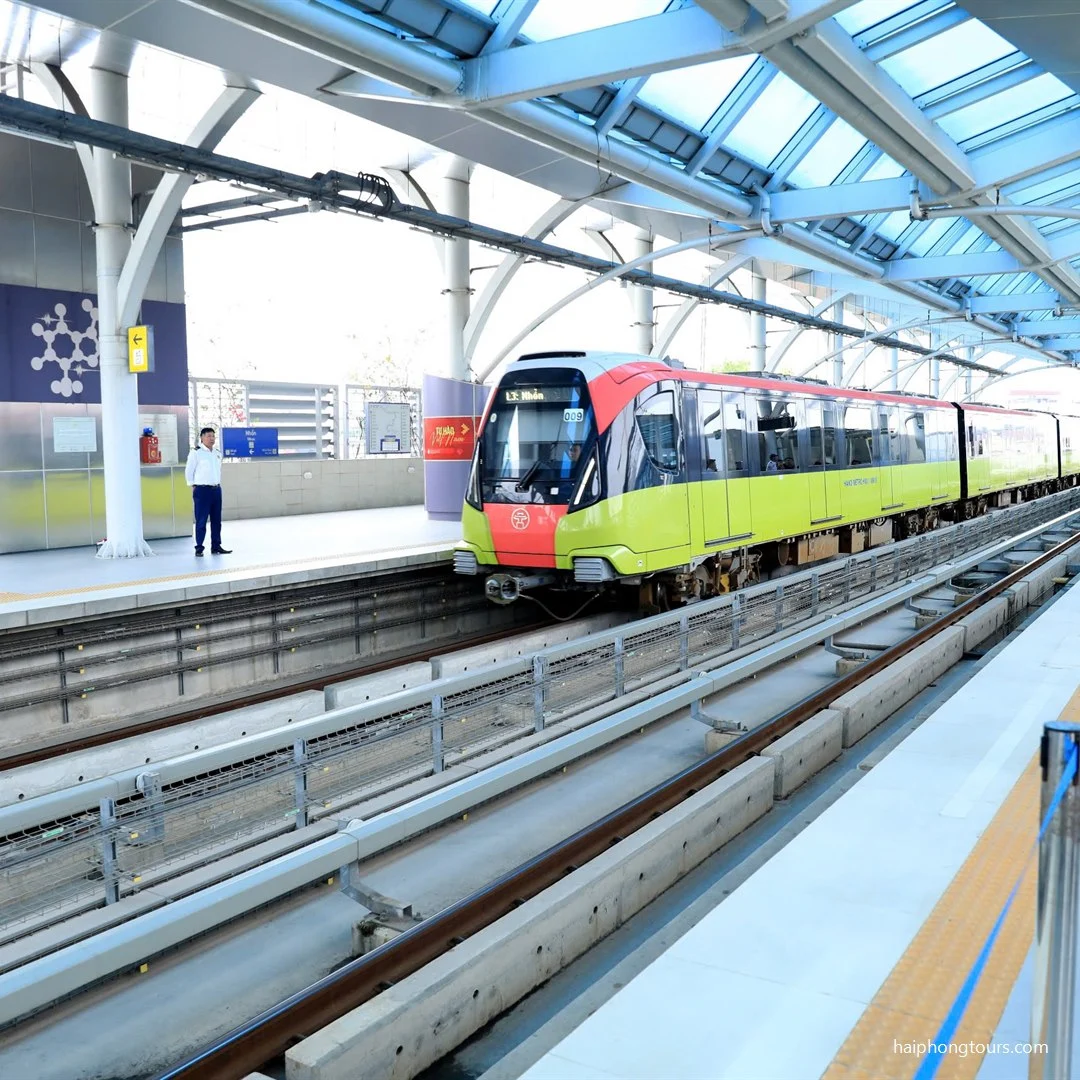
A recorded road vehicle is the practical choice after coach delay, with several bags, limited mobility, poor weather or a short metro margin. A public city route can suit a flexible traveler only when every stop, change, final walk and station entrance is confirmed for the day.
Identify where the coach actually releases passengers
Use the coach ticket and the operator’s current message to determine the arrival point. A coach may use a terminal bay, a public exit, an operator office or a permitted roadside point. The route name alone does not prove that you will step off inside Gia Lam Bus Station.
If the coach enters the terminal, follow staff direction and identify the operator, bay or passenger exit before arranging the next stage. If it unloads elsewhere, update the origin immediately. Do not return to 9 Ngo Gia Kham automatically unless the next operator specifically requires the terminal.
Wait until the whole group and every bag are together at a safe staffed location. Send a live pin and visible landmark to a recorded driver. A generic Gia Lam pin can point to the railway station, a district area or the wrong side of a busy road.
Choose road transport or a verified city route
Recorded direct road travel
A taxi, app ride or licensed car can take you from the actual coach release to Cau Giay Metro Station. Confirm the vehicle, plate, pickup side and cargo capacity before loading. Give the destination as the operating Cau Giay station on Line 3, not simply Cau Giay.

This option is especially useful when the coach is late, the group has several cases, phone signal is poor or the release point differs from the terminal. It also reduces the risk of carrying luggage across multiple city stops only to reach Line 3 as service is ending.
Public city transport
Check the complete route from the actual release point on the travel day. Confirm the first stop and road direction, any transfer, the final walk and the correct Cau Giay entrance. Do not freeze a city-bus number, fare or stop from an old itinerary.
A public plan is viable only when the full route works with your luggage and mobility needs. A stop that appears close on a map may still require a difficult crossing or long walk. When the last stage remains unclear, the connection is incomplete.
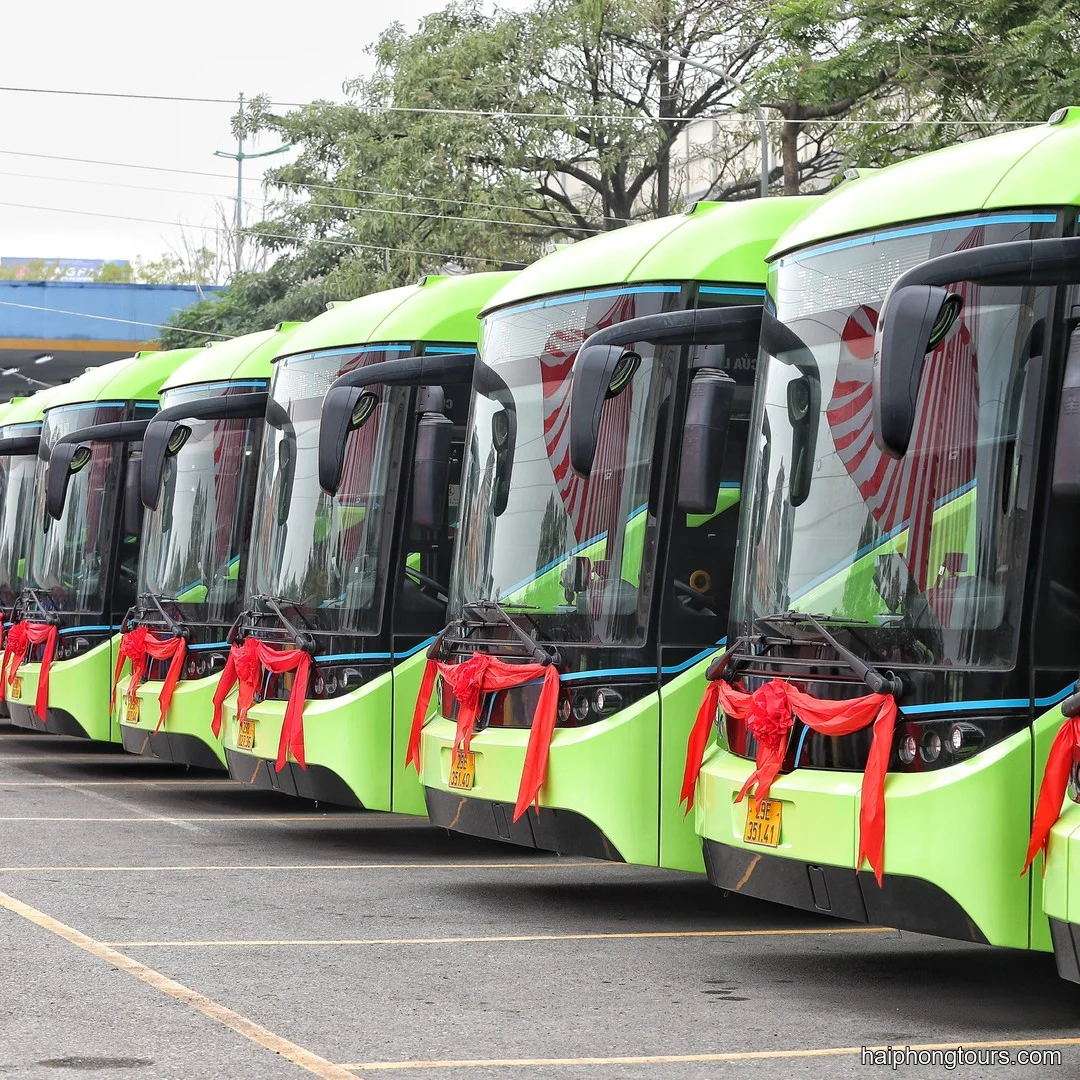
Use the operating Line 3 station
Current Line 3 passenger service uses eight elevated stations between Nhon and Cau Giay. Cau Giay is the operating eastern endpoint. Do not follow a route that assumes an open underground continuation farther into central Hanoi.
At Cau Giay, follow the signed entrance and staff instruction. Confirm current operation, fare media, luggage rules and the usable accessibility route. Avoid promising an exit number or lift status, because the practical station path must be checked when you arrive.
If the metro is only an intermediate stage, compare direct road transport to the real final address. Reaching Cau Giay after passenger service has ended does not advance the journey and may create another roadside transfer.
Plan around the coach’s real arrival, not its timetable
Your usable transfer time begins after the coach has stopped, doors are open, bags are released and the group reaches a safe public point. Do not book a tight onward plan from the printed arrival time. Road delays and off-site unloading can change both the time and place of the handoff.
Check Line 3 only after the actual release is known. Include city waiting, traffic, the final walk, metro entry and fare control. If service is ending, continue by road to your accommodation or final destination instead of paying for a transfer to a closed station.
Keep valuables, medication, travel documents and the next booking with the traveler. Count every checked case after the coach unloads and before the next vehicle leaves. Ask the road provider about cargo space when the coach carries large luggage or mobility equipment.
Who should confirm each decision
- Coach operator: Confirm whether arrival is at Gia Lam Bus Station, an office or a roadside point, plus the expected luggage release.
- Terminal staff: When the coach enters 9 Ngo Gia Kham, confirm the passenger exit and safe pickup area.
- City route source or driver: Confirm the actual origin, legal pickup, complete route and vehicle record.
- Hanoi Metro staff: Confirm current Cau Giay operation, signed entrance, fare media and accessible path.
Hai Phong Tours presents this as a terminal-release decision rather than a generic Gia Lam to Cau Giay route. Hai Phong Tours does not list a transfer product for this exact connection, so no coach, road or metro stage should be represented as a single through service.
Useful recovery plans
- The coach unloads outside the terminal: Use the actual safe release as the new origin and do not send the next vehicle back to 9 Ngo Gia Kham unnecessarily.
- A map selects Gia Lam Railway Station: Correct the origin to the coach release or Gia Lam Bus Station before anyone moves.
- The city route is incomplete: Request a recorded vehicle from the staffed release point rather than improvising with bags.
- Line 3 service is ending: Continue directly by road to the final destination or stay in Hanoi.
- Accessibility fails at any stage: Ask staff for the current usable path and choose road travel when the complete route is not suitable.
Final checks
- Coach operator and exact release point are known.
- The origin is not confused with Gia Lam Railway Station.
- The city route or recorded vehicle starts from the actual release.
- The destination is the signed operating Cau Giay Metro Station entrance.
- Luggage, accessibility, Line 3 margin and a road fallback are ready.
Would a private transfer make this journey easier? Contact us with your travel date, exact pickup and drop-off, number of travelers and bags. Include any flight, train or cruise deadline so we can assess a suitable plan and quotation.