
Prepare for Grand Pioneers boarding and return as a sequence that may involve side-by-side docking or a tender transfer. The operator’s current terms expressly allow either arrangement. A deck plan, cabin image or previous traveler’s route does not guarantee that you will walk through the same gangway-style sequence on your sailing.
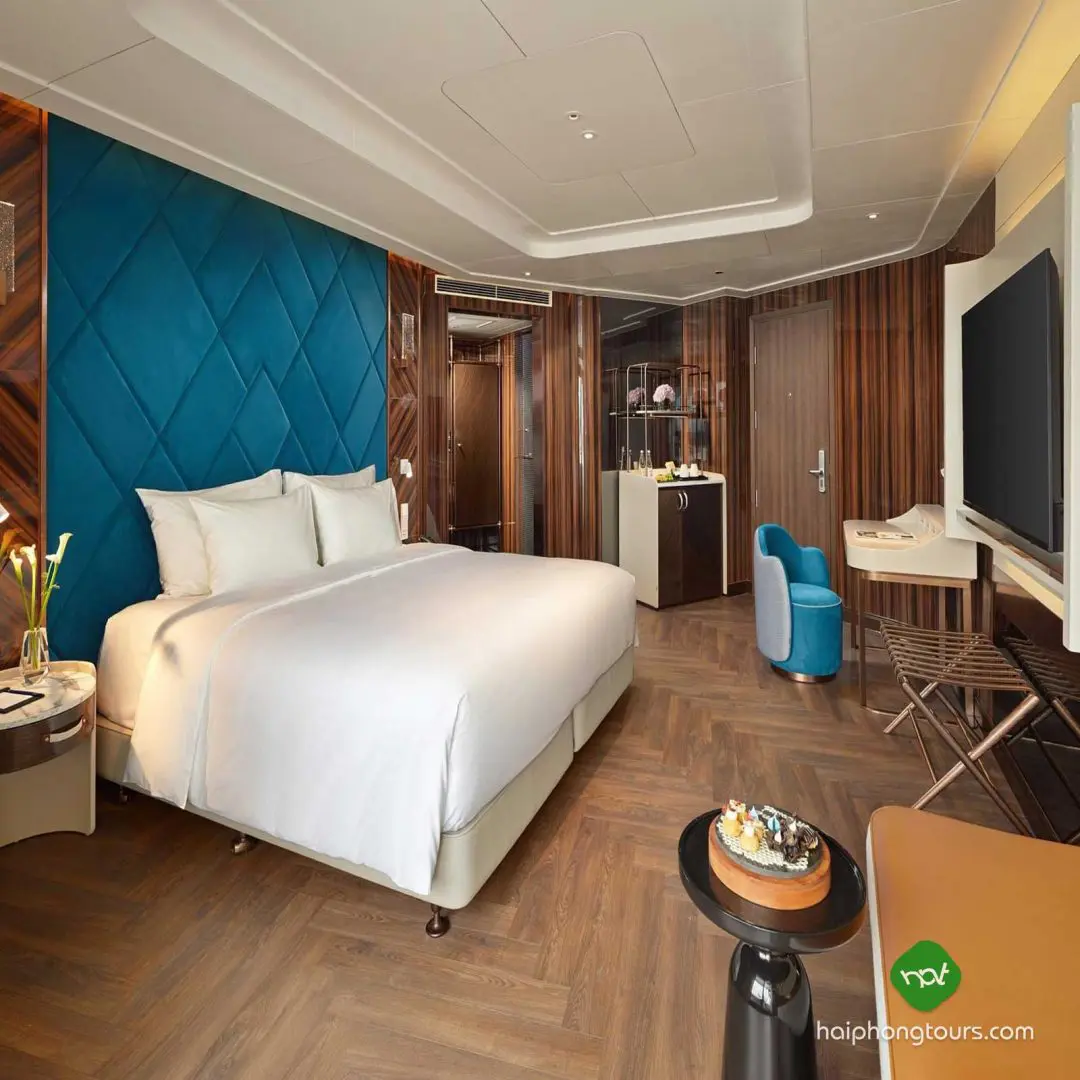
If mobility, balance or confidence on a transfer matters, ask Grand Pioneers for the current lounge-to-ship and ship-to-lounge sequence in writing. Describe what you can and cannot safely manage, then keep a fallback if the actual tender step is unsuitable. Do not infer step-free access, staff lifting or a fixed boarding position unless the operator confirms it for the assigned sailing.
What the published docking term means for planning
Grand Pioneers states that side-by-side docking or tender transfers may occur and that deck plans and marketing materials are indicative. For planning purposes, this means the visible ship layout is not a complete accessibility description. It also means a sequence reported on another date may not match the arrangement used for your departure or return.
Side-by-side docking can require movement between vessels rather than direct access from a fixed shore point. A tender transfer can add a smaller transfer stage between points in the boarding sequence. The exact route, height changes, steps, gaps, handholds, waiting position and staff procedure are operational details that must be confirmed rather than assumed.
The question is not simply whether a traveler can walk. Balance, range of movement, ability to use steps, confidence near moving surfaces and the need for a mobility aid can all change whether the sequence is suitable. Explain the functional concern plainly so the operator can answer the right question.
Request the full sequence, not a general assurance
Ask for each stage from the Grand Pioneers waiting lounge to the assigned ship. Then ask for the expected return sequence because it may not be identical. A reply such as “assistance is available” is not enough when a particular movement is the deciding factor.
Useful written questions include:
- Which Grand Pioneers ship is assigned on the latest voucher?
- Is side-by-side docking or a tender transfer currently expected?
- What are the physical stages between the lounge and the cabin?
- Are steps, height changes or vessel-to-vessel movements involved?
- What handholds or crew assistance are normally available at each stage?
- Can the stated mobility aid move through the full sequence?
- What happens if the operational arrangement changes before boarding?
- What return sequence should the traveler be prepared to complete?
Include the dimensions and type of any mobility aid when those details matter. Do not ask only whether the cruise is “accessible,” because that word can hide the exact movement that determines suitability. Ask the operator to answer for the named ship, current arrangement and described need.
Describe the traveler’s limits precisely
A useful message states whether the traveler can climb steps, step across a gap, stand without support, transfer from one surface to another or carry an aid. It should also state whether a companion can assist. This is practical information for the operator, not a request for a medical judgment.
Do not assume that crew can lift a person or mobility device. The released evidence does not support that promise. If lifting would be necessary, ask explicitly whether it is permitted and available for the actual sequence. An unanswered question should remain a planning gap, not be converted into consent.
Keep the reply with the voucher. Read any conditions or limits carefully, and ask again if the response refers only to the ship interior while your concern is the transfer itself. The decision should cover the entire path, not just the cabin or public areas after boarding.
Set a fallback before travel
Decide in advance what will happen if the operator cannot confirm a suitable sequence. The fallback may be changing the travel plan before the applicable booking deadline, choosing an arrangement whose access can be confirmed, or not boarding when the actual transfer is unsafe for the traveler. Review the current voucher and operator terms before making a booking change.
Do not wait until the transfer point to discover that one movement is not manageable. Conditions may still change, but written preparation gives the operator a chance to describe the present plan and gives the traveler a chance to make a reasoned decision.
A companion should understand the fallback as well. Agree that no one will pressure the traveler to attempt a movement merely because the group has arrived. The boarding decision should follow the actual physical conditions and current crew instructions.
Reconfirm on the travel day
Bring the latest voucher and written response offline. At the lounge, ask whether the expected docking or tender arrangement remains current. If it changed, request a fresh explanation of the sequence before proceeding.
Keep hands as free as practical for the transfer and follow crew directions at the actual boarding point. Do not rely on a marketing photograph to choose where to stand or step. If the traveler needs more time, communicate that before entering the sequence rather than trying to manage silently while the group moves.
If the physical arrangement differs from what was described, stop and clarify the difference. Ask specifically how the traveler will complete the difficult stage and the later return. A new verbal assurance still should not be treated as a promise of step-free movement or lifting.
Know what this plan does not cover
This decision begins after the traveler reaches the Grand Pioneers lounge. It does not determine road pickup, traffic timing, late check-in or passport registration. Those are separate travel and booking tasks. Keeping them separate prevents a correct road transfer from being mistaken for confirmation that the ship-access sequence is suitable.
It also does not predict sea conditions or provide medical advice. The purpose is narrower: identify the possible docking or tender stage, obtain the current physical sequence and decide whether the traveler can complete it under the operator’s stated limits.
Hai Phong Tours boundary
Hai Phong Tours does not control Grand Pioneers docking positions, tender procedures, crew-assistance rules or boarding decisions. There is no HPT service call to action for this operational question. Use the current Grand Pioneers voucher and official contact channel, then follow the onboard team’s instructions.
Final access checklist
- Identify the assigned ship on the latest voucher.
- Ask whether side-by-side docking or a tender is currently expected.
- Obtain the lounge-to-ship and return sequences in writing.
- Describe steps, balance, transfer and mobility-aid limits precisely.
- Do not infer step-free access or staff lifting.
- Keep a fallback if the actual sequence is unsuitable.
- Reconfirm the arrangement at the lounge before boarding.
The safest decision is based on the actual movement required, not the ship’s appearance. Confirm the present sequence, preserve the written limits and reassess if operations change. If one necessary step cannot be completed safely, use the fallback instead of treating a general assurance as a guarantee.
Would a private transfer make this journey easier? Contact us with your travel date, exact pickup and drop-off, number of travelers and bags. Include any flight, train or cruise deadline so we can assess a suitable plan and quotation.
