
Ha Long Cave Flash and Tripod Photo Rule starts with one decision: check site rules on flash, tripods and stopping positions before photographing inside a cave The answer must be tied to the exact vessel, site, activity, purpose and equipment rather than inferred from a general photo opportunity.

Official Paradise material describes photography locations, devices, deck context and onboard safety; the Ha Long Bay Management Department provides the visitor-regulation route; and Heritage guidance sets shared-space conduct expectations. None is a universal permit.
Quick decision
- Place: vessel, deck, cave, beach, kayak route or other exact site.
- Purpose: personal memory, publication, staged session or commercial production.
- People: identifiable guests, children, crew, performers and consent.
- Equipment: handheld device, tripod, lighting, drone, batteries and charging.
- Fallback: secure storage, offline backup and a loss-report record.
Check the exact cave or visitor-site rule for flash, tripods, stopping points and group flow before taking equipment off the vessel.
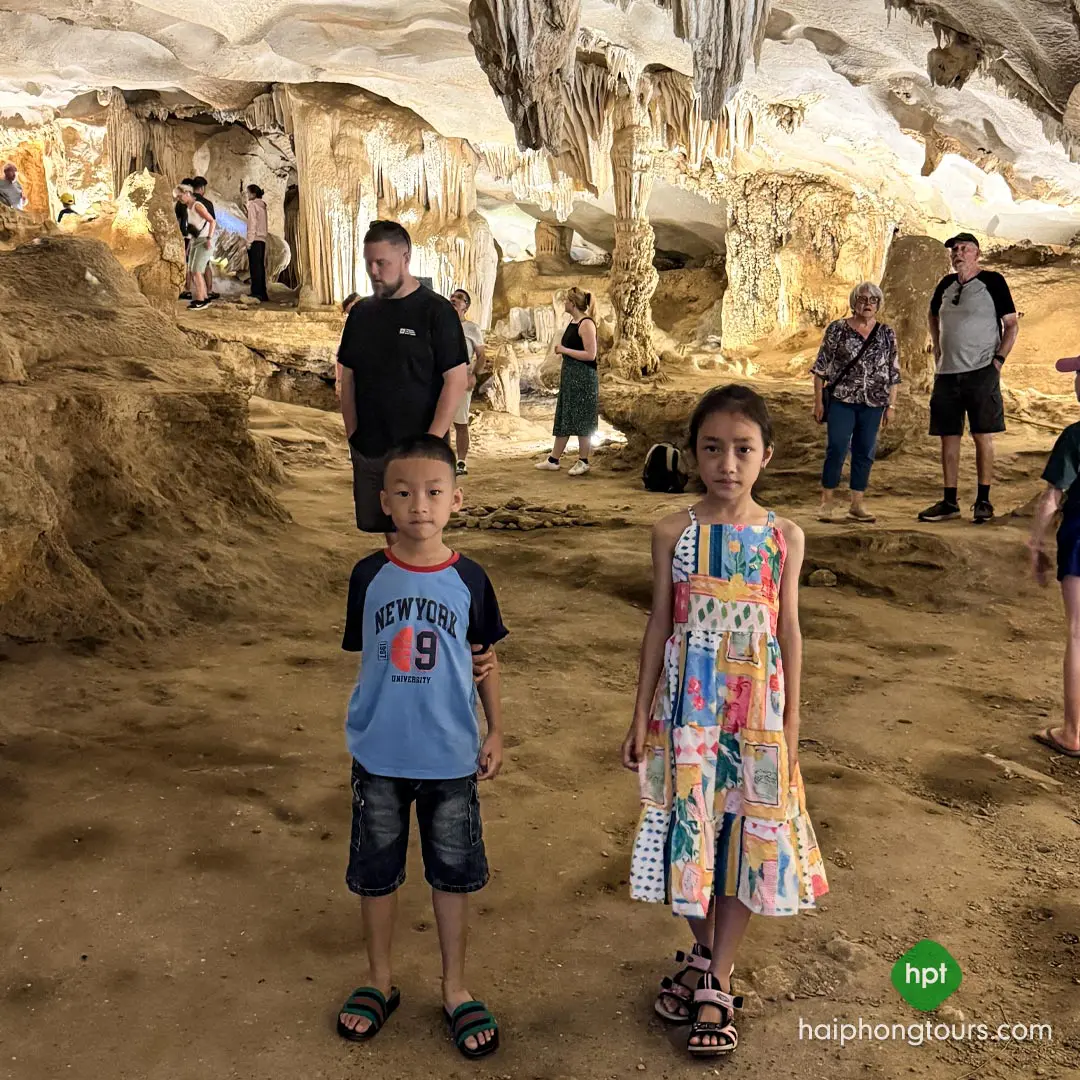
Questions to ask before setup
- What is the current operator rule for flash, tripod and stopping rule?
- Does a site manager or competent authority also need to approve it?
- Where may the guest stand, stop or place equipment?
- Which people require consent before capture or publication?
- What weather, water, charging or storage condition changes the plan?
Keep shared routes and operations clear
Choose a position approved by crew and reassess it as people move. Keep stairs, doorways, rail access, emergency equipment, tender boarding, mooring areas and service routes unobstructed. Never ask another guest to enter an unsafe or restricted position for a photograph.

Handle consent and privacy deliberately
Obtain appropriate guardian consent before photographing or sharing an identifiable child. Ask the operator before using images of crew, demonstrations or performances beyond ordinary personal memories. Consent for capture should not be assumed to include advertising or commercial reuse.
Back up files without relying on the network
Hai Phong Tours can explain Ha Long Cave Flash and Tripod Photo Rule as a planning procedure, but it is not the vessel operator, site authority, permit office, drone regulator, privacy adviser, equipment manufacturer, insurer or lost-property authority. Those parties control approval and response.
Final checklist
- Exact vessel, site, activity and purpose identified.
- Operator and any authority permission checked.
- Guest, child, crew and performance consent considered.
- Position and equipment kept clear of shared operations.
- Water, humidity, charging and storage plan confirmed.
- Offline backup and loss-report details prepared.
Ha Long Cave Flash and Tripod Photo Rule is responsible only when access, permission, consent and equipment handling are checked for the real situation. Keep the setup small enough to control, follow crew direction and do not promise access, approval, safety, weather, image quality, privacy compliance or recovery.
Useful guides for your trip
Would you like help fitting this experience into your trip? Contact us with your travel dates, starting point, available time and group size. Tell us about walking limits or special interests so we can suggest a practical itinerary.