
Most Ha Long Bay cruise fares include the scheduled meals shown in the exact itinerary, but the count and names differ by cruise length and vessel. A day cruise may include only lunch, while a one-night cruise may include embarkation lunch, dinner, an early light breakfast and a later breakfast or brunch. Drinks, special menus, celebration cakes and private dining are separate questions unless the booking confirmation names them.
Before paying, compare three things side by side: the itinerary, the inclusions and exclusions, and the confirmation issued for your cabin or day-cruise fare. If one page says “all meals” but the itinerary calls the final service brunch, ask the seller to identify every included service in writing. The answer for one vessel should never be applied to another cruise under the same general Ha Long Bay label.
Count meal services, not calendar days
A “two day, one night” cruise does not provide two complete days of restaurant service. Boarding usually happens near lunch on the first day, and disembarkation is normally in the late morning on the second. The useful count is therefore each named service between boarding and leaving the vessel.
Paradise Elegance publishes a one-night program with one lunch, one dinner, one light breakfast and one main breakfast. Its inclusion list also names canapes and two bottles of water in the cabin each day, while beverages appear in the exclusions. That example shows why “meals included” does not mean every drink at the restaurant or bar is covered.
The current Athena Cruise two-day package lists two lunches, one dinner and one breakfast under its inclusions. The itinerary itself calls the early second-day service breakfast and the later service brunch. Treat the schedule as the map of when food is served, then ask whether the seller counts brunch as the second lunch in the inclusion summary.
Use the itinerary to decode broad inclusion wording
Start at embarkation and write down each food service in order. For an overnight trip, that may be welcome refreshments, lunch, canapes, dinner, light breakfast and a later breakfast or brunch. Mark only the items that the inclusion block or confirmation actually covers. A cooking demonstration or afternoon tea may be part of the program without being a full meal.
Watch for services provided away from the overnight vessel. A three-day itinerary can use a smaller day boat for the middle-day excursion and lunch. The operator needs to confirm whether a dietary request follows the traveler to that second galley, not only to the main ship where the cabin is located.
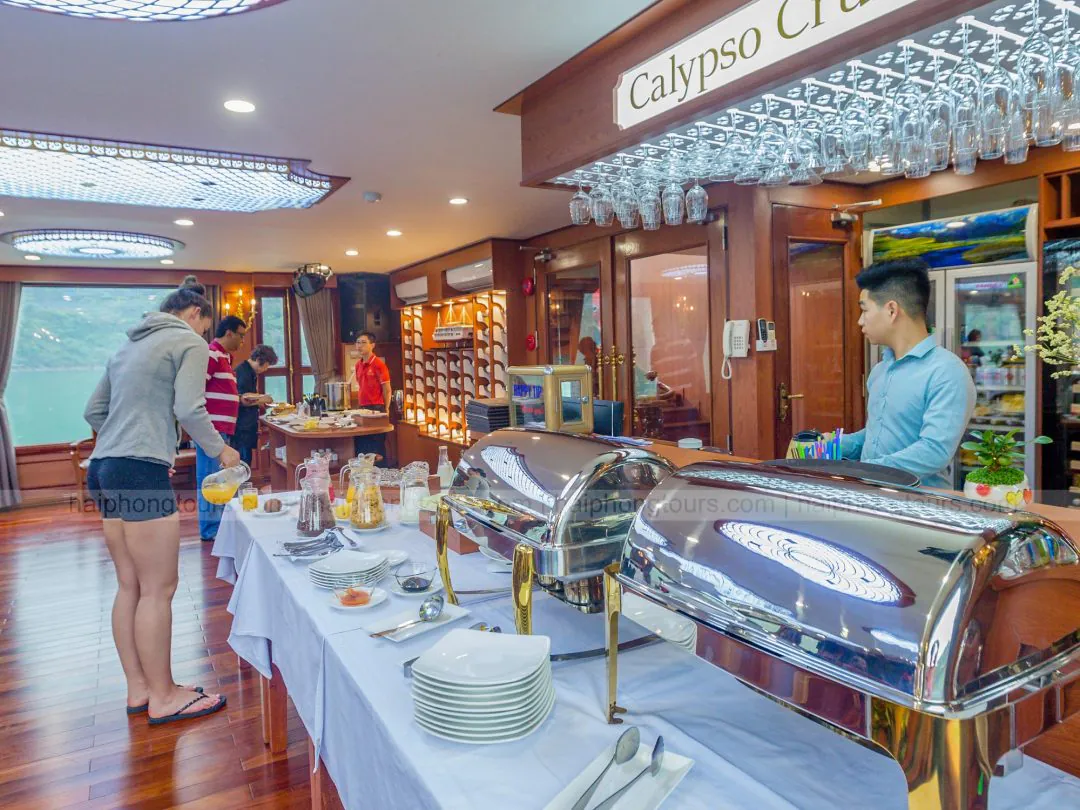
Hai Phong Tours recommends saving the exact package page or confirmation used for the purchase. A sample menu proves what the kitchen may serve, not which meals the fare includes. Likewise, a restaurant photograph does not establish a buffet, set menu, table location or specific dish for the booked date.

Day cruises have a different meal pattern
A day cruise often includes one main lunch rather than a sequence of overnight meals. The current Hai Phong Tours Ha Long Bay Day Tour includes lunch onboard and lists vegetarian food as available. Its Premium package names a buffet lunch or an Indian vegetarian set menu when requested, so confirm which option is attached to the selected booking.

Paradise Delight publishes another useful example: its seven-hour program lists breakfast, buffet lunch, afternoon tea and a welcome drink as inclusions, while beverages appear in the exclusions. The distinction matters because a welcome drink or tea service does not create an open beverage package.
If your pickup is early, check whether breakfast is truly included on the vessel or whether you need to eat before the road transfer. If the cruise returns before dinner, plan the evening meal ashore. The advertised number of hours onboard should not be converted into meals that are not named in the package.
Separate food from drinks and optional dining
For each included meal, identify what is still chargeable. Common examples are bar drinks, wine, cocktails, fresh juice, espresso drinks, room service, private dining and premium dishes. Even when cabin water, welcome drinks or tea are included, that does not mean all drinks ordered at lunch or dinner are free.
Ask whether a set menu, buffet or a la carte service applies. In a buffet, the fare normally covers the published service but not an item ordered separately from another menu. In a set meal, a substitution may require advance preparation or an extra charge. A private table or cabin meal is not included simply because the cabin is a suite.
Celebration cakes, wine packages and special dinners should appear as separate confirmed items with the price, service time and cancellation terms. Do not infer them from an anniversary note attached to the booking. The same rule applies to a requested children’s meal, Indian menu, halal meal or other dietary arrangement.
Make dietary arrangements within the included sequence
A dietary request changes what may be served, not automatically how many meals are included. State the vessel, sailing date, booking reference, passenger name and every relevant exclusion. Ask which named meals can be adapted and whether the same arrangement applies on a day boat or at another dining venue.
Published notice periods differ. Paradise asks for at least two working days for vegetarian, vegan and children’s options, while Mon Chéri asks guests to report dietary requirements, food allergies or special meal requests at least 24 hours before check-in. Use the deadline for the exact operator and send the request earlier when the requirement is important.
For an allergy, celiac disease or medically necessary diet, an accepted request does not prove that shared storage, equipment, oil or serving tools meet the required standard. Obtain an ingredient and preparation response before relying on the meal. If the operator cannot meet the requirement, agree on a permitted backup before embarkation rather than assuming outside food will be accepted.
Resolve wording differences before payment
Send one compact question that forces the booking owner to reconcile the documents: “Please list every food and drink service included for [vessel, date, itinerary and package], using the same names and times as the current itinerary. Please mark any meal, drink, dietary adaptation or optional dining service that costs extra.”

Keep the answer with the booking and compare it with the onboard program after check-in. Operating conditions can move a serving time, but staff should still explain how the confirmed meal sequence will work. If a meal is missed through late arrival or a personal choice, do not assume a replacement or refund unless the operator’s terms say so.
Final booking check
- Exact vessel, date, itinerary length and selected package.
- Every included lunch, dinner, light breakfast, main breakfast or brunch.
- Included water, welcome drinks, tea or canapes, listed separately from bar beverages.
- Meal format and venue, including any lunch served on a day boat.
- Dietary request deadline, written acknowledgement and galley limits.
- Price and terms for optional dishes, cakes, alcohol, private dining or substitutions.
The reliable answer is the named sequence for one confirmed sailing. Count those services, identify what costs extra and keep written confirmation. That approach is more useful than treating “all meals included” as a promise that every food or drink shown in cruise marketing belongs to your fare.