
Bus 86 is the budget choice between Noi Bai Airport and central Hanoi when you can manage your own luggage and a listed stop suits your hotel or Hanoi Railway Station. The fare is VND 50,000, and the end-to-end ride takes about 60 minutes before extra traffic. Departures from T2 run 06:40 to 22:15 before the bus calls at T1; station departures run 05:15 to 20:40. From the airport, board at T2 arrivals, level 1, column 14, or the signed Bus 86 stop on the T1 arrivals level. In the other direction, use a marked stop such as 23 Hang Tre or the station. Choose a direct car for bulky bags, limited mobility or a fixed connection.
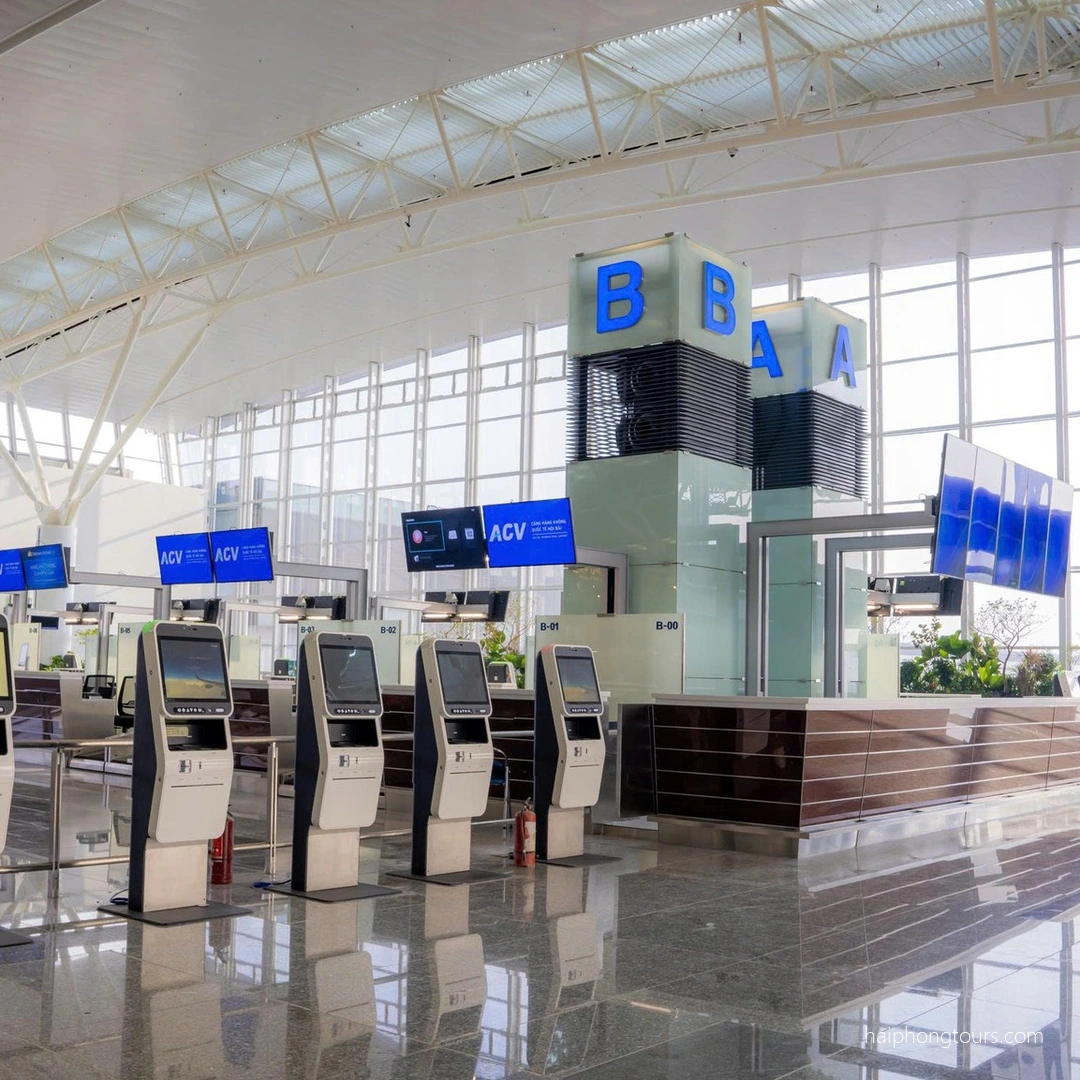
Bus 86 facts that change the decision
- Route: Noi Bai International Airport to Hanoi Railway Station, with useful central stops in the Long Bien, Hoan Kiem and Cua Nam areas.
- Fare: VND 50,000 per passenger per trip.
- Reference journey: about 60 minutes from end to end, before extra traffic or waiting time.
- Airport to city schedule: departures from T2 start at 06:40 and end at 22:15, with T1 called afterward.
- City to airport schedule: the current operator timetable starts at 05:15 and ends at 20:40.
Departure gaps vary across the day, so do not assume another bus will arrive within 30 minutes. Check the current Bus 86 timetable on busnoibai.com before leaving the terminal or hotel, especially near the first or last service.
Find the airport pickup in the correct direction
After an international arrival at T2, stay on the arrivals level and start with the signed route 86 area around level 1, column 14. After a domestic arrival at T1, use the signed Bus 86 stop on the arrivals level. The listed airport times are T2 route-start times. T1 is the next call, so arrive early rather than calculating an exact T1 departure.
Airport curb assignments can move during traffic changes or construction. If route 86 is not signed at the published column, ask the airport information desk for xe buýt 86 đi Ga Hà Nội, meaning bus 86 to Hanoi Railway Station. Check the route number and destination on the vehicle before loading your bags. An airline shuttle, hotel minibus or another public route is not an equivalent service.
In the opposite direction, route 86 serves the departure levels at both passenger terminals. T1 is the domestic terminal and T2 is the international terminal, but use the terminal shown for your actual flight rather than deciding from the airline name alone. Tell the onboard staff whether you need T1 or T2 before the bus reaches the airport.
Choose the Old Quarter stop by direction
From the airport, the operator lists central stops at 162 Tran Quang Khai, Hanoi Opera House, Melia Hotel and finally Hanoi Railway Station. The Tran Quang Khai stop can be useful for the eastern side of the Old Quarter. The Opera House suits the French Quarter. Melia and the railway station are farther south and west, so they may create a longer return walk for an Old Quarter hotel.
For travel from the city to the airport, the useful stops are not the same curb in reverse. The published sequence begins at Hanoi Railway Station, then includes 59 Ly Thuong Kiet, Hanoi Post Office at 75B Dinh Tien Hoang, 23 Hang Tre, Long Bien interchange and stops through Yen Phu and Au Co. For many Old Quarter stays, 23 Hang Tre is the clearer outbound choice.
The weekend traffic note says the Hanoi Post Office stop changes to 6 Phan Chu Trinh from 19:00 Friday through Sunday. Check the current designated stop before walking across Hoan Kiem with luggage. Save the hotel pin and compare the complete walk, including road crossings and pavement condition, rather than choosing a stop by neighborhood name alone.
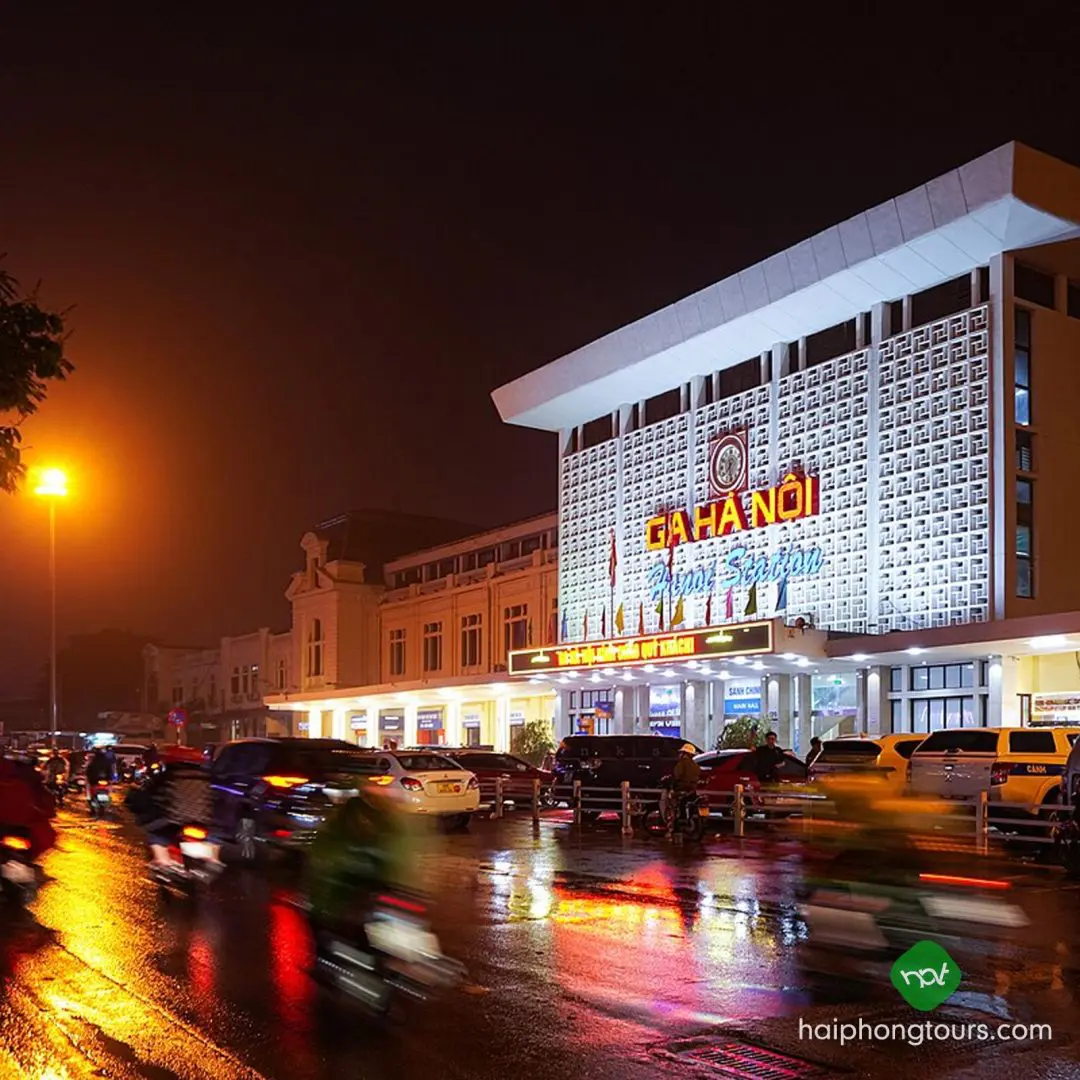
Allow for waiting and road traffic
The end-to-end ride takes about 60 minutes in normal planning. That figure does not include the time from immigration or baggage reclaim to the bus stop, waiting for the next departure, or the walk from a city stop to your hotel. Congestion, rain and temporary street controls can lengthen the road journey.
For an arrival, tell the hotel your route and likely stop instead of promising a check-in time from the flight schedule. For a departure, work backward from the airline’s required check-in or baggage-drop time. Select a bus that leaves room for a later backup departure, the road journey, the walk through the terminal and the full airport procedure. The final scheduled bus is a poor choice for a flight that cannot absorb a delay.
A rail connection needs the same discipline. Hanoi Railway Station is the route terminus, but leaving the bus, collecting every bag and finding the correct platform still takes time. From the airport, allow a backup bus plus time for the platform walk and the train’s boarding deadline. From a train to the airport, add the risk of a late rail arrival, the walk to Bus 86 and the full airport procedure. Use a direct car when either margin is too narrow.
Buy the correct ticket without assuming a payment method
A route 86 ticket costs VND 50,000 for one passenger on one trip. Online booking is available, but payment can fail when a foreign card, phone verification or network connection is involved. If you have not bought a valid ticket, carry VND 50,000 in small notes and ask the onboard staff before taking a seat.
Keep the ticket or booking confirmation until the journey ends. Route 86 is an airport express service with its own published fare, so do not apply a fare formula from an ordinary subsidized city bus. A map result or payment receipt also does not prove that you are waiting on the correct side of the road.
Use Bus 86 only with luggage you can control
Plan on lifting, boarding and keeping control of every bag yourself without blocking the aisle. Do not depend on a reserved rack, porter help or space for a fixed number of suitcases. Keep passports, money, medication, phones and other valuables with you rather than in a case separated from your seat.
A solo traveler with one manageable suitcase is a stronger fit than a family carrying several large cases, a stroller and cabin bags. Rain also changes the decision because the final walk from 162 Tran Quang Khai or 23 Hang Tre can involve wet pavements and busy crossings. Compare the whole door-to-door journey, not only the bus fare.
If step-free boarding or assistance is essential, contact Transerco on 1900 1296 before relying on the bus. State route 86, direction, stop, date and planned departure, then ask whether the assigned vehicle can accommodate the mobility aid and what the boarding point requires. Choose a direct vehicle if the answer does not support a safe journey.
Compare the bus with a direct car
Bus 86 gives one traveler a low, predictable fare and removes the need to negotiate an airport taxi. It works well when the arrival is within the timetable, the hotel is near a named stop and the traveler can handle the final walk. Two people with light bags may still find it useful, but each additional passenger and case reduces the saving once a final taxi is added.
A direct car is the stronger option for a late arrival, several suitcases, young children, limited mobility or a train, tour or cruise connection that cannot tolerate a missed stop. Hai Phong Tours lists a direction-specific Noi Bai Airport to Hanoi Old Quarter transfer and a separate Hanoi Old Quarter to Noi Bai Airport transfer. Choose the correct direction and select the vehicle by both passenger count and luggage capacity.

Have a fallback before the bus stops working
After a delayed arrival, check the current route 86 departure before waiting at the curb. If immigration and baggage reclaim push you beyond the last practical bus, use the signed airport taxi service or a prearranged car. Do not accept an unmarked vehicle merely because someone approaches near the bus area.
If you reach the wrong passenger terminal, use Noi Bai’s free T1 to T2 shuttle and follow its current signs. Do not walk along the airport access roads with luggage. If you miss a central stop, stay calm, ask the onboard staff for the safest next stop and arrange the final connection from a legal pickup point.
Choose Bus 86 when the VND 50,000 fare, named stop and schedule all fit the trip. Choose a direct vehicle when luggage, mobility, weather or a fixed deadline makes the public-bus chain fragile. The practical decision is the one that still works from the airport curb to the exact hotel or terminal door.