
For one or two flexible travelers, a confirmed shared sleeper from the Noi Bai area is usually the lowest-cost way to reach Mu Cang Chai. It is not necessarily a terminal pickup. Many services use a meeting point in Soc Son or near Kim Anh Junction, so the ticket must name the exact pin. A private car is more practical for a group, several large bags, reduced mobility, daylight travel, or delivery to a rural homestay.

Build the journey from your actual arrival terminal and your actual Mu Cang Chai property. Terminal 1, Terminal 2, an airport-area road stop, Mu Cang Chai town, Tu Le, Khau Pha Pass, and an outlying homestay are different endpoints. The safest budget plan confirms both the coach meeting point and the final drop before the flight departs.
Decide whether the shared sleeper really starts at the airport
Noi Bai has separate domestic and international terminals. After landing, you still need time for immigration when applicable, baggage collection, and finding the onward vehicle. A listing that says “Noi Bai” may refer to a road junction in the wider airport area rather than the arrivals curb.
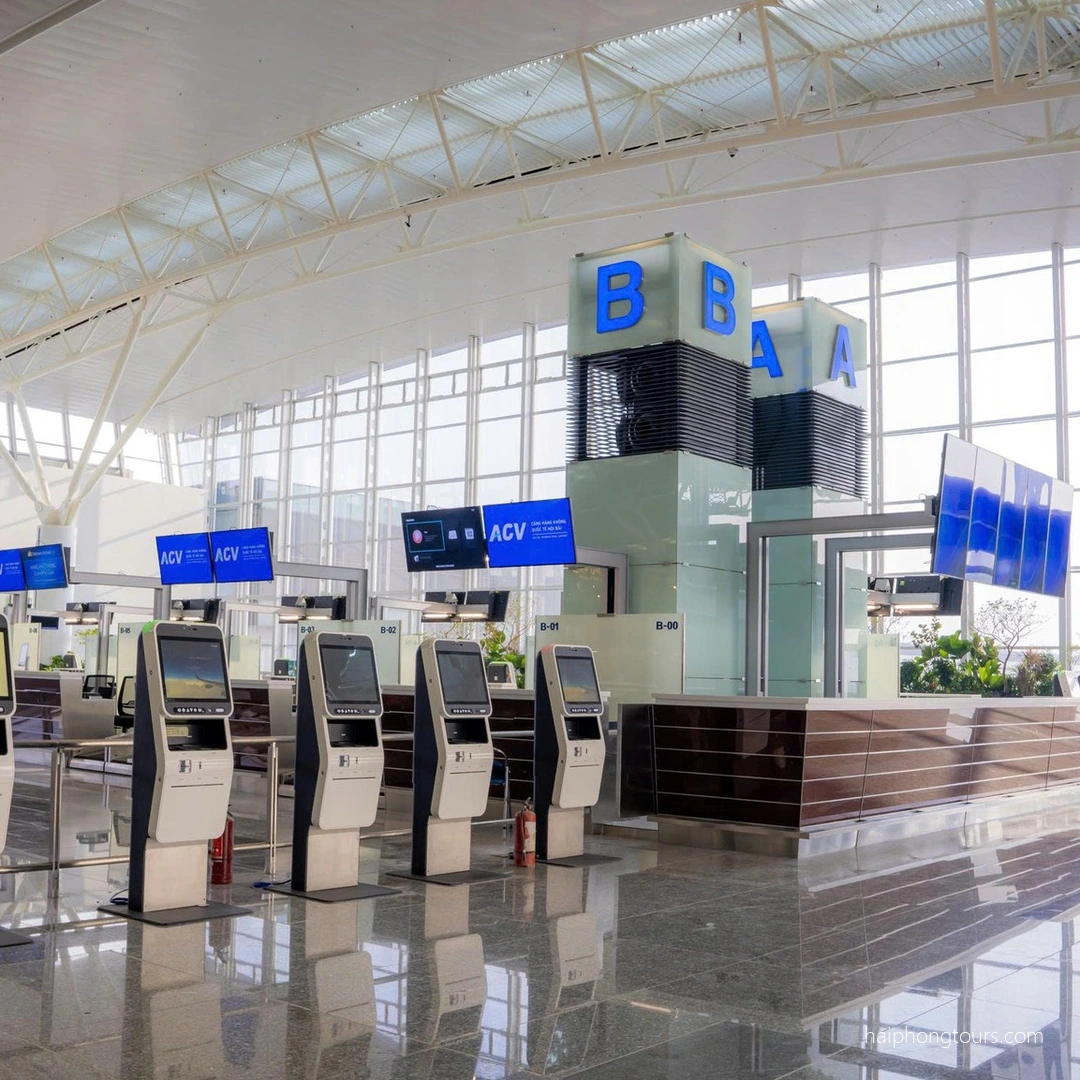
Ask the operator for a map pin, vehicle number, boarding window, and a plain answer about whether a feeder is included. If the meeting point is at another terminal, Noi Bai provides a free T1 to T2 shuttle, but that shuttle does not protect the separately booked coach. If the stop is in Soc Son or at Kim Anh Junction, arrange a licensed taxi and allow time for the road transfer.

Noi Bai currently publishes the free terminal shuttle from 5:00 AM until 1:00 AM the next day. Its pickup points are Level 1, Hall A at Terminal 1 and Level 1, Lane 2 by columns 11 and 12 at Terminal 2. The airport lists 15-minute service during the main daytime and evening period and 20-minute service at other operating times. Recheck the airport page on the day because a terminal change affects whether the coach plan remains workable.
Do not plan from scheduled landing time. Use the time you are likely to leave the terminal with every bag. An international arrival, checked luggage, a late aircraft, or a terminal change can consume the margin that looked comfortable on paper.
Use the budget option when the handoffs are clear
Son Phuong is a named operator to check for this corridor. Its own website lists a sleeper route linking Noi Bai Airport with Mu Cang Chai and onward northwest destinations. The operator publishes booking hotline and directs passengers to online booking at nhaxesonphuongtnlc.vn. Use those operator channels rather than treating a marketplace result as the final ticket.
Ask Son Phuong to confirm four items in writing for the travel date: the exact Noi Bai or Soc Son boarding pin, pickup time, Mu Cang Chai drop, and baggage allowance. A terminal-curb pickup supports a direct post-flight plan. A Soc Son or highway pickup requires a licensed taxi and more connection time. A main-road drop rather than the homestay means the property must arrange the last mile.
A shared sleeper suits a solo traveler or couple with light luggage, flexible timing, and a verified main-road drop. It can be much better value than paying for a whole car. Current marketplace results are useful for identifying operators, but a search result is not a stable timetable or proof of a terminal pickup.
Book against the actual date and obtain written confirmation of the boarding point, departure window, Mu Cang Chai drop, berth type, luggage allowance, and policy after a delayed flight. Keep the operator’s phone or messaging contact available offline. The coach and flight are separate bookings, so neither provider is normally responsible for a missed connection to the other.
Match the drop to Mu Cang Chai town, Tu Le, or the homestay
Mu Cang Chai is used loosely for a long mountain corridor. Tu Le lies before Khau Pha Pass when approaching from Hanoi, while Mu Cang Chai town and many rural properties are farther along the route. A coach that serves the district may not enter the lane to your accommodation.
Send the property name and map pin to the operator, then send the confirmed coach and drop details to the host. For a night arrival, ask who will meet you, where the safe waiting point is, and whether the property vehicle can carry all luggage. Do not accept a vague promise to “drop near the hotel” when the accommodation is several kilometers from the main road.
Choose a private car for control, not because it is automatically faster
A private vehicle removes the coach meeting point and can provide direct delivery to a road-accessible property. This matters for families, travelers with mobility needs, groups splitting the fare, or anyone carrying several cases. Daylight travel may also make the mountain section easier to manage.
Private transport cannot remove fog, heavy rain, road works, or congestion on the mountain roads. Confirm the driver understands the exact property pin and where a larger vehicle can safely stop. Ask about planned rest breaks, night-driving limits, child-seat availability, and usable luggage space after every passenger is seated.
For one mobile traveler with a verified sleeper and a main-road homestay transfer, a private car is usually poor value. Compare the complete shared chain, including the taxi to the boarding point and the final homestay vehicle, rather than comparing only the headline fares.
Plan luggage through every vehicle change
Passenger seat count does not prove luggage capacity. Sleeper coaches may have limited hold space, and a small homestay vehicle may be the tightest part of the chain. Declare the number and approximate size of every case, plus strollers, wheelchairs, or sports equipment, before paying.
Keep passports, medication, electronics, money, and one essential layer with you. Photograph checked bags before they enter the coach hold and count them at the rural drop. If a feeder changes vehicles, confirm who is responsible for the bags before the first driver leaves.
Allow the road and weather to change the arrival
The route crosses mountainous terrain where rain, fog, landslides, and repair work can affect timing. Treat any quoted duration as a planning estimate, not an arrival guarantee. Ask the property how late it can receive guests and what to do if mobile coverage is weak near the drop.
If bad weather makes the final rural road unsuitable, agree on a road-accessible meeting point rather than pressuring a driver to enter an unsafe lane. A host transfer arranged in advance is safer than searching for a vehicle after a late main-road drop.
Keep a realistic fallback after a delayed flight
If the aircraft, immigration, or baggage release causes you to miss a limited shared departure, stay near Noi Bai or in Hanoi and travel the next day. Do not ask a taxi to chase the coach or attempt an unverified roadside interception. A confirmed room and a fresh departure are safer than starting a mountain trip with no reliable boarding point.
If a private driver is waiting, agree in advance on the flight number, terminal, waiting arrangement, and contact method. Flight monitoring and unlimited waiting should never be assumed. Confirm what happens if the arrival moves to another terminal or becomes several hours late.
Make the final choice
Choose the shared sleeper when the operator confirms the airport-area meeting point, the Mu Cang Chai drop, luggage, and a workable last mile. Choose a private car when exact rural delivery, daylight travel, mobility, or group luggage is worth the extra cost. Choose an overnight near Hanoi when the flight cannot meet either plan safely.
Hai Phong Tours recommends writing the full chain on one page: terminal release, meeting-point transfer, coach or car, main-road drop, and property reception. The current catalogue has no product for this complete route, so confirm each independent booking directly and recheck road and weather conditions before travel.
Would a private transfer make this journey easier? Contact us with your travel date, exact pickup and drop-off, number of travelers and bags. Include any flight, train or cruise deadline so we can assess a suitable plan and quotation.