Hanoi Ring Road 4 is not a complete ring, but one section of its parallel road now carries temporary traffic. The usable section runs from Huu Hong dyke near the unfinished Hong Ha Bridge to Thang Long Boulevard. Through Hoai Duc, traffic from National Highway 32 toward Thang Long Boulevard uses the western parallel road; the reverse direction toward National Highway 32 uses the eastern road. Each is one-way. Follow current signs and signals because local connections and work areas remain unfinished. Hong Ha and Me So bridges are still under construction, so do not build an airport, station or intercity deadline around a full Ring Road 4 shortcut.
This temporary plan makes the opened section useful for some trips across western Hanoi. It does not make the expressway mainline, river crossings or complete regional ring available. Use it only when the driver’s current route naturally meets its public endpoints and signed junctions.
Know the temporary public section
The temporary traffic plan covers the parallel road from Huu Hong dyke, near the future Hong Ha Bridge, to Thang Long Boulevard. It passes the National Highway 32 and provincial road 422 corridors, with signals and markings controlling important junctions.
Public traffic uses a temporary plan that may change as construction progresses. Use the road that is signed and open on the travel day rather than an old screenshot or a project alignment.
Use the correct one-way road through Hoai Duc
From National Highway 32 toward Duong Hoa and Thang Long Boulevard, use the western parallel road. From Thang Long Boulevard back toward National Highway 32, use the eastern parallel road. These are separate one-way roads, not two directions on one shared carriageway.
At the Thang Long Boulevard end, the connection is with the boulevard’s service road, not a direct entry to the main expressway. The current plan uses the signed N5 connection to enter from the service road on the Hanoi side. Cars leaving may use N6 or the existing road toward Phuong Ban Bridge, while motorcycles must use the existing Phuong Ban approach rather than N6.
Continue to a signed junction when you need to change direction. Never cross a barrier, make an arbitrary U-turn or enter a construction access to shorten the route. At Thang Long Boulevard and local-road connections, follow the lane arrows, traffic lights and any direction given by officers or site staff.
The open section does not complete the river crossings
The Huu Hong end sits near the Hong Ha Bridge project, but the bridge is still under construction. Me So Bridge is also unfinished. The parallel road therefore cannot be treated as a complete Ring Road 4 river route or a continuous loop around Hanoi.
For a cross-river journey, live navigation or the licensed driver must select an operating bridge and legal approach. A future bridge line on a map is not a public road, even when the parallel road leading toward it is open.
Decide whether this section helps your trip
The temporary section is most relevant when the origin or destination connects with the western Hanoi corridor around National Highway 32, road 422, Duong Hoa or Thang Long Boulevard. It may be irrelevant to a journey starting on the opposite side of the city.
Do not assume this section will save time on every airport, station or coach connection. Traffic at the approaches and the alternative river crossing can matter more than the open segment. Compare the complete live route from the exact pickup to the exact destination, not the distance shown for one new section.
Protect airport and station deadlines
Noi Bai Airport terminals, Hanoi Railway Station on Le Duan, Long Bien Station and Gia Lam Station are different endpoints. Send the ticketed terminal or station, departure time, passenger count and luggage before the car is assigned.
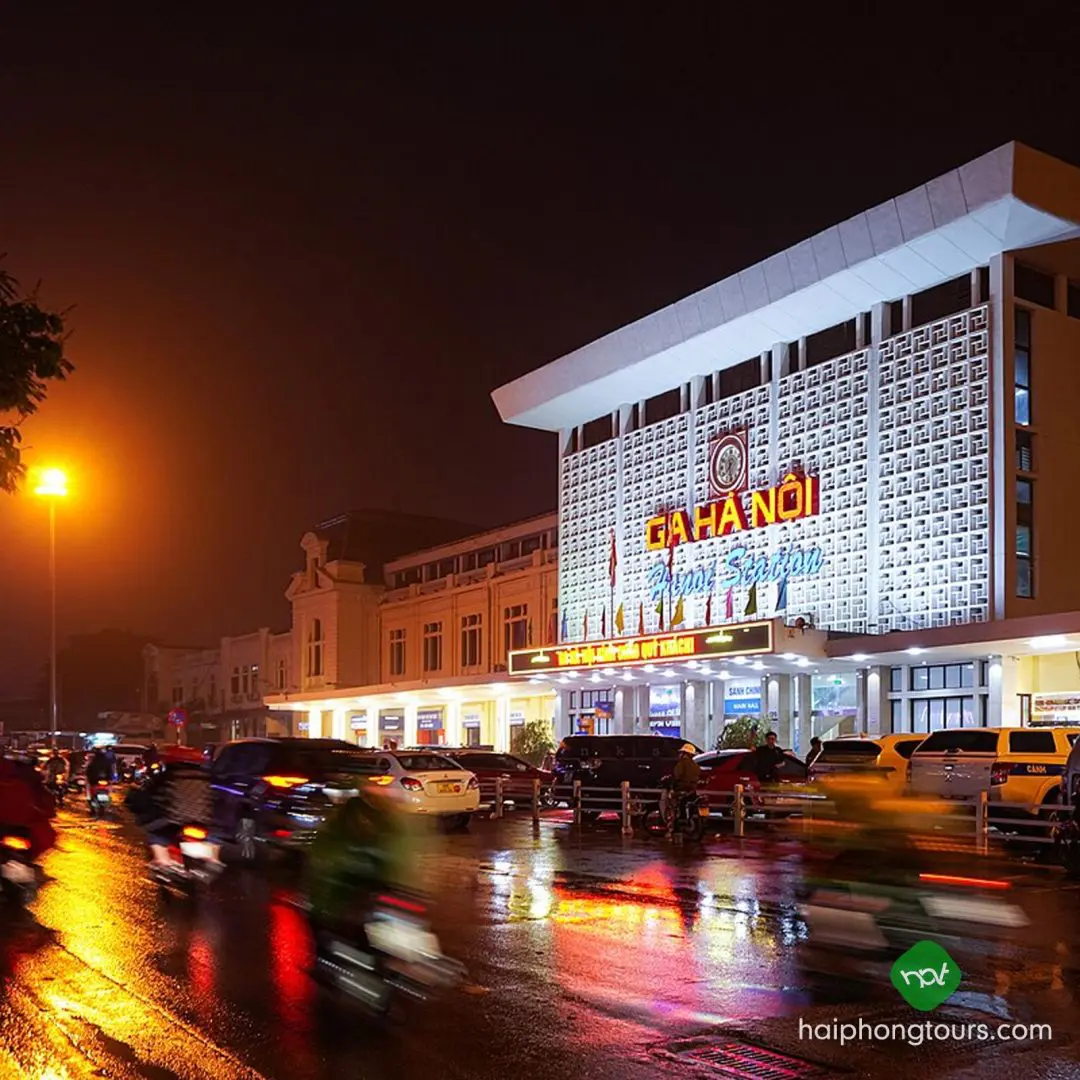
Hai Phong Tours recommends asking the driver for the complete current route rather than requesting Ring Road 4 by name. The driver may use the temporary section when it genuinely helps, or use another operating road when the pickup, destination or traffic makes that stronger.

For rail, the issued ticket controls the station. For a flight, work backward from the airline’s recommended airport-arrival time and the check-in or bag-drop deadline. Keep that margin even when navigation predicts a shorter drive.