
A direct flight is the quickest way from Hanoi to Dong Hoi; an overnight train is useful if you want a proper berth, while a sleeper bus can keep the transport bill lower. The decision changes if your real destination is Phong Nha: trains and flights normally bring you to Dong Hoi, but some coaches continue to Phong Nha itself.
The best ticket is not necessarily the one with the shortest journey time. It is the one that gets you to an open hotel, with enough rest before your first cave visit. Decide where you will sleep before choosing how to leave Hanoi.
Compare the complete journey, not just the ticket
| Option | Useful planning allowance | Where you arrive | Best fit |
|---|---|---|---|
| Direct flight | About 1 hour 15 minutes in the air; allow roughly 4.5–6 hours from a central Hanoi hotel to a Dong Hoi hotel | Dong Hoi Airport, code VDH | A shorter travel day, especially if overnight transport disrupts your sleep |
| Through train | Roughly 9.5–12 hours on the train, plus travel to and from the stations | Dong Hoi railway station | A four-berth sleeper, families who prefer a compartment, or travelers avoiding a long road journey |
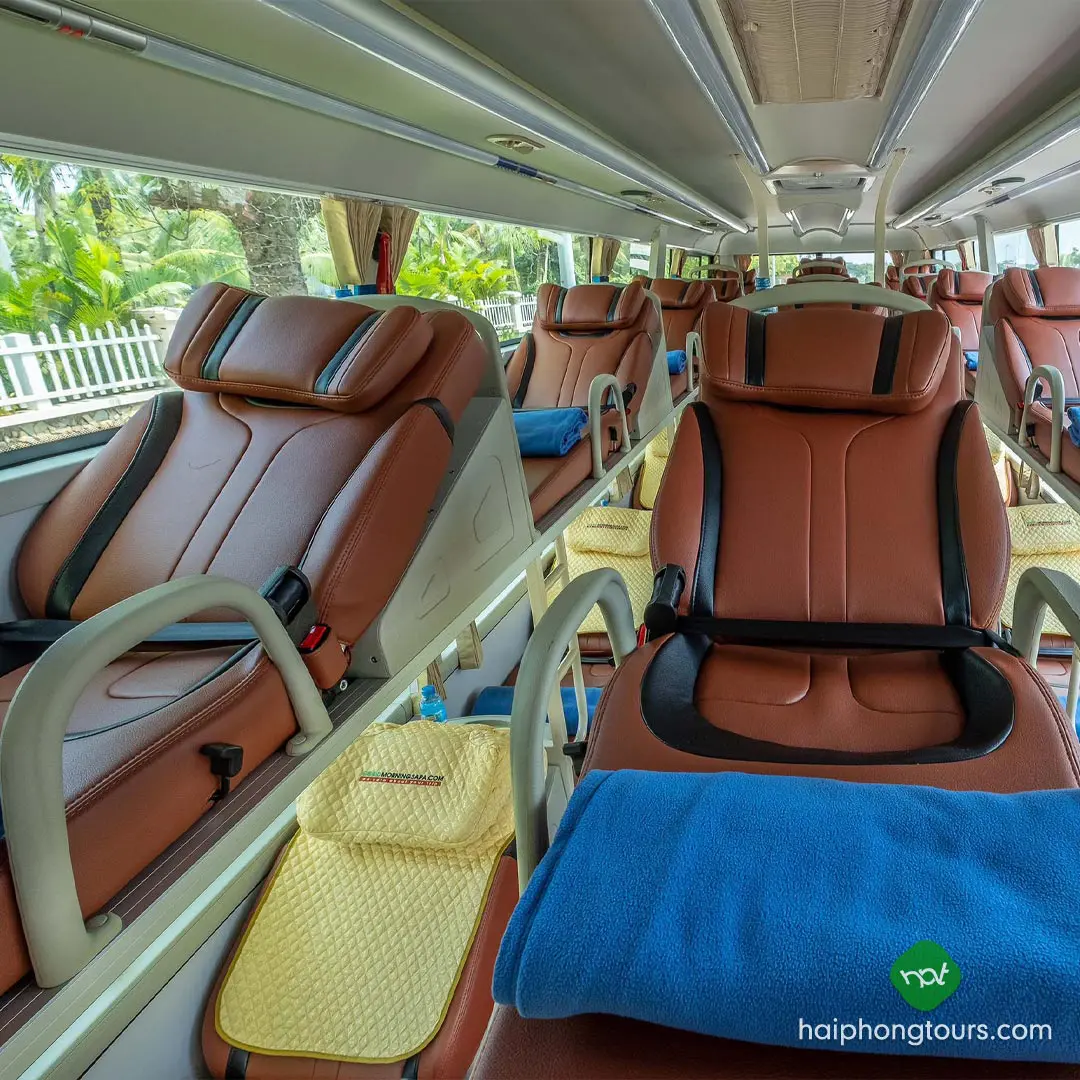
| Sleeper bus to Dong Hoi | Operators advertise around 8–10 hours, with extra time possible for traffic and collections | The specific office, terminal or roadside stop on your booking | Price-conscious travelers comfortable with a reclining berth and an overnight road trip |
| Coach booked to Phong Nha | Use the operator’s full itinerary and arrival date | A named Phong Nha stop, not automatically your homestay | Travelers whose first nights are in Phong Nha rather than the coastal city |
The hotel-to-hotel flight allowance is our planning estimate, not an airline promise. It includes the drive to Noi Bai, airport formalities, baggage collection and the final road transfer. For Phong Nha, add the separate inland journey instead of assuming that VDH is beside the caves.
Flying from Hanoi: straightforward, but include both airport transfers
Search for Hanoi HAN to Dong Hoi VDH. Vietnam Airlines sells this direct route. Use the flight actually available on your travel date; a route page or old timetable does not establish that a particular departure runs every day.
Noi Bai’s domestic flights use Terminal 1. Tell your driver that you need the domestic terminal and show the airline and flight number. A hotel pickup described simply as “Hanoi airport” is not a sufficiently precise instruction if the driver is taking several passengers to different terminals.
- Compare the final fare with your required checked baggage, not only the first price displayed.
- Plan to reach the airport around two hours before a domestic departure. This is a sensible working target, not the last permitted check-in time.
- Carry your original passport and the Vietnam entry or residence documents applicable to your nationality and immigration status.
- Send your arrival flight number to the receiving hotel or transfer provider so a schedule change can be identified.
If a cheap flight leaves before you can reach Hanoi after a cruise or island stay, the missing hotel night belongs in the comparison. The Dong Hoi Airport arrival guide explains what to arrange for the final leg.
Taking the train: choose the arrival hour first
For a southbound departure from central Hanoi, use Ga Hà Nội, 120 Lê Duẩn, unless your issued ticket explicitly names another boarding station. Do not go to Long Bien station because it happens to be nearer your Old Quarter hotel.
The images below show the Hanoi departure station and its ticket-counter setting, not Dong Hoi station.


These published timetable examples show why the arrival hour matters:
| Train example | Hanoi departure | Dong Hoi arrival | Practical consequence |
|---|---|---|---|
| SE3 | 19:20 | 04:45 the next day | Arrange a very early pickup and a place to rest |
| SE1 | 21:45 | 07:21 the next day | A later morning arrival, but still not an automatic hotel check-in |
These published ticket examples are reference times, not a guaranteed daily schedule. Search the official Vietnam Railways booking system for your departure date and follow the issued ticket. Use the booked arrival time for pickup: a through train can have a separate onward departure time at Dong Hoi, which is not the moment you first reach the station.
A standard soft-sleeper compartment commonly has four berths; a hard-sleeper compartment commonly has six. Buying two berths does not normally buy a private four-person compartment. If privacy or a lower berth is important, select the actual accommodation and berth positions before paying. An inexpensive seat fare is not a useful comparison with a sleeper fare.
Enter each passenger’s name and identity details accurately, complete payment, and save the issued e-ticket offline. A reservation code awaiting payment is not the same as a confirmed ticket. For the general booking process and berth terminology, see our Vietnam train travel guide.
Taking a sleeper bus: book the exact drop-off
Hưng Long is an established operator advertising the Hanoi–Dong Hoi route. Its listed offices include 338 Trần Khát Chân in Hanoi and 19A Lý Thường Kiệt or 38 Xuân Diệu in Dong Hoi. These are useful named reference points, not a promise that every departure boards and terminates at all three. Use the particular pickup and drop-off printed in your confirmation.
For Phong Nha rather than Dong Hoi, HK Buslines also lists a Hanoi–Phong Nha–Hue corridor. Check that your chosen ticket actually includes the Phong Nha stop. Do not buy a generic “Quang Binh” ticket and hope that a driver will divert to your accommodation.
Before paying, establish the berth type, whether a “double cabin” price covers one or two people, luggage allowance, onboard toilet availability and the possibility of a feeder vehicle. Travelers who are tall should ask about usable berth length. Marketing terms such as VIP or limousine do not specify those details.
What should you budget?
Basic Hanoi–Dong Hoi bus berths have been listed by ticket sellers from about VND 350,000 per person. Treat this as a starting benchmark, not a guaranteed fare or a price for every cabin type. Weekend, holiday and premium-cabin prices may be higher.
Train prices depend on the departure, seat or berth category and position. Flight prices are also date-sensitive. A fair comparison includes the complete cost below:
- Flight: airfare, baggage, Hanoi airport transfer and the VDH arrival transfer.
- Train: the chosen berth, station transfers, and any paid early room access.
- Bus: the selected berth or cabin, travel to the boarding point, and transport from the actual drop-off.
An overnight journey only replaces a hotel night if you are happy with the sleep you get and do not then need to buy a room immediately on arrival. For a family, compare the whole group’s costs rather than multiplying the cheapest headline fare.
Make the arrival day easy
If you arrive before dawn and need immediate access to a bed, arrange it with the hotel in advance. You may need the previous night’s room booking, with a late-arrival note so it is not treated as a no-show. A reservation beginning on your arrival date usually does not, by itself, provide a room at 05:00.
For your first day, choose breakfast, a shower and a flexible visit rather than a demanding trek with a fixed early briefing. If you are traveling straight inland, use the Dong Hoi to Phong Nha transport guide. If you are undecided, compare staying in Dong Hoi or Phong Nha before reserving both hotels and transport.
Already ending your northern itinerary in Tam Coc or Trang An? Do not automatically return to Hanoi. Our Ninh Binh to Phong Nha guide covers the more relevant southbound choices.

Want to fit Dong Hoi after your northern Vietnam trip? Contact us with your last northern stop, travel date, group size and preferred overnight comfort. We can help you assess the connection before you commit to tickets.