
Long Bien Market is Hanoi’s large wholesale produce market near the city-side end of Long Bien Bridge. Go before dawn if you want to see the main trading activity; roughly 2 am to 5 am is a useful planning window, not a formal admission timetable. Allow 30 to 45 minutes, keep clear of loading lanes and arrange a reliable ride for the early hour.
This is a good choice for visitors interested in how Hanoi works behind its restaurants and street-food stalls. It is a working market with deliveries, buyers and porters moving on tight schedules. The reward is seeing that trading system in action, rather than finding a neatly arranged attraction designed around visitors.
Where is Long Bien Market?
The usual address is 189 Hong Ha Street, near Long Bien Bridge. Older maps may use the former Phuc Xa and Ba Dinh administrative labels; more recent local information places the market in Hong Ha ward. Use the Vietnamese name Chợ Long Biên and the market entrance pin so your driver does not take you across the river to the wider Long Bien area.
Ask to be dropped at a suitable public access point outside the busy loading area. The nearby roads carry through traffic as well as market vehicles. A convenient map location is not necessarily a place where a car can wait, so agree a separate pickup point before entering.
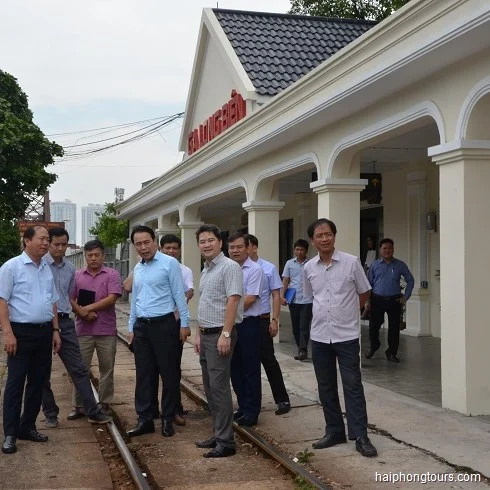
Long Bien Station, Long Bien Bridge and Long Bien Market are neighboring landmarks, not interchangeable addresses. If you are staying in the Old Quarter, a car or taxi can still be useful before dawn even when the distance looks short. For a walk, choose a clear public route and avoid shortcuts through dark vehicle yards or railway areas.
When should you visit?
Long Bien supplies fruit, vegetables and other food to businesses and smaller markets around Hanoi. Produce arrives after dark so trading can serve the early-morning distribution cycle. Vietnam Airlines’ destination guide identifies 2 am to 5 am as a particularly active period. The actual pace depends on deliveries, season and the day.
| Your priority | Best planning approach |
|---|---|
| Wholesale activity | Visit before dawn, with transport arranged and a short observation plan |
| An easier first visit | Choose the later part of the early-morning period, accepting that the busiest loading may be finishing |
| A relaxed shopping outing | Consider a daytime market in the Old Quarter instead of organizing a night around wholesale deliveries |
| Photography | Choose a position where you can stand clear, rather than following the most crowded aisle |
Do not plan the visit by a rigid “opening show” time. Individual traders and sections work to different rhythms. Rain, holiday demand and a late delivery can change what is happening when you arrive. If your hotel breakfast or a tour begins early, keep enough time afterward to return, wash and rest.
A practical short route through the market
Begin at the edge
Spend the first few minutes understanding the traffic. Notice where loaded carts move, where buyers stop and which lanes vehicles need to keep using. If you cannot identify a place to stand without obstructing work, move to another section or shorten the visit.
Ask a member of market staff which public aisle is appropriate for visitors. A workable route on one morning may be blocked by a delivery the next. This is why a fixed turn-by-turn circuit is less useful here than choosing an unobstructed edge and returning by the same known route.
Choose one or two produce sections
You do not need to inspect every stall. Compare how goods are packed, sorted and transferred between large deliveries and smaller buyers. Watch a transaction from a respectful distance without leaning over the goods or trying to handle stock for a photograph.
A companion who speaks Vietnamese can help ask a short question when a trader has time, but conversation is an invitation, not part of admission. Move on if the seller is negotiating, counting money or directing a porter. A useful visit can be mostly observation.
Return to the agreed exit
Leave before tiredness makes it harder to watch the moving traffic. Message your driver from a clear standing area, then walk to the agreed pickup point. Avoid trying to find a car while standing in a working entrance with your attention on the phone.

Photography without getting in the way
Ask before taking close portraits. A broad scene can often show the trading activity without putting one person under the lens. If someone declines or turns away, accept that immediately. Buying something is not a substitute for permission to photograph the seller.
Use available light and avoid flash near drivers and workers. Tripods, light stands and large camera bags are awkward in lanes used for carrying goods. Keep the camera close to your body while walking, and pause only after checking that you are clear of a cart’s route.
Do not climb onto crates, market roofs, bridge structures or parked vehicles for a higher angle. The often-photographed view of a market is not an invitation to enter every place from which it can be seen. Stay on ordinary permitted paths.
Can visitors buy small quantities?
Ask whether the trader sells the quantity you want before discussing price. A wholesale unit may be a box, basket or bundle rather than one piece. If the seller only handles large orders, thank them and move on instead of insisting on a tourist-sized purchase.
Confirm the unit and total together, using a calculator or written number if necessary. Carry modest cash in small denominations, keep the rest put away and avoid spreading money or documents across a produce table. Buy fruit for your stay only if you can store and wash it appropriately. International border rules may restrict taking fresh produce home.
Breakfast and what to do afterward
A return to the Old Quarter is a practical way to finish the outing. Choose a breakfast place that is actually open when you reach it rather than making an unverified market stall the anchor of the plan. Our Hanoi pho guide helps you choose a more focused noodle breakfast, while the street-food guide explains other dishes.
If daylight and energy allow, add a short visit to Long Bien Bridge using its designated pedestrian access. The market visit does not provide a shortcut onto the railway. Leave the bridge for another day if the weather or footing is poor.
Choose Quang Ba Flower Market instead if flowers are your main interest. Trying to cover both markets before dawn makes sense only when the trading scenes are a priority and you are comfortable with a very early start.
For a prearranged ride that fits the rest of your Hanoi or northern Vietnam itinerary, contact Hai Phong Tours with your hotel, date and preferred return time.