
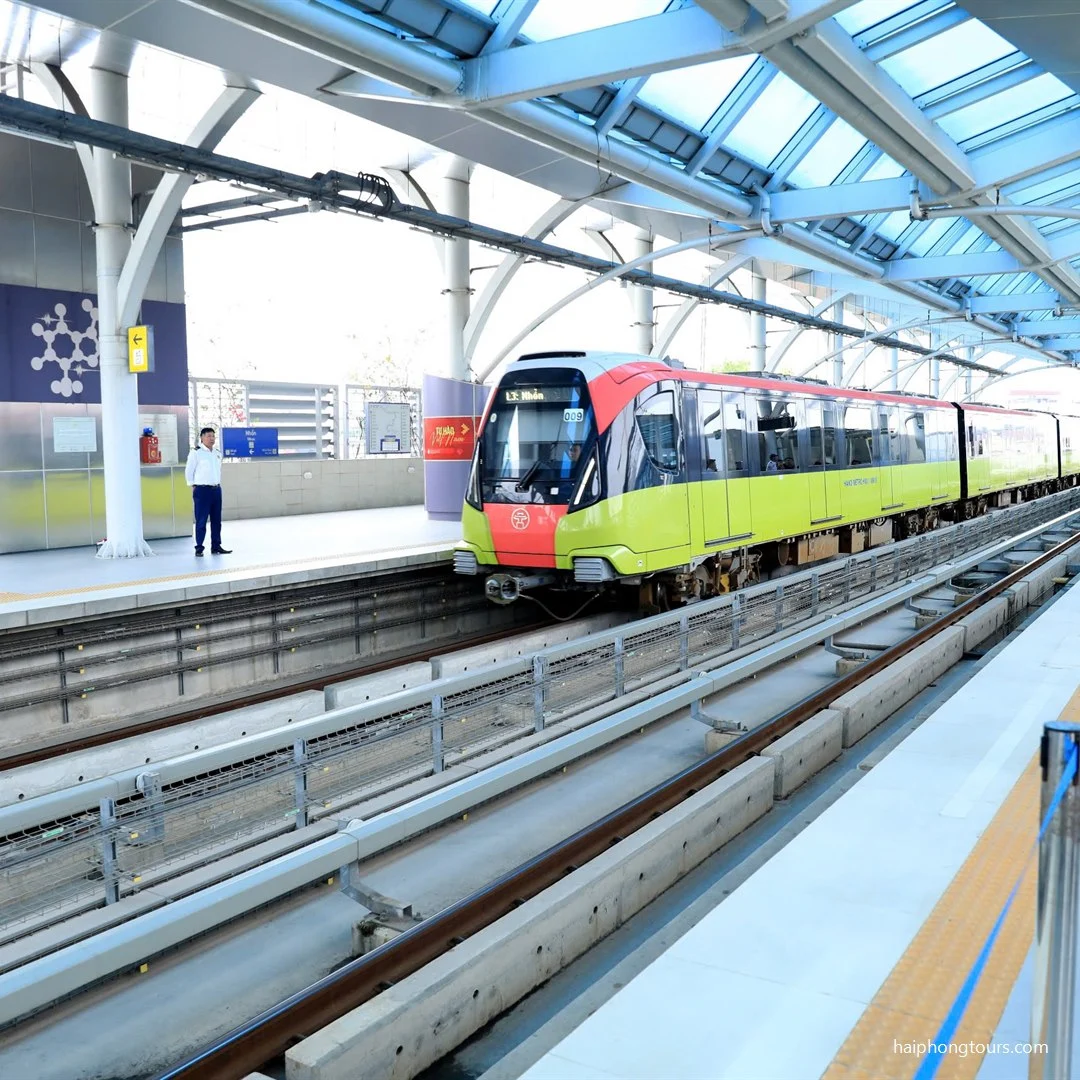
Long Bien Railway Station is the national-rail passenger facility near the bridge, not the Long Bien bus interchange. Cau Giay Metro Station is the operating eastern endpoint of the elevated Line 3 section. There is no same-platform transfer between them, so you need a recorded road vehicle or a complete city route.
A direct vehicle is usually the clearer choice after a delayed train, with several bags, limited mobility, poor weather or a short metro operating margin. A public city connection can work for a flexible traveler only after every stop, direction, final walk and station entrance has been checked.
First confirm that the train releases at Long Bien
The issued railway ticket must name Long Bien before you plan this transfer. Do not assume that every Hanoi-area train stops there, that a local segment can be bought on arrival or that another station is interchangeable. Confirm the train code, date and station with the ticketed seller or railway staff.
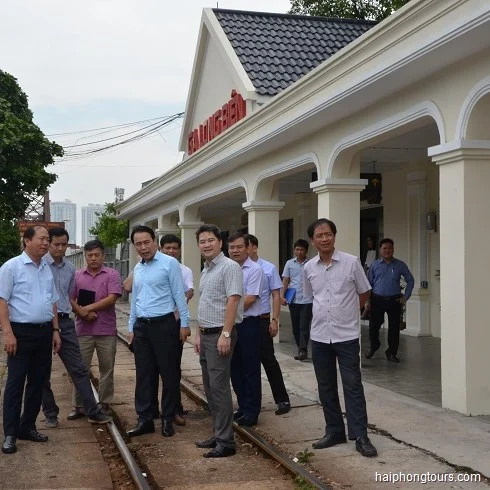
Long Bien has a constrained bridge-side setting. Follow staff instruction to the passenger exit and remain in the staffed railway area while arranging transport. A bus-interchange pin, bridge landmark or nearby cafe is not a safe substitute for the station’s current passenger handoff.
Your actual release time begins when the group has left the platform and recovered every bag. If the train is late, recalculate the remaining Line 3 margin before setting off. National rail does not protect a later metro journey, and the metro does not wait for a delayed train.
Make the road or city stage complete
Recorded road travel
For a taxi, app ride or licensed car, send the full origin as Long Bien Railway Station passenger exit. Share a live pin from the staffed area and a visible landmark only after reaching the legal pickup point. Match the recorded plate and driver details before moving luggage.

Give the destination as Cau Giay Metro Station on the operating Line 3 section, not Cau Giay district. Ask the driver to use a legal drop near the signed station access. A broad district pin can leave you too far from the entrance with bags or on the wrong side of a difficult road.
A public city connection
Verify the full route on the travel day. Check the first stop from the actual railway exit, road direction, every required change, the final walk and whether the route remains practical with luggage. Do not freeze a city-bus number, fare or stop from an old plan.
A city route is useful only if it reaches an operating Cau Giay entrance while Line 3 still serves passengers. If the last stage remains uncertain, a direct recorded vehicle is not merely more comfortable; it removes the risk of ending at a district landmark instead of the metro.
Know which part of Line 3 is operating
Current passenger service on Line 3 is the elevated section with eight stations between Nhon and Cau Giay. Cau Giay is the operating eastern endpoint. Do not route to an unfinished underground station or assume that a future city-center section is available.
At Cau Giay, follow the signed entrance and current staff direction. Confirm operating hours, fare media, luggage rules and the usable accessibility path on the day. Avoid promising a particular exit number or lift, because the practical entrance can depend on current station control.
If Cau Giay is only a transfer point and your accommodation lies elsewhere, compare road transport directly to the final address. Arriving at the metro after service ends creates another road journey and may make the station stop unnecessary.
Manage luggage and mobility at both ends
The Long Bien approach can be awkward for a traveler who cannot manage stairs, narrow spaces or an uncertain curb. Ask railway staff for the passenger route and assistance that is actually available. Do not move toward the bridge or road edge to chase a vehicle.
Confirm vehicle cargo capacity or the practicality of carrying bags on the city route. Keep tickets, identity documents, medication and valuables with the traveler. Count every case before leaving the rail area and again before entering metro fare control.
For a wheelchair, stroller or other mobility device, verify both the road handoff and Cau Giay station path. A lift at one point does not prove that the entire route from Long Bien platform to Line 3 platform is step-free.
Choose the option by consequence, not distance
Use a verified city route when the train arrives with time to spare, luggage is light, the full route is current and Line 3 remains useful. Keep enough flexibility to abandon the plan if the actual station exit or city stop differs.
Use recorded direct road transport after delay, at night, in heavy weather, with several bags, with a group or when accessibility matters. It also makes sense when Cau Giay is the exact destination and another public change adds more risk than value.
Hai Phong Tours uses the railway-versus-bus-interchange distinction as the critical safety check for this route. Hai Phong Tours does not list an exact transfer product between these facilities, so the trip should be arranged through current railway, metro and licensed road channels without implying a through booking.
Recovery choices
- The ticket does not name Long Bien: Follow the ticketed seller’s instruction for the correct station instead of creating a transfer from the wrong facility.
- The pickup goes to the bus interchange: Stay in the staffed railway area, resend the full railway-station identity and match the recorded vehicle.
- The train arrives too late for Line 3: Continue by road to the real final destination or stay in Hanoi rather than visiting a closed station.
- The city route is incomplete: Switch to a recorded road vehicle before leaving the staffed rail area.
- Accessibility cannot be confirmed: Ask station staff at both ends and use direct road travel when the complete passenger path is not workable.
Final handoff checklist
- Issued ticket names Long Bien and railway staff confirm the passenger exit.
- Origin is Long Bien Railway Station, not the bus interchange or bridge.
- Road vehicle or complete city route ends at the signed Cau Giay Metro Station entrance.
- Elevated Line 3 remains operating with a useful margin.
- Luggage, accessibility and a road-to-final-destination fallback are ready.
Would a private transfer make this journey easier? Contact us with your travel date, exact pickup and drop-off, number of travelers and bags. Include any flight, train or cruise deadline so we can assess a suitable plan and quotation.