
Choose one authorized bay itinerary that fits the trip instead of stacking similar boat days. Reduce unnecessary road and port transfers, follow current plastic and waste rules and avoid calling any cruise eco-friendly without concrete evidence.
A longer stay has lower impact only when it replaces repeated journeys and the operator’s actual practices support the claim. Hai Phong Tours recommends comparing the complete chain rather than treating price or luxury hardware as proof.
Choose the route before the marketing label
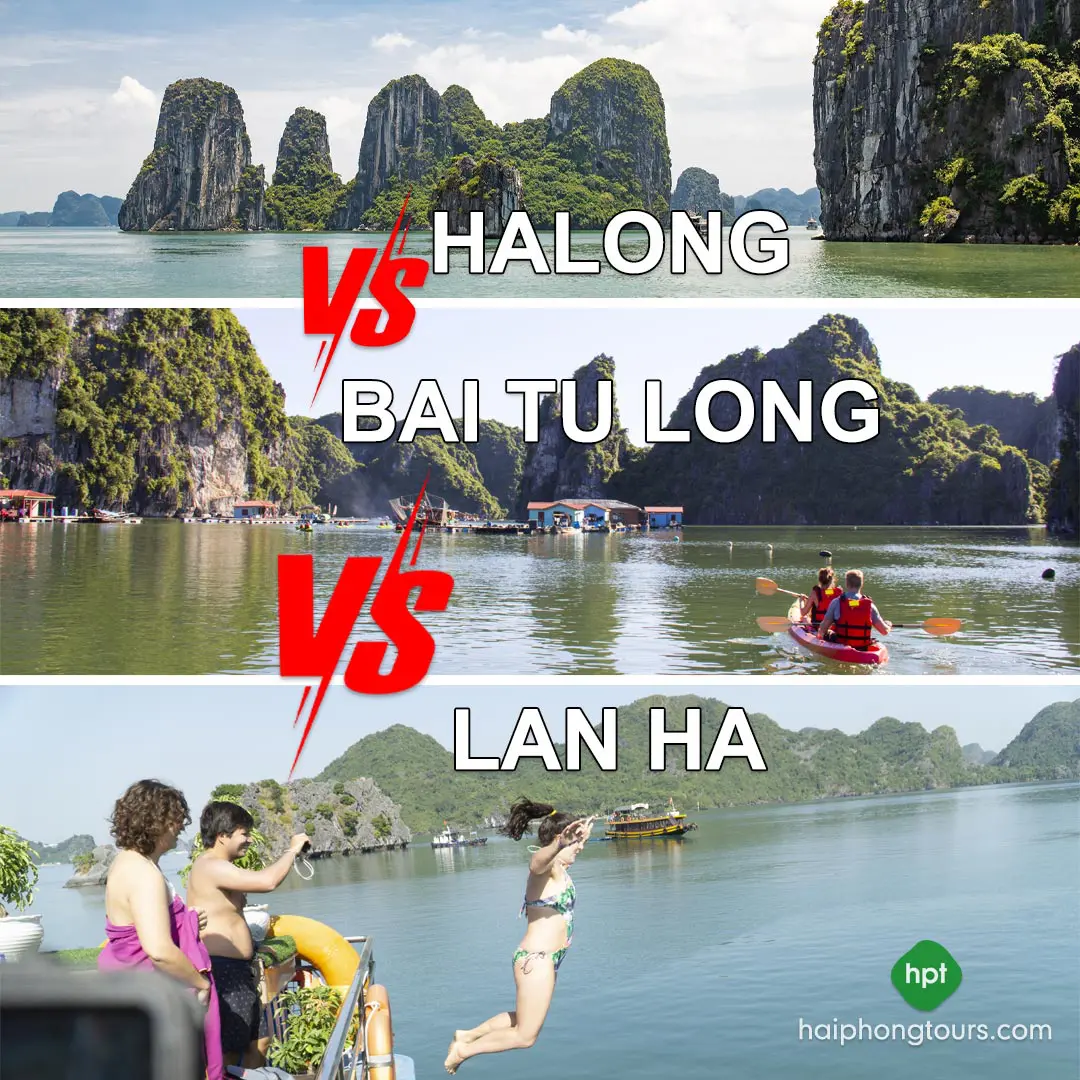
Start with the landscape and activity the traveler wants, then select the authorized route and departure chain. Ha Long, Lan Ha and Bai Tu Long have different access and management patterns even within the combined heritage region.
Do not add another cruise simply to collect a second bay name when the stops and experience are similar. One well-fitted itinerary can reduce duplicate roads, check-ins and boat movements.
Count every transfer
- Hotel to road vehicle.
- Road vehicle to passenger port.
- Gangway, tender or support boat.
- Middle-day boat on a longer cruise.
- Return port and road transfer.
- Any bay-to-bay repositioning.
A 3D2N program may remove a repeated road and port day while adding a day boat. Compare the actual movements instead of assuming longer always means greener.
Use only authorized routes and operators
Cross-bay coordination can create legitimate combined itineraries, but it does not permit travelers or sellers to improvise a route. Use the named vessel, operator and port process on the confirmation.
Avoid illegal night-fishing, unlicensed speedboats and informal “eco tours.” Safety, environmental and route controls remain authority decisions.
Follow current plastic rules
Ha Long visitor campaigns restrict or discourage single-use plastic bags, bottles, cups and other difficult-to-degrade items. Follow the current port and operator instruction and use accepted reusable alternatives.
Do not encourage travelers to bring an outside container that the operator or security process does not accept. Ask how drinking water and refills work on the chosen vessel.
Keep waste in the authorized system
Nothing belongs overboard. Use the vessel’s collection process and follow regulated anchoring, activity and waste-handling instructions.
Informal floating-vendor or craft purchases can create custody and waste problems. Use the authorized operator and named activities in the itinerary.
Protect wildlife and karst features
Stay on marked paths, follow guide instructions and avoid touching, removing or marking cave and karst material. Do not feed, chase or promise wildlife encounters.
Keep noise and light reasonable and remain inside authorized areas. A lower-impact visit does not seek hidden access around management controls.
Audit every environmental claim
Ask for specific evidence: waste collection, refill policy, engine or electric technology, fuel practice, local procurement, certification scope and measured targets. A green logo or luxury vessel is not enough.
When evidence is absent, describe only the verified service. Avoid zero-impact, carbon-neutral or community-benefit claims that the operator cannot support.
Keep local value specific
A local guide, meal or longer stay can add value, but do not claim that every floating-village visit benefits residents. Name the operator, activity and documented arrangement.
Lower impact should never pressure a traveler into a physically unsuitable overnight or activity. The right route still has to fit mobility, health and luggage needs.
Compare current options without ranking
The Hai Phong Tours cruise category helps compare live routes and durations. No product should be labelled low-impact without product-level evidence.
Higher price does not prove better environmental performance. Compare route efficiency, group size, refill and waste practices and documented operation.
Respond when the evidence changes
If the vessel changes, a promised refill practice is absent or an environmental claim cannot be verified, follow crew safety instructions and document the mismatch. Use the operator’s lawful alternative.
Weather cancellation is not a reason to seek an unauthorized boat. A land-based day or rescheduled authorized route protects both traveler and destination.
Choose fewer, better-verified movements
Build a simple evidence table
Give each shortlisted cruise one line for authorized route, road transfers, tender or day boat, refill system, waste handling, group size and verified environmental practice. Leave a field blank when the operator cannot answer rather than filling it with marketing language.
This comparison may show that a straightforward authorized cruise with fewer transfers is easier to support than a premium product making broad green claims. It also makes the traveler’s trade-offs visible without pretending that any tourism visit has zero impact.
Use duration to remove duplication
One overnight may replace two separate road-and-port day trips, but only when the route and cabin suit the traveler. A 3D2N program may add a smaller day boat, so it should not receive automatic credit for being longer.
Choose the shortest itinerary that delivers the desired experience without repeated repositioning. Keep the final hotel and next transport close enough that the return does not create another unnecessary long road.
Report concerns through the operator
If the vessel ignores a documented waste or refill commitment, raise it through the booking issuer and keep evidence that does not expose other passengers. Follow crew safety instructions while onboard; environmental disagreement is not permission to disrupt vessel operations.
A lower-impact bay visit is not a badge. It is a route with fewer unnecessary transfers, lawful operation, practical waste choices and claims that survive a request for evidence.
Save the final vessel, route and operator commitments in the booking record. When a substitute is offered, repeat the transfer and practice comparison before accepting. The lower-impact choice is allowed to change when the facts change; loyalty to a marketing label should never override current evidence or authority instructions.
Need help choosing the cruise or coordinating the shore transfer? Contact us with your date, preferred route, group size and starting point. Tell us about any dietary, mobility or onward-connection needs before booking.