
Hang Mua is worth visiting if you want an elevated view of Tam Coc, the Ngo Dong River and Ninh Binh’s limestone countryside, and are comfortable climbing a steep staircase. The main experience is the ascent of Ngoa Long Mountain, with 486 stone steps leading toward the viewpoints. The cave that gives the attraction its name is at the foot of the mountain.
Allow roughly one and a half to two hours for a visit with a climb, rest stops and photographs, and longer if you want both upper viewpoints and time by the lotus pond. This is a planning estimate rather than a fixed walking time. Heat, wet steps and queues near the top can make the outing slower and more demanding.
What you will see at Hang Mua
The staircase and upper viewpoints
The climb rises above fields, ponds and village buildings before opening onto a wider view of the surrounding limestone mountains. Its stone walls and winding steps are part of the attraction, with dragon and phoenix decorations along the route. Wear shoes you can descend in comfortably; going down steep steps deserves as much attention as going up.
The upper areas include the dragon viewpoint and a separate pagoda-tower viewpoint. The dragon side is associated with the broad view toward Tam Coc and the winding Ngo Dong River. The tower side gives another angle over the countryside and the grounds below. There is also a statue of Quan Am, the Bodhisattva of Compassion.
You can enjoy the landscape from the designated paths and viewing areas without climbing onto the dragon sculpture or stepping across exposed rocks. If a narrow section is crowded, wait where you are not blocking people coming down. Visiting both upper areas is optional; one viewpoint may be enough after a hot or tiring ascent.
The cave, gardens and lotus pond
The actual Mua Cave is below the mountain, within the visitor grounds. It is a secondary stop alongside the gardens and pond, rather than a long underground exploration. If your main interest is traveling through water caves, a Trang An boat trip is a different experience to plan separately.
The lotus pond at the base has a wooden walkway and mountain scenery behind it. When flowers are in bloom, it can be a reason to linger even if you skip the climb. Outside the flowering period, expect the pond to look different from peak-season photographs.
A lower-ground visit can work for companions who prefer not to climb, but check the paths and facilities needed by your group before paying. Arrange a clear meeting point and time if some people head uphill while others stay below.
Tickets and opening times
Budget VND 150,000 per adult for admission. Children under one meter tall have free entry. Check the ticket board for the current price and your child’s category; parking, food, clothing rental and hotel services should be treated as separate purchases unless explicitly included.
Published seasonal opening hours are:
- Summer: 5:30 a.m. to 7:30 p.m.;
- Winter: 6:00 a.m. to 7:00 p.m.
Confirm the day’s gate hours and the latest permitted start for the climb, especially if arriving early or planning sunset. The seasonal labels do not give you a reliable date-specific cutoff on their own. You can ask Hang Mua on its published contact number, 0378 699 330.
Buy admission at the visitor entrance and keep the ticket. If you are staying at Hang Mua Ecolodge, ask whether sightseeing admission is part of your room package before buying another ticket. A hotel booking and ordinary attraction admission have different conditions.
Choosing the time of day
Early morning is a useful choice for a cooler climb and more flexibility afterward. Confirm access first if you are aiming for sunrise: arriving before the gate opens does not guarantee you can reach a viewpoint in time. Morning can also work well for visiting the lotus pond before the day’s heat builds.
Late afternoon can bring softer light over Tam Coc, but allow enough time to get back down in daylight. Check that day’s sunset rather than using one fixed year-round starting time. If you reach the lower slopes late, enjoy what you can see there instead of racing toward the summit.
Midday is more exposed and can feel strenuous in hot weather. Carry water, rest when needed and shorten the climb if the conditions are uncomfortable. On rainy or windy days, prioritize secure footing and follow any access restrictions over getting a particular photograph.
Rice fields and lotus flowers are seasonal
The golden rice scenery along the Ngo Dong River usually falls around late May to early June, depending on the crop and harvest timing. It is a relatively short window, not the appearance of Tam Coc throughout the summer. Fields closer to the entrance or in other valleys may be at a different stage.
Early summer, particularly around June, is a useful period to consider for lotus flowers at the base of Hang Mua. Flowering changes with weather and pond management, so ask about current conditions if the lotus pond is the main purpose of your visit. Do not assume that every part of the pond flowers at once.
Outside those periods, the attraction still offers limestone views and the shape of the river valley. Visibility and comfortable climbing weather may matter more to your visit than matching a particular promotional image.
Getting there and arranging your return
Hang Mua is in the Khe Ha area, also written Khe Dau Ha, near Tam Coc in Ninh Binh. Ask for the Hang Mua tourist entrance and share the map pin with your driver. It is a separate land attraction from both Tam Coc’s boat terminal and Trang An’s boat terminal.
From accommodation around Tam Coc or Ninh Binh, a taxi or arranged car makes the outing straightforward. Agree on whether the driver will wait or return at a set time. Leave room for the descent, a toilet stop and the walk back to the pickup point when arranging collection.
If arriving by bicycle or motorbike, follow the entrance and parking signs, ask the price before leaving the vehicle and keep any parking receipt. Check that you have reached the visitor entrance you intended before paying for unrelated parking farther along the approach.
Large bags are awkward on the steps. Leave them at your accommodation or make a storage arrangement before starting; an ordinary entrance ticket does not establish a luggage-storage service.
What to bring for the climb
- Shoes with grip that stay secure on your feet;
- Drinking water carried from the base;
- A hat and sun protection for exposed sections;
- A light rain layer when showers are possible;
- A small bag that leaves your hands free;
- Your ticket and enough money for any separate parking or refreshments.
Avoid footwear or long clothing that catches on steps. Keep children close on the staircase and away from exposed edges. If steep steps, heights or a long descent are unsuitable for someone in your party, plan a lower-ground visit or a different attraction rather than treating the summit as essential.
The story behind the name
Mua means dance in Vietnamese. Local tradition connects the cave with a Tran king coming to enjoy music and dancing while staying in the Hoa Lu region. That story explains the name without requiring the modern visitor structures to date from the Tran dynasty.
Dragon and phoenix carvings decorate the approach, while the Quan Am statue gives the upper area a place of worship as well as a viewpoint. Be respectful when passing shrines and people making offerings.
Combining Hang Mua with other Ninh Binh sights
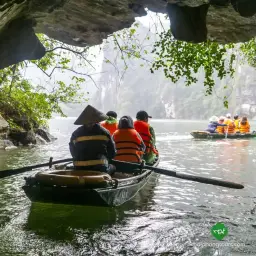
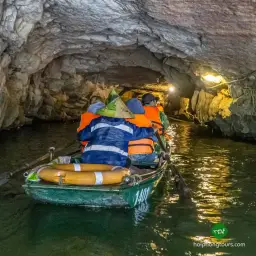
For an independent day in the area, combine Hang Mua with one boat journey at Trang An or Tam Coc, with a proper break for lunch. Trang An emphasizes cave passages and temple stops; Tam Coc follows the Ngo Dong River through its own valley and caves. Their boats do not replace the separate entrance and stair climb at Hang Mua.
From Hanoi, the Ninh Binh day tour from Hanoi offers several packages that include Hang Mua, with either Trang An or Tam Coc and selected cultural stops. Choose a package whose name explicitly includes Hang Mua: the Hoa Lu, cycling and Trang An option without it does not automatically include the viewpoint.
From Hai Phong, the Hai Phong to Ninh Binh day tour includes a Trang An and Hang Mua option with private return transport, a local guide, lunch and admission for the selected program. It involves a long return drive, so adding several more attractions will leave less time for rest and sightseeing.
Tell your guide if you want a slower climb or plan to stay below. A scheduled Hang Mua stop does not guarantee sunset or enough time to visit every viewpoint. Agree on the time allowance, then enjoy the amount of the climb that suits your group and the conditions.