
Noi Bai has documented wheelchair routes, lifts and accessible toilets in both passenger terminals. The useful question is how to join those facilities into your actual journey: aircraft seat, personal wheelchair, immigration or baggage claim, then the vehicle outside. Arrange those handovers before flying and the airport becomes much easier to navigate.
This guide covers the terminal journey at Hanoi’s airport, code HAN. It separates facilities you can use in the building from assistance the operating airline must arrange for boarding and disembarking.
Noi Bai Terminal 2: check-in hall, arrivals roadway and baggage-claim seating. Follow the airline and airport staff for the current assistance route.

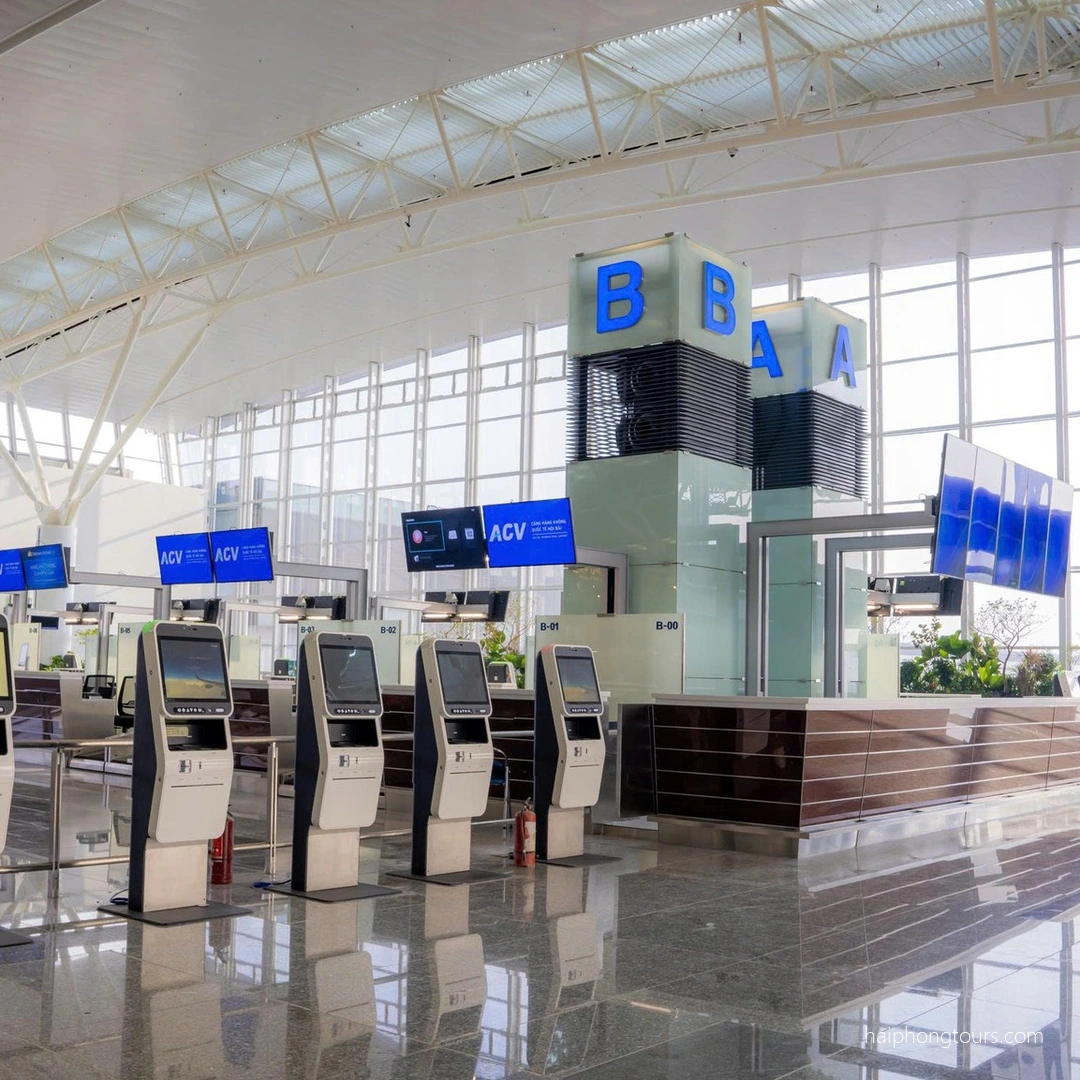
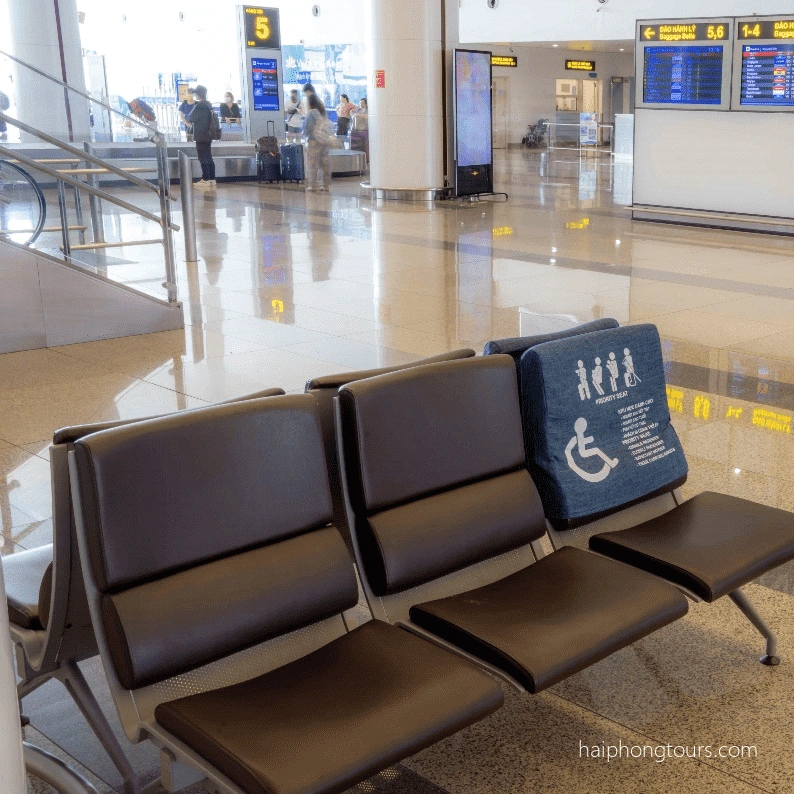
The arrivals roadway at Noi Bai Airport Terminal 2. Check-in kiosks and counters inside Noi Bai Airport Terminal 2. Designated seating near the baggage-claim area at Noi Bai Airport Terminal 2.
Save these contacts and terminal details
| What you need | Where or who to contact |
|---|---|
| Airport address | Noi Bai International Airport, Noi Bai Commune, Hanoi. Give the driver HAN and the correct terminal. |
| Airport information | 1900 636 535 within Vietnam. The airport also publishes service-support mobile +84 389 166 566. |
| T1 information counters | Two in the central public arrivals hall on Level 1; another halfway along the corridor connecting Concourses A and E. |
| T2 information counters | Public halls on Level 1 and Level 3. |
| Airline wheelchair assistance | Contact the operating airline using your booking reference. An airport information call does not add assistance to the flight booking. |
T1 serves domestic flights and T2 international flights. T1 check-in is on Level 2; T2 check-in is on Level 3. Arriving passengers emerge into public arrivals on Level 1. Use the numbered level, terminal and hall when communicating with a driver, rather than translating everything into “first floor.”
Before departure: describe the assistance you need
Tell the airline whether you can climb aircraft steps, move along the aisle and transfer into an aircraft seat. These are different requirements. Also send the wheelchair’s dimensions, weight and battery information where relevant, and request assistance for each flight and arrival airport.
For Vietnam Airlines, telephone or ticket-office requests require at least 24 hours; the online form requires at least 36 hours. Its contacts are 1900 1100 within Vietnam and +84 24 3832 0320 from abroad. The Vietnam Airlines wheelchair request guide explains the booking process.
Obtain a reporting time and meeting point. A confirmation should explain how you reach the aircraft seat if the flight uses a remote stand, as well as what happens to your own chair. Do not assume a terminal lift solves aircraft stairs.
Using domestic Terminal 1
At T1, the airport identifies two priority security entrances in Zone C for the A and B wings, plus one in Hall E. Report to the airline first, then have its staff direct you to the entrance appropriate for your flight. A priority entrance changes the queue route; it does not remove screening.
T1’s published accessibility guide describes separate accessible toilets within its restroom areas, with emergency call buttons. It also documents lifts and wheelchair routes, priority seating near boarding gates, and drinking-water and charging points at different heights.
If you need a particular side for transferring to a toilet, ask staff to identify the appropriate cubicle before your companion leaves to collect food or luggage. The published description does not provide every cubicle’s measurements or confirm adult changing equipment. Plan around your own requirements rather than the wheelchair symbol alone.
For arrival pickup, use the public-hall information counters as a clear meeting landmark if the driver cannot find you. Ask staff to indicate the sloping crossing to the correct vehicle lane. Avoid sending a companion across several lanes while you wait without a shared location.

Using international Terminal 2
T2’s public departures hall on Level 3 has designated wheelchair approaches. Its priority entrances are at the east and west ends, associated with Wings B and A. Ask your airline’s assistant which route serves your check-in area and departure procedures.
The airport documents accessible restrooms in the public and restricted areas, including automatic doors. It also describes lifts, priority seating and water stations at different heights. Use the toilet before leaving the central hall if you need to settle equipment or companion assistance before continuing towards a distant gate.
T2 has long departure wings. The free four-seat electric cart runs inside the restricted departures area on Level 3; the published service contact is +84 915 285 961. It can reduce walking for someone able to use its passenger seat. Its description does not establish carriage while seated in a personal wheelchair. Ask airline staff for the appropriate wheelchair assistance instead of treating the cart as an interchangeable option.
Landing: get your chair and complete the arrival route
- Before leaving the aircraft, confirm who is assisting you and where your personal chair will be returned. Explain if an ordinary airport chair cannot meet your seating needs.
- Follow the assisted route through the procedures for your flight. International arrivals also pass entry formalities; allow time for this before telling a driver you are ready.
- Check the chair when it returns, including detachable parts you handed over. If it is missing or damaged, ask the airline’s baggage staff to record the problem before leaving the reclaim area.
- Complete baggage collection with an agreed division of tasks. The person pushing a chair should not also have to control an overloaded trolley.
- Move to the named public-hall meeting point, then contact the driver. Give your terminal, level, exit or hall and a current photograph if useful.
Tell the driver that “landed” and “ready outside” are separate messages. Agree the included waiting time before travelling, especially when the chair needs reassembly or a baggage report.
From the terminal to the road vehicle
At T2, the airport lists 12 designated parking spaces in P3 and two pickup positions at the ground-floor front hall for vehicles collecting wheelchair users. Staff can direct your driver to the current permitted position. These spaces describe parking access; they do not supply an adapted vehicle.
If you can transfer into a car seat, confirm the actual vehicle, seat height and storage space for the chair alongside your bags. If you must remain seated in your wheelchair, obtain written confirmation of a suitable boarding system and occupied-wheelchair restraint arrangement before committing to the ride. A larger ordinary car does not establish either feature.

For a connection between terminals, use the Noi Bai accessible terminal shuttle guide. The airport documents ramps and wheelchair space on the interterminal buses. Have staff confirm the current boarding stop and the space available for your journey.
Plan the hotel arrival as carefully as the airport exit
Send your hotel the exact vehicle arrival time when known and identify an entrance reachable from the stopping point. In Hanoi, a short final stretch through a narrow lane can matter more than the airport drive. Ask reception to meet you at the usable entrance if luggage or a threshold needs attention.
Contact us with your flight, hotel address, chair measurements, luggage and whether you can transfer into a vehicle seat. We can review the ground journey and explain what can be arranged before you book.