
For a family transfer in northern Vietnam, arrange the child restraint before you book the vehicle. Send each child’s age, height and weight, ask for the exact seat model, and confirm that it can be fitted in the vehicle assigned to your trip. A request for a “baby seat” is too vague: an infant seat, a harnessed child seat and a booster serve different needs.
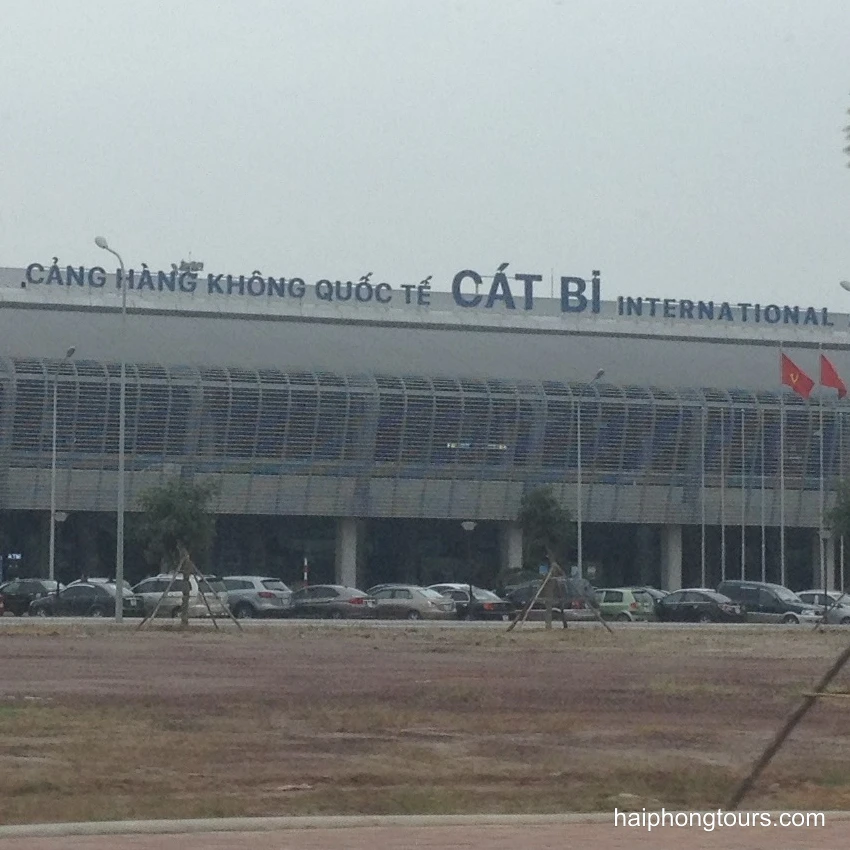
This matters from the first airport pickup, whether you land at Noi Bai for Hanoi or Cat Bi for Hai Phong. It also matters on later journeys to Ninh Binh, Ha Long, Cat Ba and the mountains. Include every road segment in the arrangement, not just the longest drive.
Choose the restraint before choosing the car category
Use the manufacturer’s limits for the child’s current size and the seat’s intended mode. An age label alone does not establish a suitable fit. Keep a young child rear-facing until the applicable rear-facing height or weight limit is reached; moving to a larger vehicle is not a reason to change the child’s restraint stage.
- Rear-facing seat: confirm that the offered model accommodates your child and that the necessary base or approved belt installation is available.
- Forward-facing harnessed seat: check the size limits and the required installation, including any tether or other specified attachment.
- Booster: this positions the vehicle’s lap-and-shoulder belt. It is not a replacement for a harnessed seat that the child still needs, and a lap-only belt is not sufficient for a belt-positioning booster.
If you are uncertain about moving between stages, ask the seat manufacturer or a qualified child-passenger-safety specialist before traveling. Bring the instructions for the exact model; advice for a similar-looking seat may use a different belt path or attachment system.
What to obtain from the transfer provider
Ask for a current photograph of the actual restraint, its model name and the label showing its size limits. Establish whether the seat is included, charged per journey or rented separately. Confirm how many seats are reserved if you have more than one child.
The vehicle confirmation should identify the usable rear seating positions and the installation method. ISOFIX connectors, a support leg, a top tether and a seat-belt installation are not interchangeable options: the seat and vehicle instructions determine what is allowed. A vehicle with ISOFIX does not necessarily provide it in every rear seat.
Ask about the restraint’s condition, missing components, recall status and any crash history. If the provider cannot identify the model or explain how it will fit, resolve that before making the booking dependent on the seat.
Hai Phong Tours recommends putting the accepted restraint details beside the route and pickup time in the booking confirmation. A message saying “request noted” should be followed by an answer confirming the equipment for your date and vehicle.
Two child seats, adults and luggage must fit together
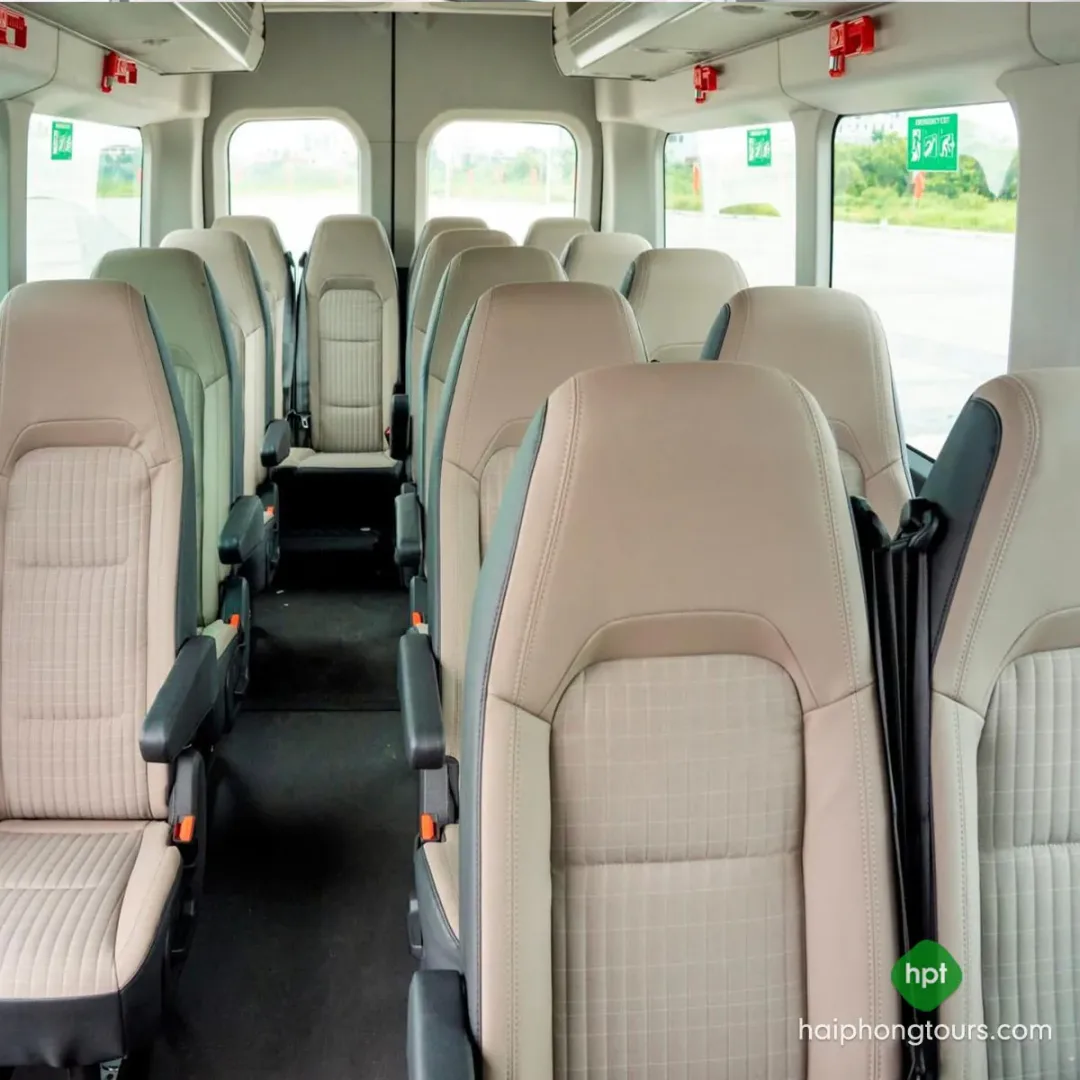
 Confirm the seating layout and child restraints for the assigned vehicle.
Count every person, including infants, when requesting the vehicle. Then add the restraints, stroller and suitcases. Two child seats can occupy enough width to make the remaining middle position unusable, even when the car has a nominal seat there.
For a three-row vehicle, ask how adults will reach the rear row after the child seats are installed and how much luggage space remains with that row in use. Do not plan to fold away a seat that someone needs. If an adult wants to sit beside a child, make that part of the seating plan rather than an assumption at pickup.
The Hai Phong car and van capacity guide explains why advertised seat counts and usable space differ. A larger vehicle helps only if its belts, seating positions and access work with the restraints you need.
Bring your own seat or arrange one locally?
Bringing your own
Your own seat gives you a known model and a familiar harness, but check compatibility with each booked vehicle before departure. Send the model and installation instructions to the transport coordinator. Do not assume a seat requiring a particular base can be installed with a belt instead.
For flights, distinguish carrying the seat as baggage from using it in an aircraft seat. Ask the operating airline about approval, dimensions, a separate booked seat, installation and baggage handling. Acceptance by one airline does not establish acceptance on your connecting flight.
Vietnam Airlines’ child-seat requirements distinguish approved restraints that can be secured with the aircraft’s lap belt from boosters and seats requiring a shoulder-belt installation. Confirm the arrangement with the airline for your booking before relying on onboard use. Keep the model label and instructions accessible.
Plan where the seat goes during a cruise or other period without a car. Agree on hotel storage or an operator handoff in advance, including the collection time. A bulky seat that travels with you should also be included in the luggage count for the next vehicle.
Using a transfer provider’s seat or a separate rental
Hanoi has businesses advertising child-seat rental and delivery, and some airport-transfer providers accept advance seat requests. Availability still depends on the model, date and delivery location. Do not assume a Hanoi delivery offer covers Cat Bi Airport, a Hai Phong hotel or a mountain lodge.
If the seat supplier and driver are different businesses, agree who receives the seat, who fits it and who checks the compatibility before the family arrives. Obtain the total rental period, deposit, delivery and collection charges, cleaning conditions and return location.
A one-way itinerary needs particular care. A seat delivered in Hanoi may have to return there even if your trip finishes in Hai Phong or Ninh Binh. Compare that return arrangement with keeping one confirmed restraint throughout a multi-day vehicle booking.
Vietnam’s rule and the practical booking decision
The child-specific rule covers children who are both under 10 years old and under 1.35 meters tall. They must not sit in the driver’s row, except in a vehicle with only one row. The requirement for an appropriate child-safety device has an exception for vehicles operating as passenger-transport businesses; that exception does not remove the driver’s-row restriction.
A “private transfer” describes a vehicle reserved for your party, not its legal operating category. It also does not establish whether a restraint is installed. Confirm the actual arrangement with the operator. The legal exception is not a reason to replace an appropriate restraint with an adult’s lap.
Plan for vehicle changes around Cat Ba and shared services
Some Cat Ba journeys combine a mainland vehicle, a passenger ferry and a different island vehicle. Ask whether your booking uses that arrangement. If it does, establish whether the same restraint travels with you or a separately confirmed seat awaits in the second vehicle.
For a seat you bring yourself, include carrying it between vehicles in the luggage plan. A seat remaining with the first driver cannot protect the child on the next road leg. A car seat also does not replace the boat operator’s required child-size life jacket.
Shared “limousine” vehicles vary in seat layout and belt configuration. Before buying tickets, ask whether the operator permits your restraint, has a compatible forward-facing passenger position and allows time for installation. A free infant fare or shared berth does not answer those questions.
Compare routes in the northern Vietnam transfer directory, then confirm the child-seat arrangement for the specific service. A route listing establishes the journey options; restraint availability requires its own confirmation.
At pickup, resolve a mismatch before setting off
Allow time to compare the supplied seat with the confirmation and follow both manuals when fitting it. Check the restraint’s position, belt or anchor route, required attachments and harness fit. Never put a rear-facing restraint in front of an active airbag, and do not improvise with cushions, straps or accessories that the manufacturer has not approved.
If the promised equipment is missing or cannot be installed correctly, contact the booking coordinator before traveling. Ask for a suitable restraint or compatible replacement vehicle and agree on a safe place to wait. A supposedly short airport or ferry connection still needs the planned protection.
For the overall itinerary, use the North Vietnam family travel guide. Fewer hotel changes and sensible rest stops make it easier to keep the same transport arrangements working throughout the trip.
A message you can send before booking
We need transport from [pickup] to [destination] on [date], for [adults] and [children]. Each child’s age, height and weight are [details]. We have [bags and stroller]. Please confirm the exact child-restraint model, suitable rear seating position, installation method, total charge and arrangements for every vehicle change. If we bring our own seat, its model is [model]. Please confirm compatibility before accepting the booking.
Would you like to include local food in a city visit? Contact us with your destination, date, group size and dietary needs to discuss a suitable tour or private itinerary.