Use Quan Ba Heaven Gate as a place to understand the gateway to the plateau, and the Twin Mountains as one feature within the valley below. Choose a legal stopping place with the view you want, then give yourself time to look. You do not need several hurried roadside stops to appreciate the same landscape.
Quan Ba belongs to the southern approach to the Dong Van Karst Plateau. It is a useful first landscape stop for travellers arriving from Ha Giang, especially before the rockier northern country. The names “Heaven Gate” and “Twin Mountains” describe connected scenery, but they are not instructions to park anywhere along the road.
What you are looking at
The paired rounded hills, also called Núi Đôi or Núi Đôi Cô Tiên, sit within the Tam Son valley landscape. Look beyond their outline to the fields, buildings and enclosing mountains. That wider view explains why this area feels different from the more exposed stone country around Dong Van.
UNESCO describes Quan Ba as part of a geopark whose limestone terrain has been shaped through geological processes over immense timescales. A viewpoint gives you a way to see the relationship between rock and cultivated ground. It does not reveal every process by itself, and local legends about the hills should be understood as cultural stories rather than geological explanations.
For a useful photograph, try one wide frame that includes the valley and one closer view of the paired hills. The first records the setting; the second records the recognisable shape. There is no need to enter a field or climb a barrier to make either image.
Choose the stop by its access
| Your group | What to prioritise | What to avoid assuming |
|---|---|---|
| Travellers who want a quick panorama | A designated stopping place with a clear view and safe reboarding | That a bend in the road is an acceptable parking area |
| A family with young children | Space away from traffic and a short, manageable walk | That a viewpoint café provides supervision |
| Someone who finds stairs difficult | The actual route from the vehicle to the viewing position | That a car removes the final steps or slope |
| Photographers | Visibility, space to stand and enough time to compose | That a famous pin guarantees the best light |
Tell the driver whether the priority is the broad valley or a view of the paired hills. “Stop at Heaven Gate” can be too vague when several businesses and stopping positions use the name. Agree where everyone will leave and rejoin the vehicle before people spread out.
No universal fee or guaranteed public opening schedule is quoted here for every viewpoint business. A drink, privately managed terrace or parking service can have its own charge. Read the displayed terms before using a business’s space rather than treating a landscape name as a single ticketed attraction.

Make cloud a decision, not a delay
If the valley is visible, take the landscape break before adding another activity. If cloud hides it, decide how much time you are willing to give the stop and keep the next part of the day realistic. Standing beside a road for an indefinite wait does not improve the rest of the itinerary.
A nearby cultural activity can give the day a different focus. The Nam Dam village guide covers a Dao household setting, while the Lung Tam weaving guide offers an introduction to hemp cloth. These are separate visits with their own receiving arrangements, not indoor attractions you can always enter immediately when the weather changes.
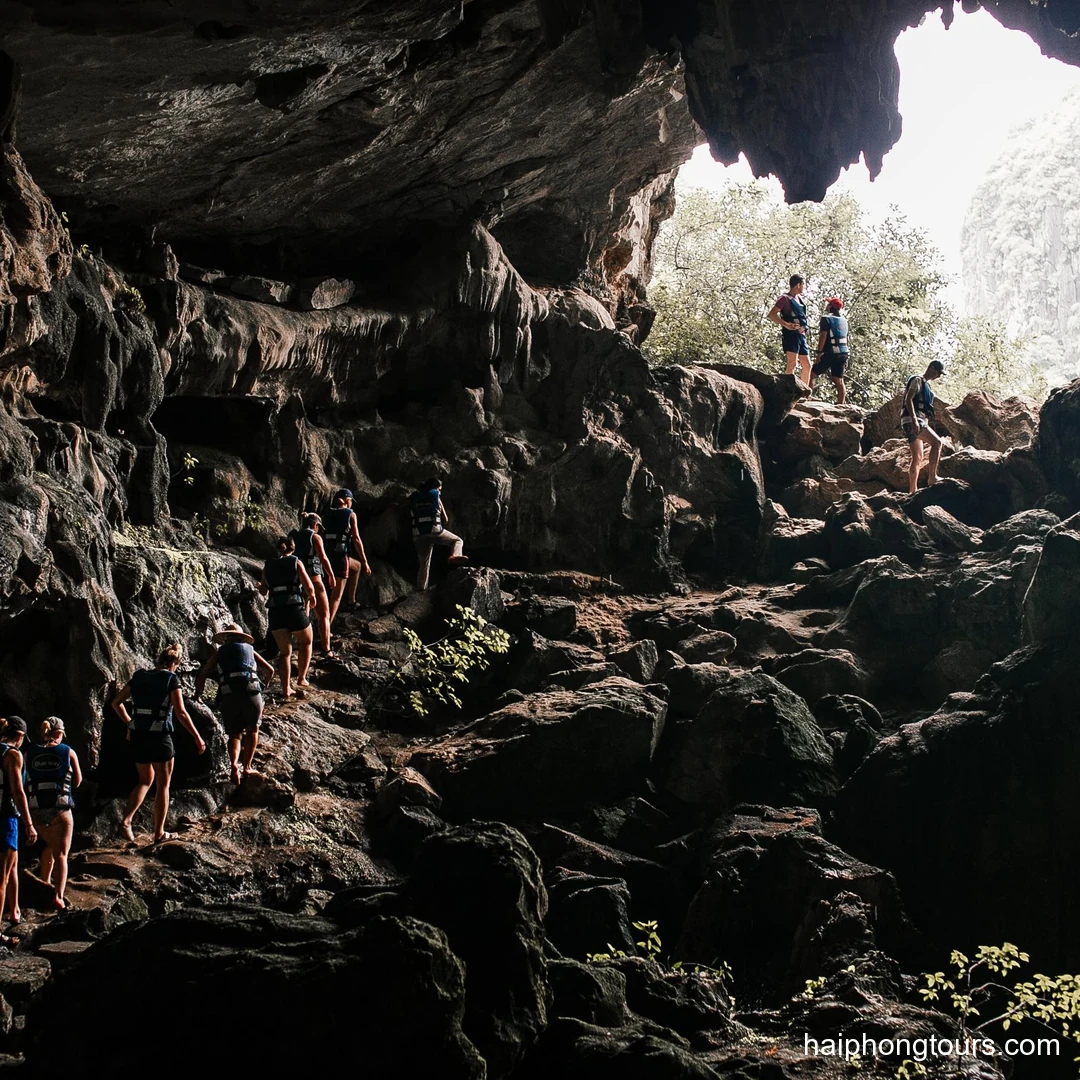
Lung Khuy Cave is another option around Quan Ba, but it includes an outdoor uphill approach. Use the cave guide to judge the climb. It should not be treated as an effortless wet-weather substitute simply because part of the visit is underground.
Use the stop to understand a working valley
Choose one question to discuss while the view is in front of you: where the fields lie in relation to the slopes, why houses cluster in certain places, or which land remains rocky. A local guide can connect what you see with water, cultivation and settlement instead of reciting only the hills’ nickname.
For children, ask them to find a house, a field and a route through the valley. Compare that picture with a later stop farther north. The contrast gives the journey a story without requiring another ticket or a long walk.
A roadside display or shop can be interesting too, but identify the product and producer before buying. A textile sold near a viewpoint is not automatically woven in the village you can see below, and a jar labelled “Ha Giang” does not explain its exact origin.
Keep the rest of the day balanced
A viewpoint and one substantial village, workshop or cave visit make a more coherent Quan Ba day than trying to collect every named stop. Decide where you will have a proper meal and which activity gets the most time. If the overnight is farther north, protect the arrival margin rather than extending a cloud wait into a late road journey.
The Dong Van Karst Plateau guide helps place Quan Ba within the wider landscape.
Would you like help fitting this experience into your trip? Contact us with your travel dates, starting point, available time and group size. Tell us about walking limits or special interests so we can suggest a practical itinerary.