
A seafood dinner can be a highlight of Quan Lan, but the wrong assumption can make the bill as memorable as the meal. Choose a restaurant near the part of the island where you are staying, distinguish a plated dish from seafood sold by weight, and agree the complete order before the kitchen starts. Fresh sa sung is an interesting shared dish; a bag of dried sa sung is a different purchase, not a cheaper version of the same restaurant portion.

Quan Lan village, Son Hao and Minh Chau are useful food-location labels. Do not treat every restaurant described as “on Quan Lan Island” as a short stroll from your room. For a first evening, eating near your accommodation is often more enjoyable than arranging an island-crossing journey for an unconfirmed menu.
Where to arrange a meal
Van Don’s tourism-business register lists the following named restaurants as operating businesses. These are useful names and village locations to give your host, not a claim that every kitchen serves continuously or that we have personally reviewed the food.
| Restaurant | Location in the register | How to use the location |
|---|---|---|
| Tuyen Doan | Thai Hoa hamlet, Quan Lan | A Quan Lan-side option to discuss when planning a village meal. |
| Bien Ngoc | Son Hao hamlet, Quan Lan | A separate Son Hao option; do not assume it is beside the central communal house. |
| Ngoc Chau | Ninh Hai hamlet, Minh Chau | A name to locate when staying on the Minh Chau side. |
| San Ho Do | Ninh Hai hamlet, Minh Chau | Another registered Minh Chau-area kitchen, not the same business as Ngoc Chau. |
The restaurant’s current location pin and your accommodation’s entrance are the two points that matter for dinner transport. If you need an electric vehicle, agree the return collection as well as the outward ride. An attractive lunch stop is not automatically a convenient late-evening choice.
Resort dining has a different role
Minh Chau Resort, near Minh Chau beach, advertises a restaurant offering shrimp, crab, swimming crab, mantis shrimp and sa sung. Its beach bar advertises coffee and cocktails. Those are venue offerings, not a promise that every species is available on every date, or that an outside dinner booking includes access to the resort’s other facilities.
At Angsana Quan Lan, Market Place lists Vietnamese and international dining with 07:00–23:00 venue hours. If you are not staying there, arrange your meal as a visitor rather than assuming a hotel restaurant is an unrestricted beach entrance. The Angsana stay guide explains the wider accommodation decision.
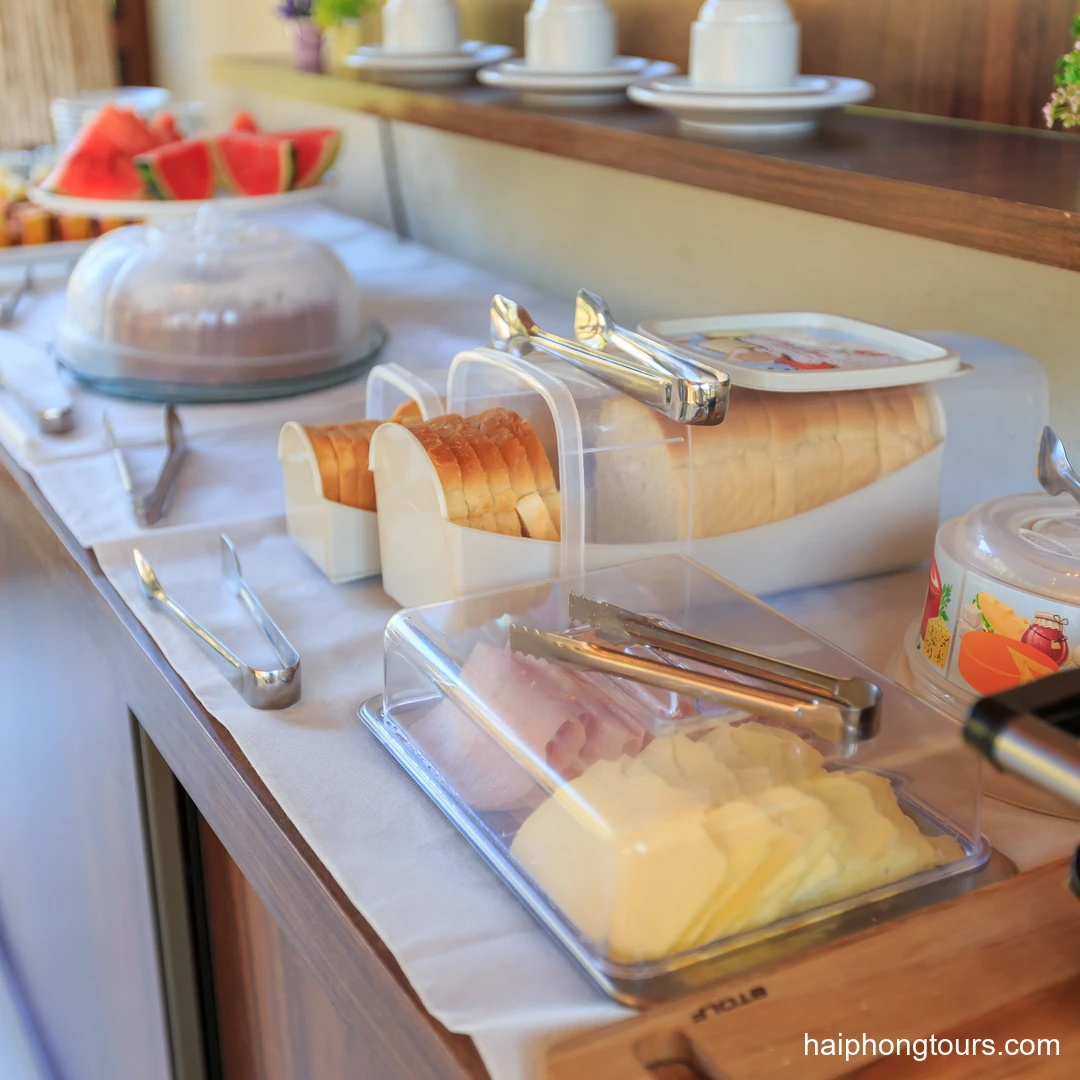
A published venue-opening window is not the same as a breakfast-buffet schedule or last kitchen order. For a late arrival, give the kitchen your likely arrival time and choose a simple agreed meal. This is more reliable than designing dinner around a photographed buffet that may belong to a group event.
Fresh sa sung and dried sa sung are different products
Sa sung is a marine worm associated with Quan Lan and Minh Chau. It needs careful cleaning to remove internal sand. A recognizable cooked dish is sa sung xao rau cu, fresh sa sung stir-fried with vegetables such as carrot, tomato, celery and leek. Recipes can include fish sauce, so the vegetable content does not make this a vegetarian dish.

Dried sa sung can be toasted or used in porridge and broth. If you want to taste it at dinner, specify whether the kitchen is offering a fresh stir-fry, a dried preparation or a broth containing it. These are different experiences and should not be compared only by the name on the menu.
Local processors clean and sort the fresh catch before drying it. Drying changes the weight substantially, so a fresh per-kilogram quote and a dried per-kilogram quote are not like-for-like prices. For a souvenir, compare the same product form, grade and net package weight. An unlabeled bag with an appealing verbal story is a poor basis for an expensive purchase.
Start with one shared cooked portion if this ingredient is new to you. There is no need to order it in several forms at the same meal, and no need to try it at all if the texture or ingredient does not appeal. Ordinary rice, vegetables and a familiar main can make a better first island dinner.
Understand the three ways a seafood bill is built
| Pricing method | What you need before ordering | Common misunderstanding to avoid |
|---|---|---|
| By weight | The species, price per kilogram, actual chosen weight and cooking charge. | A fish or crab shown to your table is not necessarily one fixed-price portion. |
| By plate | The plate size, preparation and price for that plate. | The cheapest displayed price may describe a smaller serving than the one proposed. |
| Set menu | The number of diners covered, named dishes and whether rice, drinks and extra orders are included. | A table menu and a per-person menu are not interchangeable. |
For weighed seafood, the basic calculation is the agreed kilogram price multiplied by the actual weight, with any disclosed extras added separately. Have that weight shown before cooking. Then settle whether steaming, grilling, sauces or a second preparation carry an additional charge.
Three useful phrases are “Tính theo cân hay theo đĩa?”, meaning “Is it priced by weight or by plate?”; “Đã gồm tiền chế biến chưa?”, meaning “Does that include the cooking charge?”; and “Tổng tiền món này là bao nhiêu?”, meaning “What is the total for this dish?” A written total on the order is more useful than several disconnected numbers.
Do not use an old photograph of a seafood price board as your dinner budget. The species, size and supply matter. Ask for the available choices within your meal budget, then select from those rather than ordering first and discussing the cost afterwards.
A sensible first order for two people
Our suggested starting structure is one cooked seafood main, one vegetable dish and rice, with a small shared sa sung dish if both diners want to try it. That is an ordering strategy, not a restaurant set menu. If the main is a large whole fish, skip a second large crab or shellfish platter until you know the portion.
Choose the preparation as deliberately as the ingredient. A simple steamed main and a stir-fried vegetable create a different meal from several fried or heavily sauced dishes. State whether chili should be served separately, and order additional food only after the first dishes make the portion sizes clear.
For a homestay dinner, send the number of adults and children, preferred meal time, budget basis and two or three acceptable mains. Agree whether the quote is for your whole group. Do not buy raw seafood at a stall and assume the host will store or cook it; kitchen labor, equipment and storage have to be arranged.
If you avoid seafood or have an allergy
“No seafood pieces” is not the same request as “no seafood ingredients.” Explain whether you avoid fish sauce, shrimp paste and seafood stock as well. For a vegetarian meal, agree an actual combination such as rice, vegetables and tofu if the kitchen can provide it, rather than accepting a seafood set menu with the visible fish removed.
For an allergy, discuss ingredients and cross-contact before choosing the restaurant. If the kitchen cannot explain its preparation arrangements clearly, choose a different meal provider. A resort menu with international dishes may give more choices, but the venue category alone does not establish allergy-safe preparation.
Fit the meals around the visit, not the other way round
For one night, keep arrival lunch close to your base, reserve one unhurried dinner, and arrange breakfast around the next boat transfer. On the Quan Lan village side, the heritage walk can fit before a nearby meal. On the Minh Chau side, there is no need to cross the island again solely to tick off another restaurant name.
Buy dried products after deciding how you will transport them. Keep the original label showing the maker, net weight, production information and storage instructions. Follow that label rather than assuming all dried seafood can remain in a hot vehicle. For an international flight, check the destination’s rules independently; local sale does not establish permission to import it.
Eating seafood, buying it and collecting it are separate activities. Use the supervised harvesting guide for permissions and activity arrangements, not a restaurant recommendation as permission to gather from the beach yourself.
Planning Quan Lan after Ha Long or a northern Vietnam trip? Contact us with your accommodation area, boat connection and dietary needs. We can help assess the transfer sequence so your first island meal is part of a relaxed arrival.