
Suoi Thau is a cultivated highland landscape where flower plots, crops and village paths create the visit. Go for an unhurried walk and the wider view, with enough flexibility for what is actually growing. It is more useful to confirm one field’s condition than to plan around a promise that the entire plateau will be in bloom.
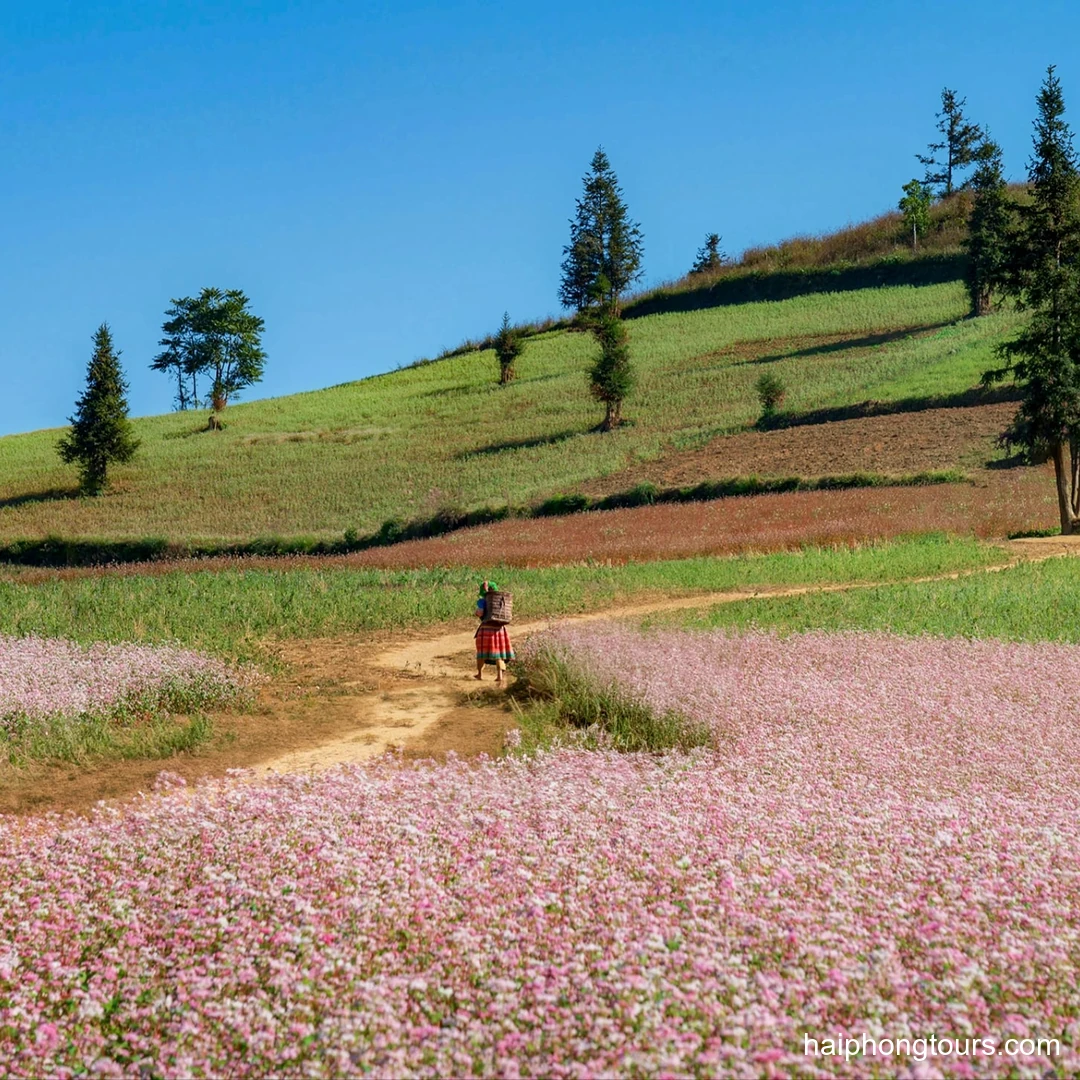
Use the Vietnamese name Thảo nguyên Suôi Thầu, xã Pà Vầy Sủ, Tuyên Quang. Older descriptions place it in Xin Man, Ha Giang. The spelling Suoi Thau is common in English, but other villages share similar names, so retain the commune and a confirmed entrance pin.

Understand the landscape you are visiting
Suoi Thau’s residents, predominantly Hmong, cultivate crops and flower plots in the upland setting. Official tourism descriptions mention buckwheat, mustard and cosmos alongside rice and maize, with views toward the Chay River landscape. These are working plots and locally managed visitor spaces, not one uniform public lawn.
That distinction changes how you visit. A flower garden may have its own entry arrangement, a path may lead to a household and a field edge may be part of farming work. Choose a permitted route and identify the person receiving visitors before entering a planted area.
If your wider journey focuses on western Ha Giang, compare the plateau with the more terraced landscapes in the Hoang Su Phi guide. They can complement each other, but one is not a substitute for the other’s crop or walking conditions.
Plan by what you want to see
| Your interest | The useful confirmation |
|---|---|
| Flower photographs | A recent image of the exact plot and whether it is open to visitors |
| Landscape views | A suitable viewing location and weather conditions for that day |
| Farming conversation | A grower or local guide who has agreed to receive you |
| A gentle walk | The actual surface, slopes and return distance from the vehicle |
| A family visit | A manageable walking area, toilet plan and a place for a break |
Seasonal descriptions are a guide to the type of landscape, not a booking guarantee. Planting decisions, harvest and weather can change the picture within the same season. Ask about the field you will visit shortly before the journey, especially if a particular flower is the main reason for going.
Use the right western approach
The ministry’s route description identifies approaches through the Bac Quang–Khuon Lung–Deo Gio corridor and from the Hanoi–Lao Cai expressway side via Bac Ha. These are regional route choices; they do not establish a scheduled bus delivering visitors to a flower field.
Have the driver choose the appropriate road for the actual origin, vehicle and conditions. Save the final entrance rather than a broad plateau pin. A car itinerary should specify where it parks, how far you walk and where it collects you afterward.
When combining the area with Thac Tien–Deo Gio waterfall, leave separate time for the waterfall’s stair route. A roadside flower stop and a descent to a waterfall use different amounts of walking energy. Do not build the driving day from map distance alone.
Make the walking visit simple
Begin with a short orientation at the entrance. Identify the permitted paths, the plots currently receiving visitors and the agreed return point. If several households manage separate gardens, clarify which entrance fee covers which area before you move between them.
Wear shoes suited to uneven or damp ground and carry water. Keep photography stops off the planted rows, even when another visitor has already made a track. Ask before using props, entering a shelter or taking a close portrait of someone working.
For a group, agree one meeting point and a realistic return time. Mobile photographs can make it easy to lose sight of companions among several plots. Keeping the walk to one understood area is more useful than wandering toward every distant patch of colour.
Arrange farm participation as a separate activity
A visit to a flower field is not automatically a farm class. If you want to join planting, harvesting or another task, obtain the grower’s agreement and a description of what is offered. The work depends on the season and should not be interrupted just to produce a photograph.
Pay the agreed visitor or hosting charge directly through the arrangement made. Purchasing a drink or renting clothing does not necessarily include entry to every plot or permission to handle crops. If an activity uses tools, let the host control how visitors participate.
Keep meals and accommodation dependable
Do not rely on a field-side stall for a full meal, a specific diet or overnight accommodation. Settle those needs in your chosen western base and bring the essentials for the walk. If staying in the Coc Pai area, have the property confirm the route to your selected entrance.
A current, comprehensive operator list and a uniform plateau ticket are not established by the public tourism descriptions. Use the provincial tourism portal to request a local referral. This is an information contact, not the booking desk for an individual garden.
Keep a useful alternative
If the flower plot is past its peak, decide whether the wider landscape still interests you. A separately arranged Nam Dan rock-field visit provides a different cultural focus, but it has its own approach and interpretation needs; it should not be added casually at the end of a full day.
Give Suoi Thau enough time for a respectful, locally agreed walk, and let the actual growing landscape determine the visit.
Would you like help fitting this experience into your trip? Contact us with your travel dates, starting point, available time and group size. Tell us about walking limits or special interests so we can suggest a practical itinerary.
