
Ban Gioc’s hillside pagoda gives you something the waterfall entrance cannot: time above the valley, with a religious complex in the foreground rather than a queue for a close-up photograph. Truc Lam Phat Tich Ban Gioc Pagoda is best treated as a separate uphill visit, not a five-minute viewpoint attached to your waterfall ticket.
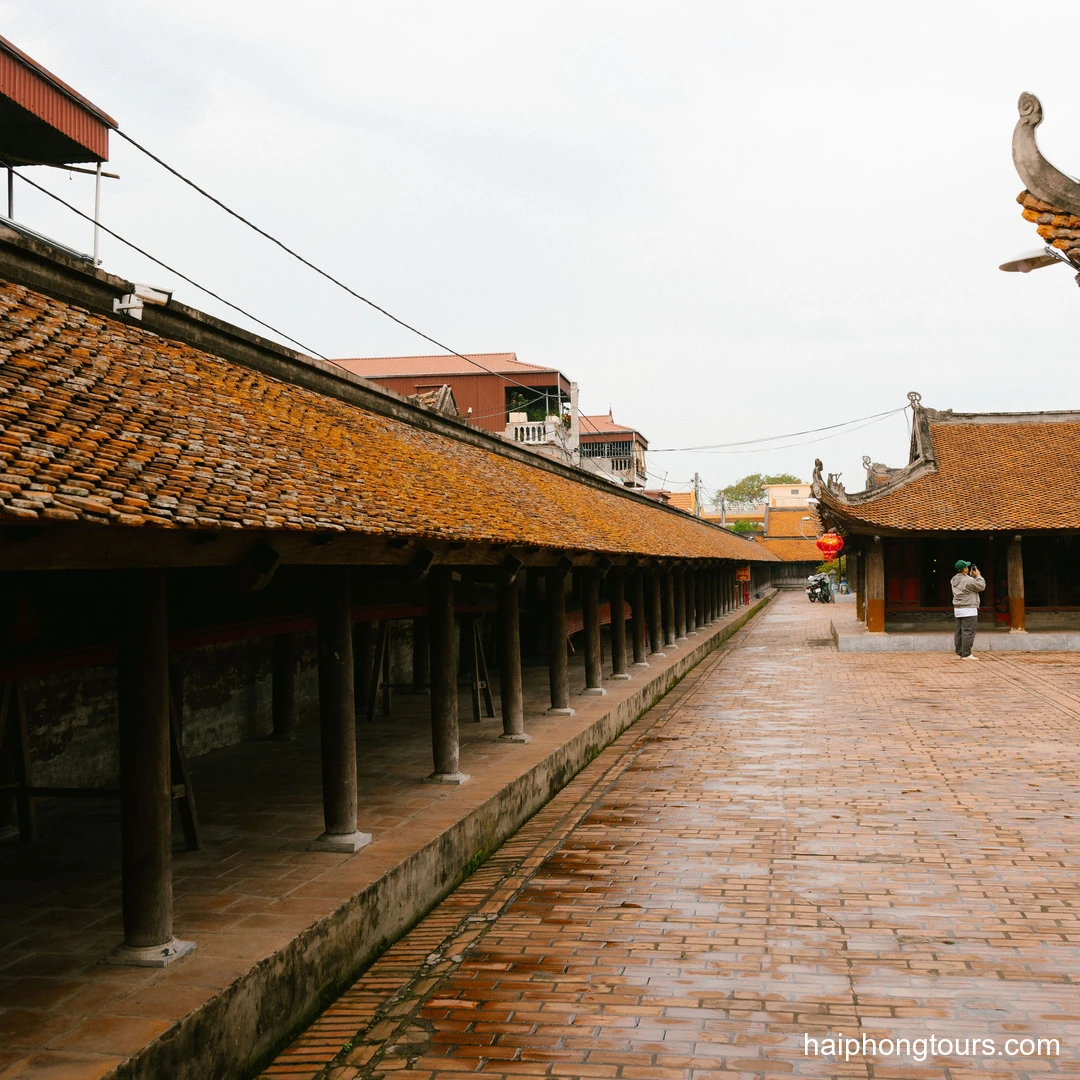
Choose it if your group enjoys temple architecture and can manage a hillside approach. On a tight day from Cao Bang, protect enough time for the descent and the return drive. The comprehensive Ban Gioc waterfall guide covers the falls themselves; this article focuses on the pagoda visit.
Where the pagoda sits
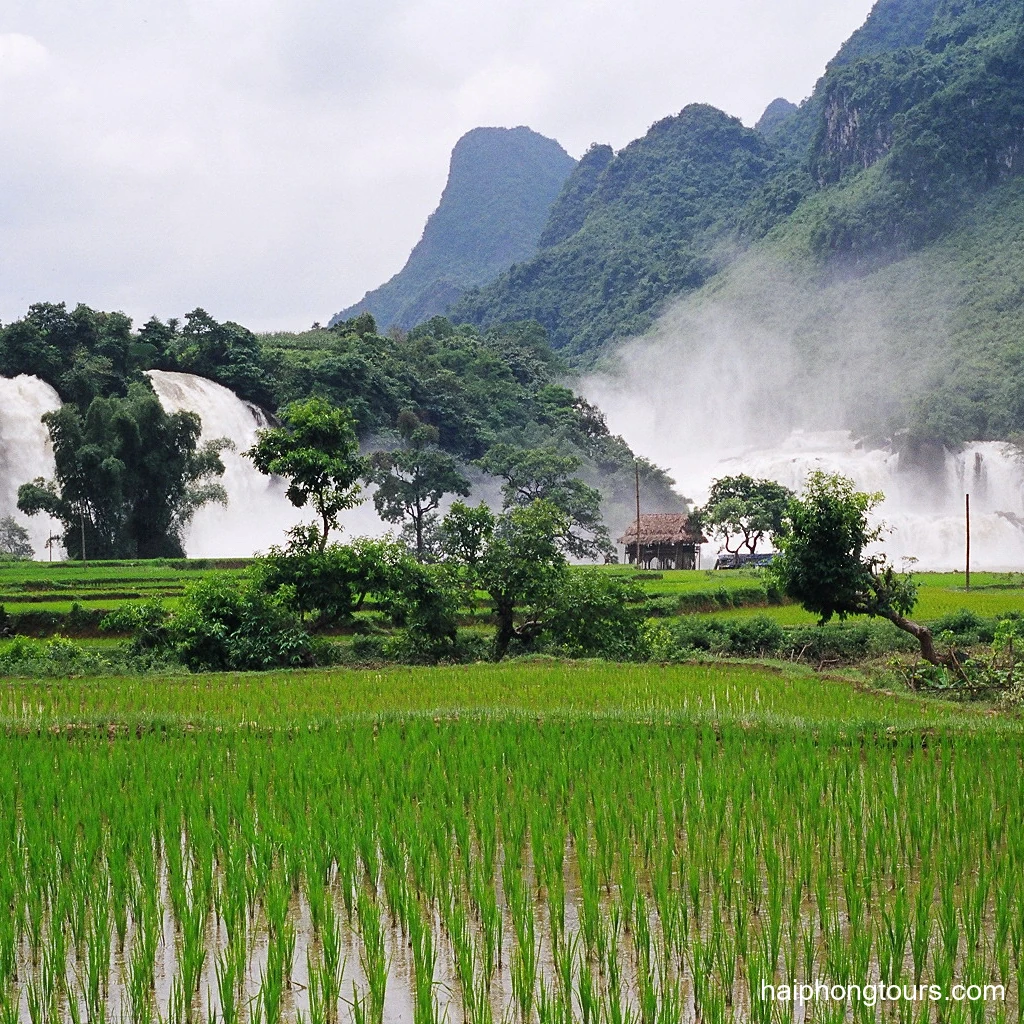
Use the name Chùa Phật tích Trúc Lâm Bản Giốc when arranging transport. The complex stands on Phia Nham, also written Phja Nham, in the Dam Thuy area. Vietnam’s tourism database places it around 500 metres from the waterfall. That is a location description, not a measured footpath from the waterfall gate or a promise of a short level walk.
Have the driver identify the pagoda’s actual vehicle access and collection point. If you have already visited the waterfall, do not assume the same parking area serves both stops. A short road repositioning can be more sensible than walking along a road simply because the destinations look close on a map.
For planning, reserve around 45–75 minutes at the pagoda, excluding the transfer between entrances. This is an allowance for an unhurried visit, not an official tour duration. A person who needs frequent rests may want longer; a group interested mainly in the courtyard outlook may choose less.
A useful sequence through the complex
The site uses traditional Vietnamese architectural forms, including timber construction and tiled, upturned roofs. Its religious spaces include the Tam Bao main hall, Quan Am area, ancestral hall and other shrines. It is an active place of worship, so the sequence below should always give way to ceremonies and local instructions.
- Pause near the entrance and bell pavilion. Start by orienting yourself rather than immediately climbing toward the highest visible roof.
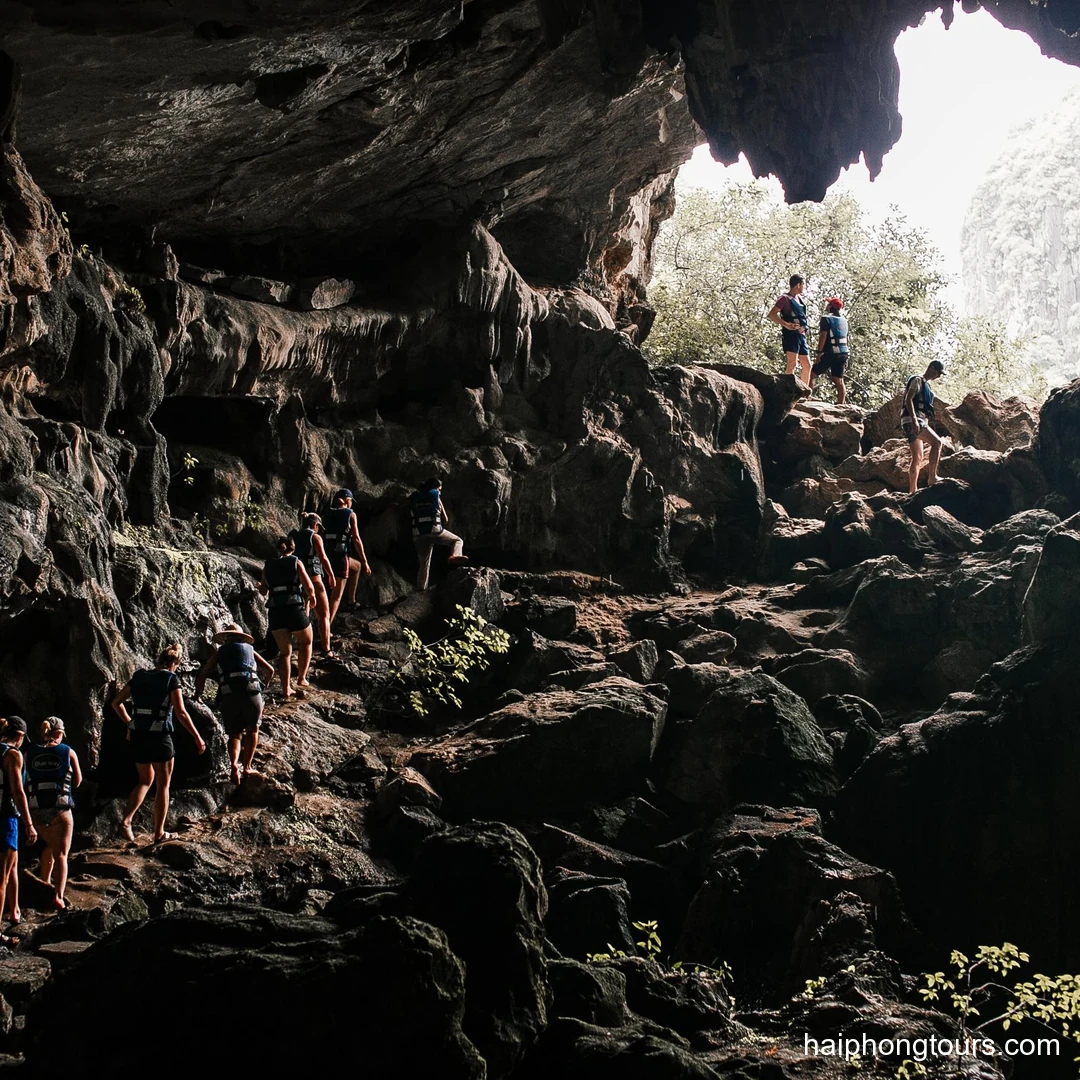
- Continue toward the Quan Am statue and main hall. The approach passes a natural opening in the hillside. Look from the public route; this is not an invitation to explore a cave.
- Choose the religious spaces that are open to visitors. Leave room for worshippers and avoid stepping across a prayer area to get a photograph.
- Finish with the courtyard outlook. This lets you enjoy the waterfall, fields and surrounding hills without making the entire visit a race for the view.
A guide can help distinguish a Buddhist figure from a historical figure honoured elsewhere in the complex. Without interpretation, choose a few features to understand rather than attempting to identify every statue. The courtyard and architectural details can still make a rewarding visit if a hall is temporarily unavailable.
The climb is part of the decision
This is a hillside religious site, not a verified step-free attraction. Do not use an unverified stair count to decide whether an older relative can manage it. What matters is the actual ascent from your drop-off, the condition of the surface and whether the person can also descend comfortably.
Wear shoes that grip, keep a hand free and take photographs from a stable stopping place. In rain, slow the descent and avoid rushing to a vehicle because the rest of the itinerary is late. For a group with mixed mobility, agree an alternative waiting place and reunion time before separating. Do not leave someone below on the assumption that seating, refreshments or toilets will necessarily be available there.
If both the waterfall outing and a cave visit are already in your day, review the total walking load. Three individually manageable stops can become a tiring sequence. Dropping one is more useful than promising that everyone will enjoy the same pace.
Photography and religious etiquette
Clothing covering shoulders and knees is the straightforward choice for entering worship spaces. Follow signs and staff instructions about footwear and indoor photography. Keep conversation low around an ongoing prayer or offering, and do not arrange people in front of an altar while worshippers are waiting.
For the valley view, leave clear space on the public walkway. A hazy or rainy day may reduce how much of the landscape you can see, so choose the pagoda because the site itself interests you, not because a photograph online guarantees identical conditions. A drone is not a substitute when the view disappoints: this is a border-area religious destination, and no flying permission is established by this guide.
Donations and any charge requested for a service should be kept distinct. Do not treat a donation box as a compulsory ticket, or assume that the lack of a published ticket on a webpage makes every visit and service free. The available primary descriptions do not provide a dependable daily admission schedule, so arrange the intended visit with your local driver or guide before departure.
Combine it with the waterfall without rushing
If arriving from Cao Bang for the day, decide whether the pagoda or another secondary stop has priority before the car sets off. Put your chosen visit explicitly into the agreed itinerary. Otherwise, a long waterfall lunch or a delayed departure can leave the pagoda as a rushed final addition.
For an overnight nearby, the pagoda can occupy a separate daylight window rather than being squeezed into the same hour as the falls. The Saigon Ban Gioc Resort guide explains one local accommodation option. A nearby room creates flexibility, but it does not establish an early-opening or after-dark temple visit.
Allow the visit to end naturally at the agreed vehicle point. There is no need to extend into unmarked hillside paths to make the outing feel complete. The strongest version of this stop is a measured ascent, a respectful look at the complex and enough time to appreciate its setting.
Need to balance the falls, pagoda and your return journey? Contact us with your overnight base, travel date and walking limits. We can help assess a realistic sequence without treating the hillside visit as a compulsory add-on.