
To finish a Van Long rowboat visit in Gia Van and still protect a fixed train, set a hard leave-by time before you board. The live Hai Phong Tours guide recommends planning about 1 to 1.5 hours for the boat outing while confirming the actual route and duration at the station. Base the cutoff on that answer, the booked train and the road journey accepted by your driver.

Prearrange the vehicle from the Gia Van visitor boat area using a pin that the driver accepts. Ninh Binh tourism material says visitor tourism at Van Long has operated since 1998 and that travelers tour the lagoon by boat. Give the driver your train number, departure time, passenger count and luggage details; no exact Hai Phong Tours transfer product is verified for this handoff.
Build the leave-by time from the train backward
Start with the current ticket or official booking record. Check the departure date, train number, Ninh Binh Railway Station, displayed time, passenger names, and required identification. Then consult the railway’s current passenger guidance for the applicable reporting requirement. Do not use a remembered schedule or an old screenshot when the live booking is available.
Ask the vehicle provider how much time it requires from the accepted Van Long roadside pickup to the station entrance under the expected conditions. Add separate margins for disembarking, walking from the landing, locating the vehicle, loading bags, reaching the station entrance, and completing passenger checks. The provider should see the fixed train deadline before agreeing to the pickup.
The resulting leave-by time is the moment you must end the attraction activity, not the time you hope to meet the car. If the boat process cannot reliably finish before that point, shorten or skip the boat visit. A fixed train should not depend on completing one more activity segment.
Confirm the boat finish and roadside exit
Van Long covers a protected wetland spread across several communes, while the traveler boat area is on the Gia Van side. Ask where the rowboat returns and which road-accessible point a prearranged vehicle should use. The live Hai Phong Tours guide lists for boat enquiries and advises confirming the route, total charge and latest departure.
Check whether weather, water level or cave access changes the route or finish. Use 1 to 1.5 hours only as a planning allowance, not a guaranteed duration. If the boat team cannot confirm that the activity fits your leave-by time, remain on land or move the lagoon visit to another day.
Make sure the driver has the road pickup, not merely an attraction-area label or water-side marker. A driver who knows “Van Long” generally can still wait at the wrong access point. Ask for written acceptance of the exact pin and a phone contact for the arriving vehicle.
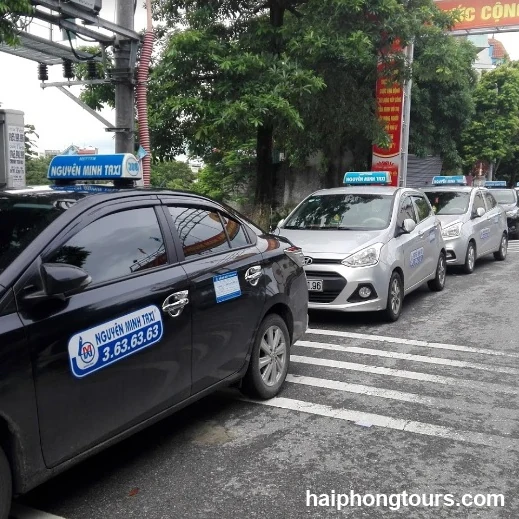
Keep luggage out of the handoff problem
Decide where the luggage will be during the boat visit. If it remains at a hotel or in a vehicle, confirm who controls it and how it reaches the station with you. Do not leave bags with an unidentified person or assume a new driver will collect them from a separate place.
Give the provider the complete load: adults, children, large suitcases, cabin bags, and bulky items. A short pickup description does not prove that the assigned vehicle has enough luggage space. Keep tickets, identification, medication, phones, and charging equipment with the passengers.
If luggage must be collected after the lagoon, include that stop and loading time before accepting the final leave-by time. A boat-to-car transfer and a luggage collection are two different steps, even if they appear close on a map.
Use a simple activity cutoff
Tell everyone in the group the final time for starting the return from the activity. One adult should hold the train details and watch the cutoff. The group should not split unless it has a precise regrouping point and the lead passenger can contact every member.
Before boarding, ask whether the expected boat process fits the remaining window. If the answer is uncertain, choose a shorter visit or remain on land. Once on the water, the group cannot treat the fixed train as if it were controlling the boat’s return.
When the cutoff arrives, move directly to the accepted roadside pickup. Do not add a meal, shopping stop, or unplanned viewpoint. If the vehicle is not visible, contact the driver from the agreed pin rather than walking toward a vague alternate location.
Separate tourist assistance from transport
Official tourist-assistance channels can help clarify attraction information or direct a visitor to appropriate support. They do not replace a pre-arranged ride to a fixed train. Do not arrive at Van Long expecting an assistance desk to source a suitable vehicle immediately.
If a problem arises, describe the location and issue accurately, but continue to work with the booked driver or provider on the road transfer. Emergency or support contacts should be used for their intended purpose, not as a substitute dispatcher for ordinary travel planning.
Prepare for a late boat or missing vehicle
If the boat returns late, contact the driver before reaching the road exit. State the exact pickup pin and the remaining train constraint. Ask whether the booked train can still be protected without unsafe rushing. The driver, not the passenger, must decide what the road journey can reasonably support.

If the car is missing, call the confirmed driver or dispatcher and remain at the accepted point when it is suitable. Set a short decision rule for replacement transport through the responsible provider. Do not enter an unidentified vehicle or move the group and luggage to another pin without telling dispatch.
If the train can no longer be protected, stop treating speed as the solution. Use the railway’s current official process to determine what can be done with the ticket. Do not assume transfer, refund, or use on another train. Confirm the next valid journey before arranging another station ride.
Final checklist
- Verify the booked train, passenger names, station, and reporting requirement.
- Calculate a hard boat leave-by time with the driver.
- Confirm current boat operation, finish process, and road-side exit.
- Send the driver the accepted Van Long pickup pin and train details.
- Decide where every bag will be and include any collection stop.
- Keep tickets, identification, contacts, and pins offline.
- End the activity when the cutoff arrives.
- Use the official railway process if the train can no longer be protected.
The safe sequence is train first, activity second: define the deadline, confirm the boat finish, secure a road pickup, and leave without adding another stop. A car at an attraction-area pin is not enough; the driver and passengers must share the same roadside exit and fixed-train constraint.
Useful guides for your trip
Would a private transfer make this journey easier? Contact us with your travel date, exact pickup and drop-off, number of travelers and bags. Include any flight, train or cruise deadline so we can assess a suitable plan and quotation.