
Keep occupants out of the traffic lane and use available lights or reflective equipment without facing approaching drivers with glare. Share an exact location and road direction. A dark shoulder may still be unsafe for inspection or wheel work.

Improve person and vehicle visibility during a nighttime breakdown without standing in a live lane.
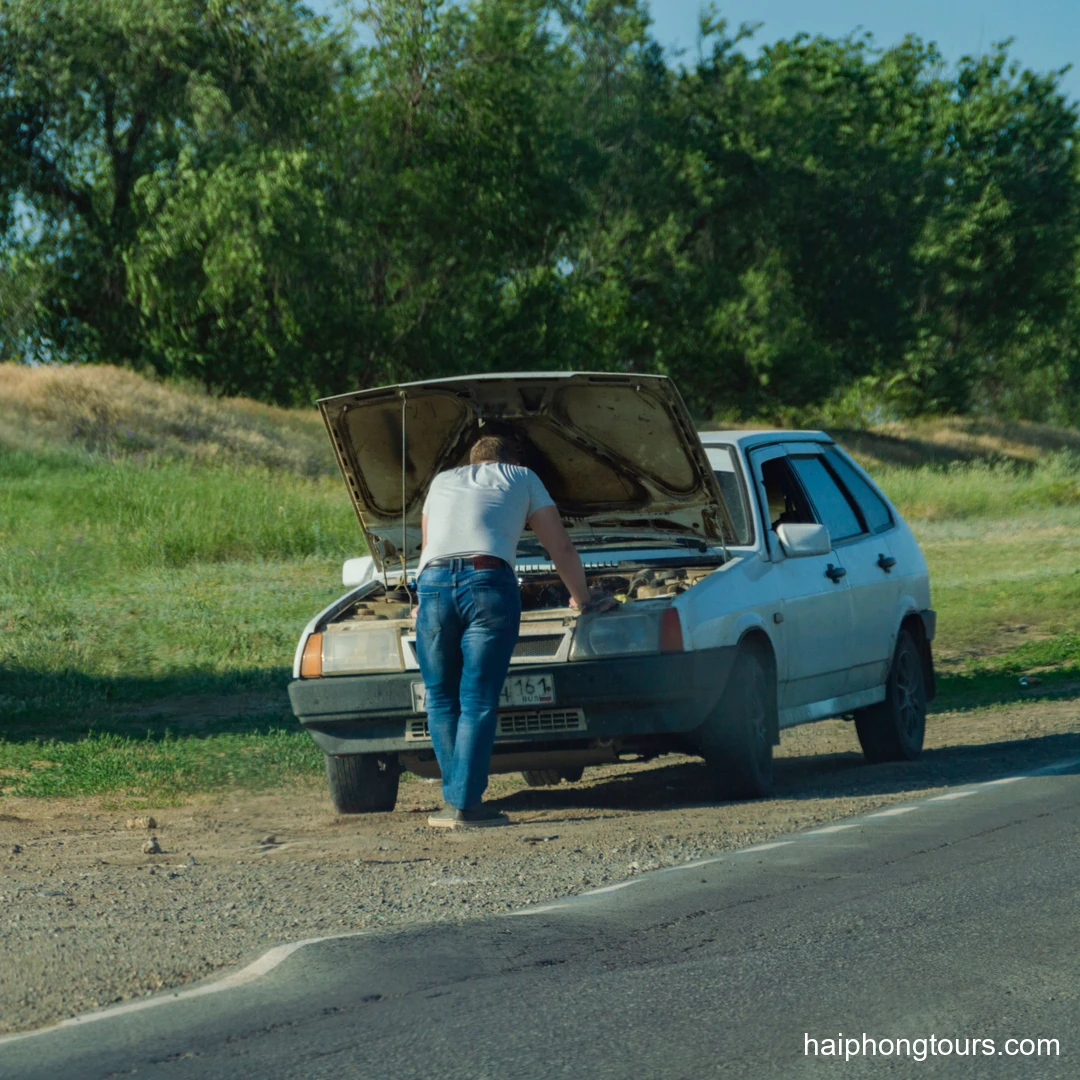
Steps for this situation
Make the stopped vehicle visible
Use hazard lights, vehicle lighting and warning equipment as appropriate to the road and conditions. Follow current law, signs and authority directions for any warning placement.
Never step into fast traffic merely to place a warning device. At night or in poor visibility, keep people away from the carriageway and use reflective equipment if available without assuming it makes the location safe.
Position occupants safely
Decide whether remaining in or leaving the vehicle creates less risk. Consider the traffic side, barriers, weather, fire, flood, a steep verge and the needs of children or reduced-mobility passengers.
Do not cross an expressway or stand between the disabled vehicle and approaching traffic. Follow staff or emergency directions when they specify a refuge, exit or protected waiting place.
Keep people clear of live traffic and immediate hazards while arranging help. For fire, injury, floodwater or another life-threatening situation, request the appropriate emergency service first and follow its directions.
Would a private car with a driver fit your onward travel better? Contact us with your travel date, pickup, destination, group size and bags to ask about a suitable ground-travel plan and quotation.
