
If you lose a passport or phone in Ha Giang, pause the next travel commitment and establish a working contact first. The item may still be at a lunch stop or in a bus seat, but an onward journey can make recovery and any official report much harder. Record where you last had it before the group moves on.
A missing phone primarily affects communication, accounts and bookings. A missing passport also affects identity, accommodation registration and the documents needed to leave Vietnam. Treat those as separate problems even when both items disappeared in the same bag.
Start with a precise recovery message
Contact the last accommodation, restaurant, driver or bus operator using the details on your booking. Give the service date, passenger name, seat or cabin if known, approximate time and a description of the item. For a phone, describe its model, colour and case. For a passport, provide the holder’s name privately without posting a full document image in a public chat.
A useful message is: “I travelled from [pickup] to [drop-off] on [date], booking [reference]. I last saw [item] at [place/time]. Please check [seat, room or table]. I can now be reached on [new number]. If it is found, please keep it securely and tell me the collection location.”
Arrange collection with a named person. Verify a request for delivery money through the business contact you already know. If someone sends a live location suggesting theft, do not pursue or confront them yourself. Preserve the information for the police.

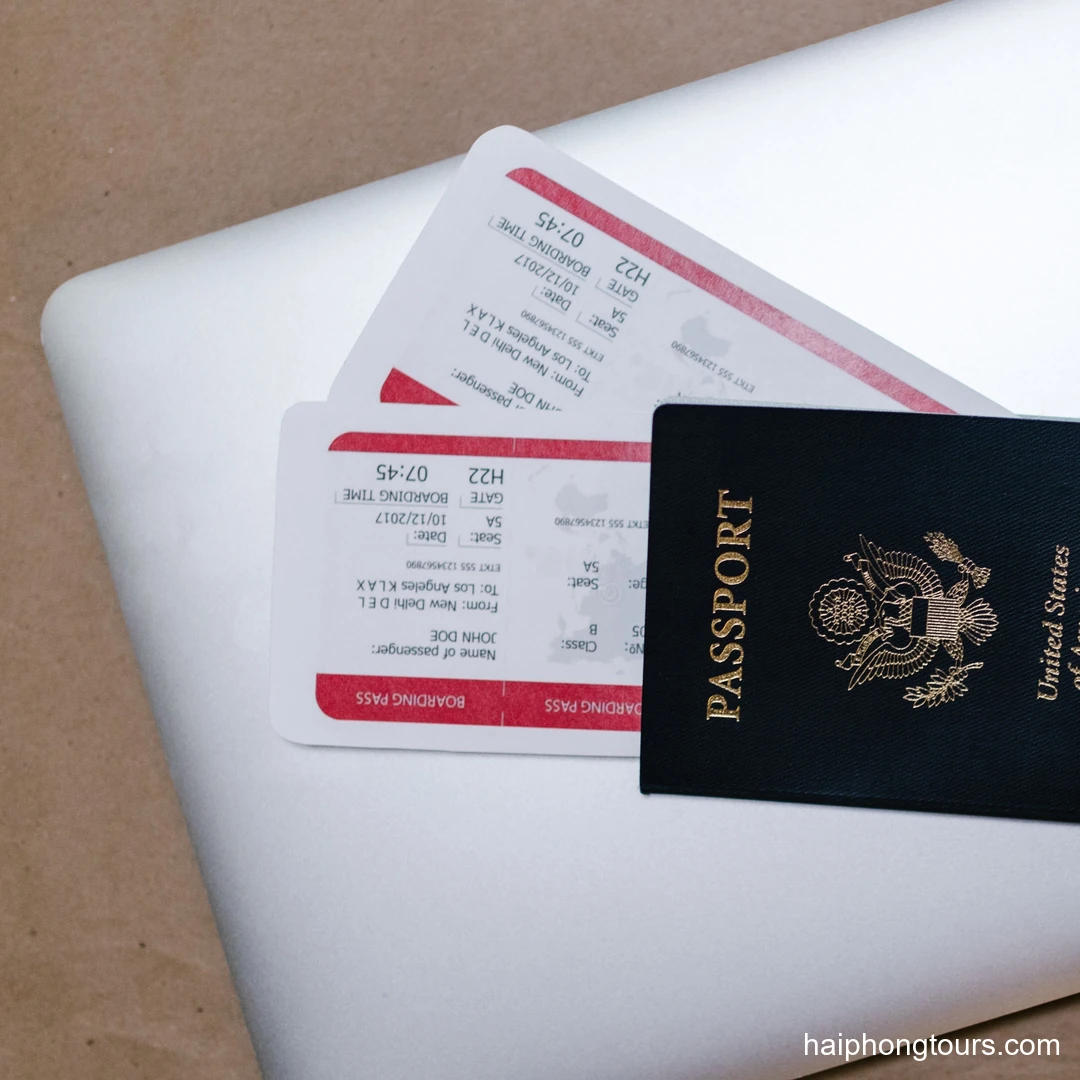
If the passport is missing
- Identify the locality of the loss. Write down the town or village and the most likely location, even if your next hotel is elsewhere.
- Contact the appropriate local police. Ask your accommodation or operator for language help and the police office responsible for that place.
- Contact your own embassy or consulate. Explain your nationality, location, passport loss and next international departure.
- Ask about the Vietnamese immigration step. A replacement passport or emergency travel document does not, by itself, settle the visa or exit-document requirement.
- Change travel bookings only with a realistic process in hand. Keep the airline and next accommodation informed while appointments and documents are arranged.
Australian consular guidance specifically says that the police report must come from the office with jurisdiction over the place of the loss. British guidance likewise directs travellers to report where the passport was lost or stolen and explains that an emergency travel document requires a Vietnamese exit-visa process. These examples show why immediately leaving Ha Giang for another region can complicate the paperwork.
Requirements vary by nationality and circumstances. Ask your consular service which originals, photographs, forms and appointments apply to you. Keep copies of the police report for the immigration process and any insurance claim. Do not assume another traveller’s replacement timeline will apply to your case.
One verified consular contact example
Australian nationals can contact the Australian Embassy in Hanoi through its published telephone service, which also connects to its consular emergency arrangements. Its published address is 8 Dao Tan Street, Giang Vo Ward, Hanoi. Contact it before travelling to the building. Travellers of other nationalities should use their own government’s official consular service, not an agency advertising passport replacement.
Check your permission to stay while the replacement is being arranged. Do not assume a delay automatically extends your visa or that a photograph of the missing passport is enough for a flight, a border-area check or a new hotel registration. Get the answer from the relevant authority and the service handling your booking.
If the phone is missing
Use a trusted device to access the manufacturer’s official lost-device service. Apple provides Find My and Lost Mode; Google provides Find Hub for supported Android devices. Available actions depend on the device, its settings and connectivity. Follow the provider’s instructions to secure it and consider the consequences before erasing it.
Contact your mobile provider about suspending the SIM and protecting the number. Inform your bank if the lost phone could expose banking access. Use official account-recovery channels; never share a password or one-time code with someone claiming they can locate the phone. A recovery message that asks you to disable security deserves particular caution.
Tell the current accommodation, next driver and tour organiser which number now works. Messaging apps may still be attached to the old number even when a replacement SIM provides data. Ask each service to acknowledge the change so an airport driver is not calling the missing phone the following morning.
Rebuild the next twenty-four hours
| Practical need | Useful action |
|---|---|
| A place to stay | Explain the document problem to the accommodation and follow its registration instructions before moving to a new property. |
| Money | Use a separately stored card or contact your issuer; do not give a helper access to your banking credentials. |
| Transport | Send the new callback number, pickup pin and booking reference to the actual dispatcher. |
| Stored suitcase | Tell the Ha Giang depot if collection will be delayed and agree who may collect it. |
| Insurance evidence | Save the report, receipts, item details and communications privately. |
The SIM and connectivity guide helps distinguish a replacement data connection from a working telephone number. The Ha Giang transport guide helps plan the next road journey after the document arrangements are clear.
Useful guides for your trip
Would you like help fitting this experience into your trip? Contact us with your travel dates, starting point, available time and group size. Tell us about walking limits or special interests so we can suggest a practical itinerary.
