
After crossing O Quy Ho from Sapa, the map presents a choice that is easy to miss: continue to Lai Chau city, turn toward the tea-growing valleys, or leave the main road for a village stay. Choosing the right branch matters more than collecting another viewpoint.
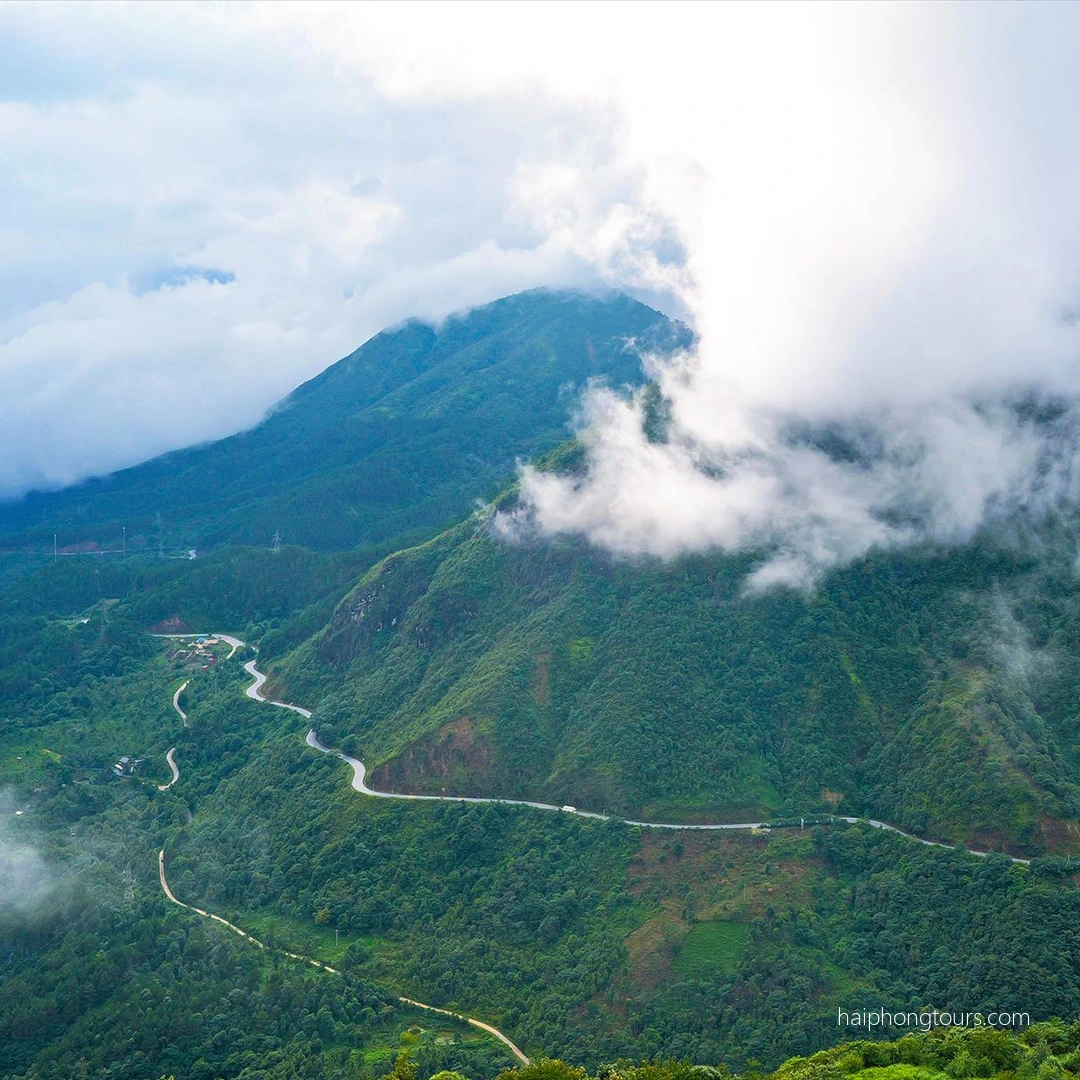
Binh Lu and the former Tam Duong town area work best as a planned stop or a gateway to a specific village. They are not another name for Lai Chau city. If you want only a meal and a short visit, keep the onward vehicle with you. If you want a homestay, arrange its exact final approach before the driver drops you off.
Understand the names before booking
Older accommodation descriptions and road signs may say Tam Duong, while newer official descriptions use Binh Lu for the former town area. The broader Tam Duong name also appears in tourism and tea branding. A booking message should therefore include the village or business name, not only the old district label.
The main road choices are the QL4D direction toward Lai Chau city and the QL32 direction toward Tan Uyen and Than Uyen. Villages around Khun Ha and the mountain slopes require a further local turn. A through vehicle on one corridor cannot be assumed to serve every address on another.
Use Vietnamese names alongside your saved pins: Bình Lư, Tam Đường, Khun Há, Sì Thâu Chải, Bản Thẳm. Several northern villages share similar names; “Lao Chai” alone is especially unhelpful when the intended stay is Lao Chai 1 in Lai Chau rather than a village near Sapa.
Choose one of three ways to use the stop
| Plan | Best reason to choose it | Transport arrangement |
|---|---|---|
| Short through-road stop | You want lunch and one accessible visit before Lai Chau | The onward car waits; luggage remains secured |
| Village overnight | You want time with a host, a meal and a local walk | Agree the village pickup point and final lane separately |
| Continue along the tea corridor | Your next night is around Tan Uyen or farther south | Book the correct QL32 direction rather than a Lai Chau-city transfer |
A short stop can be worthwhile without pretending it is a complete destination. Conversely, a village night loses much of its value if you arrive after dinner and leave before breakfast. Decide how much time you can actually give it before selecting accommodation.
For a short stop, choose one main activity
Tien Son Cave: a focused cave visit
Ask for Động Tiên Sơn, Bình Lư and confirm the public visitor entrance. This is a more contained stop than a detour involving a village meal and a long walk. Use the Tien Son Cave visitor guide for the open section and practical cave questions.
Tell the driver how long to wait and where to meet afterward. Wear shoes that grip and keep a light layer accessible. If anyone has difficulty with steps, check the actual approach before paying rather than assuming a roadside attraction is step-free.

Tac Tinh Waterfall: make the walking part explicit
A waterfall stop is not just the drive to a pin. Ask where the vehicle can stop, how much of the approach is on foot and whether the path is suitable after recent rain. Leave enough time for the return walk; reaching the viewpoint is only half the visit.
The Tac Tinh Waterfall guide explains the visit and local water-protection considerations. Do not assume that a scenic pool is an authorized swimming area. If conditions are poor, change the activity rather than following an informal shortcut.
A village meal: book the receiving host
For travelers more interested in people than geology, a pre-arranged lunch and a short village walk can be the better stop. Ask who will receive you and whether there will be someone to interpret. A driver stopping beside a village is not the same as a hosted visit.
Ban Tham is a useful starting point for learning about Lu weaving and a locally hosted experience. Ask whether a demonstration is actually available on the day; daily work does not run to a tourist timetable.
When a village night makes more sense
Choose an overnight if you want an evening meal, quieter early hours and time to walk without watching the car clock. Two distinct options are Si Thau Chai and Lao Chai 1 in Khun Ha. Read the individual guide before treating them as substitutes.
Ask the host for a short video or photographs of the sleeping area, bathroom and access lane. Specify whether you need a private room, a private bathroom or simply a private sleeping space; those are different requests. Check the meal price separately and explain food restrictions before ingredients are bought.
For the vehicle, confirm the largest size that can reach the agreed meeting point. If a smaller local transfer is needed, ask who provides it, whether it carries your bags and what happens in rain. Do not arrive with a large suitcase and discover that the quoted transfer ends at a steep lane.
Continuing toward Tan Uyen and Than Uyen
If the next part of your journey follows QL32, a deliberate stop on the Binh Lu side can avoid unnecessary travel into Lai Chau city and back. Compare the entire route, including the accommodation pin, rather than only the headline town-to-town distance.
Tea scenery is not automatically a visitor attraction with public access. Use the Tan Uyen tea-hills guide to distinguish a landscape stop from a farm or factory visit. A roadside photograph, a guided walk among tea bushes and a production tour need different arrangements.
Do not build the journey around a planned tunnel or expressway seen in a news story. Infrastructure announcements can describe construction or future connections, not the road your driver can use today. Ask the transport provider to quote the currently usable route.
How to travel without a motorbike
A pre-arranged car is the simplest option when you want a stop and still need to reach another town. Send a brief sequence: pickup, activity, lunch, final address. Ask whether waiting and the village detour are included; a direct transfer price may exclude both.
For buses, verify the named stopping point and whether the vehicle actually serves that side of the junction. Do not rely on the possibility of flagging down a passing coach. A safer arrangement is a confirmed drop-off with the host or local driver already expecting you.
If the final plan is Lai Chau city, compare with the direct Sapa to Lai Chau options. If the only affordable transport is a through bus, it may be better to reach the city first and arrange an outing later rather than create an uncertain roadside connection with luggage.
Two workable planning examples
Transfer-day version: leave Sapa after breakfast, cross the pass with a limited number of safe stops, have lunch in the Binh Lu area and choose one short activity. Continue to the hotel in Lai Chau while it is still light. These are planning blocks, not published driving times.
Village-night version: travel from Sapa to the agreed meeting point, arrive before lunch or in early afternoon, and let the host plan the walk around local conditions. Have dinner at the accommodation and continue after breakfast. This gives the stay a purpose beyond being somewhere different to sleep.
For either version, drop an activity if the pass crossing is slow. Do not recover lost time by asking the driver to hurry on wet curves or by finishing an unfamiliar footpath in darkness.
What to confirm before paying
- The exact stop and final accommodation pin, including the correct village.
- Whether the vehicle waits and how extra waiting is charged.
- Who provides any final-lane transfer, with luggage arrangements.
- Which meal, admission and guide services are included.
- A practical fallback if the chosen walk or approach is unsuitable.
For help linking this stop to Sapa, Lai Chau or the tea valleys, send Hai Phong Tours your overnight addresses and the experience you want. A clearly chosen branch makes a much better day than an ambitious list of places scattered across the map.