
Bus 109 is the direct public-bus option currently identified between Noi Bai Airport and My Dinh. It is the only direct airport-to-coach-terminal pair in this group of Hanoi terminals. Complete the arrival and baggage process first, then confirm whether the onward coach actually boards inside My Dinh Bus Station.
An airport-authorized taxi or recorded licensed vehicle is more practical after flight delay, with several bags, limited mobility or a fixed coach. The public option works only when bus 109, its My Dinh endpoint and the coach check-in all leave a safe margin.
Begin at the actual airport terminal
Noi Bai has separate domestic Terminal 1 and international Terminal 2 passenger facilities. Use the issued flight and arrival information to identify the starting terminal. Do not send a driver or search for the bus from a terminal saved in an old itinerary.
Your usable departure time is when immigration or domestic arrival is complete and every checked bag has been recovered. It is not the scheduled landing. Report a missing bag before leaving arrivals, then update the coach operator if tracing reduces the connection margin.
Ask current airport or bus information for the bus 109 boarding point, direction, operating window and My Dinh endpoint on the travel day. Do not freeze a stop or timetable from a screenshot.

Confirm that My Dinh Bus Station is the right endpoint
My Dinh Bus Station is the coach terminal at 20 Pham Hung. It is not My Dinh National Stadium. Use the full facility name, especially when sharing a pin with a driver or asking airport staff for the public-bus route.
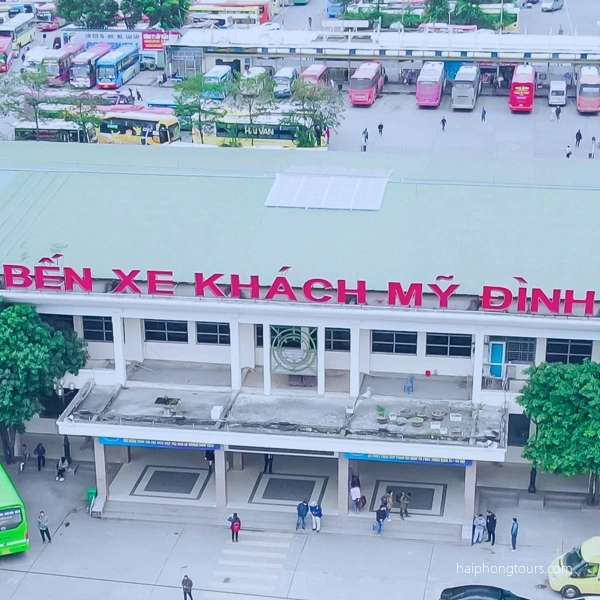
The issued coach can still require an operator office, roadside point or hotel pickup instead of a terminal bay. Check the operator name, reporting time, counter, bay and current loading instruction before leaving Noi Bai. The Hai Phong Tours guide to Hanoi bus stations helps separate the major terminals, but the ticketed operator remains the authority on your exact coach.
If boarding is outside My Dinh Bus Station, define the last mile from the actual bus 109 endpoint to that point. Do not arrive at the terminal and assume the operator will collect you without written confirmation.
Protect the coach margin
The flight, airport bus and intercity coach are separate contracts. A late flight or full airport bus does not require the coach to wait. Build timing from the operator’s reporting cutoff, not only its printed departure.
Include baggage release, reaching the airport stop, bus waiting, road traffic, walking inside My Dinh and finding the counter or off-site point. Keep enough time to take a recorded last-mile vehicle or move to a later coach when permitted.
Ask the coach operator what happens after a missed departure. Rebooking, refund and baggage acceptance depend on the ticketed service. Do not rely on a driver or terminal bystander to interpret the ticket.
Manage bags and accessibility
Confirm that the airport bus can carry the group’s luggage safely and that every traveler can board. Keep passports, medication, tickets and valuables in hand luggage. Count checked cases after the airport release, before boarding bus 109 and after arriving at My Dinh.
For a wheelchair, stroller or large mobility device, verify the bus boarding arrangement and the path from its endpoint to the coach check-in. A short terminal walk can still include curbs, crowding or steps.
A direct vehicle should have written cargo and assistance details. Match the operator, driver and plate before loading, and give the destination as the ticketed coach point rather than simply My Dinh.

Choose the mode by the connection risk
Use bus 109 when the flight releases on time, luggage is manageable, current service is confirmed and the coach boards at or near its endpoint with a generous reporting margin.
Use authorized or recorded direct road travel after delay, for a fixed coach, group, several bags, limited mobility, low phone signal or an off-terminal pickup. The value is a single documented road stage to the exact coach point.
Hai Phong Tours recommends checking bus 109 again after baggage release, then comparing its real arrival with the coach’s counter and bay deadline. Keep the two tickets independent and move to recorded direct road travel when the remaining margin cannot absorb a missed bus or terminal last mile.
Record the handoff in writing
Before leaving arrivals, save the coach operator’s exact location message and a current bus 109 confirmation. If the coach uses My Dinh Bus Station, note the terminal, reporting time and counter or bay. If it uses another point, note the last-mile plan and the latest time at which you will abandon bus 109 for direct road travel.
Recovery actions
- Flight or baggage release is late: Contact the coach operator, use a recorded direct vehicle only if the ticket remains safely reachable, or move the coach.
- Bus 109 cannot be confirmed: Stay in staffed arrivals and use an airport-authorized or recorded vehicle.
- The coach boards off-terminal: Follow the issued location and arrange the last mile from the bus endpoint.
- A pin selects the stadium: Correct it to My Dinh Bus Station or the operator’s exact loading point.
- The coach margin is lost: Rebook through the ticketed operator instead of asking a driver to speed.
Before leaving Noi Bai
- Actual flight, T1 or T2 and baggage-ready time are known.
- Current bus 109 airport stop, window and My Dinh endpoint are confirmed.
- Coach operator, terminal or off-site loading point, counter, bay and cutoff are checked.
- Luggage and accessibility work across both independent services.
- A recorded direct vehicle or later coach is ready as the fallback.
Would a private transfer make this journey easier? Contact us with your travel date, exact pickup and drop-off, number of travelers and bags. Include any flight, train or cruise deadline so we can assess a suitable plan and quotation.