
Choose a Hanoi Metro line by matching both the boarding station and the useful exit-side destination before entering the system. Line 2A and Line 3 have different station sequences, so a nearby station name does not prove that the line reaches the district, railway station, hotel, or meeting point you need.
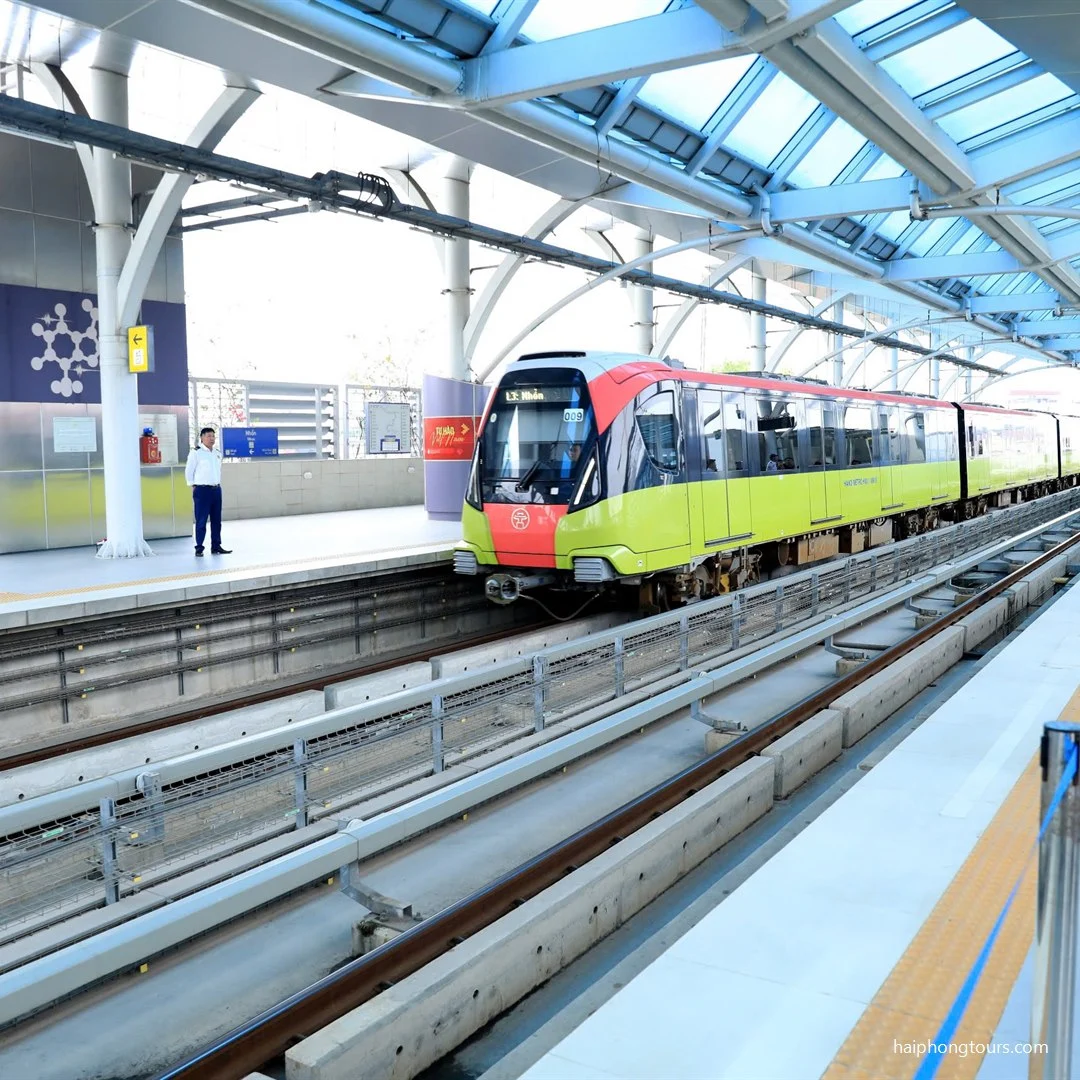
The operating section of line 3.1 is Nhổn–Cầu Giấy. The planned extension toward Hanoi railway station does not make that station an operating metro stop. Nội Bài also requires a bus or road leg to reach the metro; select the station connection before choosing the bus.

Use Hanoi Metro’s current network and passenger guidance on the travel day. Check the operating window, the exact line, station order, direction, and the final walk or road connection. Do not transfer a timetable or station assumption from one line to the other.
Start with the exact destination
Save the complete destination address, district, telephone number, and a recognizable landmark. If the destination is a railway station or hotel, confirm the branch and entrance. A general phrase such as “central Hanoi” is too broad for choosing a metro stop.
Mark whether the final appointment has a cutoff. Work backward through the walk from the metro exit, any road connection, platform exit, and time needed with luggage. The closest stop on a map may not produce the simplest journey.
Compare Line 2A and Line 3 separately
Open the official station sequence for each currently operated line. Identify whether the origin and destination are served by the same line. Do not assume the lines share a station merely because their routes appear close on a city map.
Write down the line name, boarding station, travel direction, destination station, and exit plan. If the route would require leaving the system and making a road connection, treat that connection as a separate stage.
Choose the boarding station
Compare the road or walking approach to each candidate station. Check the correct entrance, ticketing area, lifts or stairs, and the time needed to reach the platform. A driver should receive the full station name and a current pin, not only “metro station.”
When traveling from a hotel, ask reception to confirm which entrance is practical with luggage. Keep enough time for traffic, unloading, ticket purchase or validation, and finding the correct direction.
Confirm direction before passing the gate
Use station signs and staff guidance to confirm the terminal direction and station sequence. Count the stops to the planned exit. If the displayed direction conflicts with the saved plan, stop before boarding and ask staff.
Do not board an arriving train simply because the line color looks correct. The same platform area can send travelers in opposite directions, and a wrong-direction ride can destroy a fixed connection.
Check the operating window
Hanoi Metro publishes current operating information, but the usable last journey depends on the line, station, and travel date. Recheck before a late trip. Do not assume a train will wait for a road delay or that another line has the same closing pattern.
Build a fallback before entering when the trip is near the end of service. Save the destination address and identify a safe official road option or staffed waiting point in case the planned train is no longer usable.
Plan the final connection
Confirm the destination exit and the remaining walking or road distance. Metro arrival is not door-to-door arrival. Add time for leaving the platform, finding the exit, crossing streets, and managing bags.
If meeting a driver or another traveler, agree on a physical landmark outside the station and a no-signal procedure. Avoid messages such as “outside the metro,” which can refer to different exits.

Luggage, children, and reduced mobility
Count suitcases, strollers, wheelchairs, and child items before choosing the station. Ask current station staff about the practical route, lifts, gates, and platform access. Do not promise step-free travel without confirmation for the actual station sequence.
Keep the group together through gates and platform changes. Assign one adult to children and another to luggage. Do not block doors or escalators while checking the map.
If the wrong line or station was chosen
Stop and identify the current station, direction, and remaining operating window. Ask staff whether to continue, reverse direction, or leave the system. Recalculate the fixed appointment from the corrected arrival.
If the metro can no longer protect the destination, leave through the official route and use a verified alternative. Do not race across platforms or enter staff-only areas.
Check the ticketing step
Use the current passenger guidance for the selected line and station. Confirm where to obtain or validate the correct ticket and keep it available through the journey. Do not assume a ticket, card, or gate process observed on one line applies identically to the other.
If a gate rejects the ticket, step aside and ask staff rather than repeatedly forcing it. Keep children and luggage clear of closing gates while the issue is resolved.
Test the route before a critical day
When the metro will support an important train, appointment, or event, consider checking the station entrance and final exit earlier. A short practice visit can reveal a long walk, difficult crossing, or confusing meeting point without risking the fixed booking.
Update the saved plan if official station information changes. Delete old screenshots that could send the group toward the wrong entrance or line.
Who each approach suits
- Direct same-line trip: travelers whose origin and useful destination stop appear on one verified station sequence.
- Metro plus road connection: travelers with a confirmed exit, vehicle pickup, and enough operating margin.
- Road journey from the start: groups with heavy luggage, limited mobility, or a fixed deadline the metro plan cannot protect.
- Daylight practice trip: first-time users who want to learn the station before a time-critical journey.
Line-and-station checklist
- Exact destination address and deadline saved;
- Line 2A and Line 3 sequences checked officially;
- boarding station, direction, and destination stop recorded;
- current operating window confirmed;
- station entrance and final exit planned;
- luggage and accessibility route considered;
- meeting landmark shared;
- late-service fallback saved.
Hai Phong Tours does not operate Hanoi Metro. Use the current official network and passenger guidance to choose the line, station, direction, and final connection before entering the system.
Useful guides for your trip
Would you like help fitting this experience into your trip? Contact us with your travel dates, starting point, available time and group size. Tell us about walking limits or special interests so we can suggest a practical itinerary.