
Hanoi public buses can be a practical way to reach the airport, transport hubs, museums, craft villages and outer districts when you choose the route by destination rather than by route number alone. The key is to confirm the correct direction, the final walking distance and the return service before leaving.
This guide is for international travelers planning independent journeys. It avoids fixed timetables and universal fare claims because routes, stops and ticket products can change; use the live operator information for the actual travel day.
Choose a bus by the complete journey
Start with your exact hotel, terminal, attraction gate or apartment tower. Then compare the boarding stop, direction, interchange and final walk. A route that passes the correct district may still be inconvenient if the useful stop is across a large junction or far from the entrance.
- Airport journey: match the route with your hotel district and terminal.
- Attraction journey: check the final walk and opening day.
- Suburban journey: plan the last mile and return before departure.
- Transport-hub connection: add a traffic and walking buffer.
How fares and payment work in practice
Follow the current fare shown by the operator or ticket system. Cash, electronic tickets and distance-based products may not calculate the same way. Carry small Vietnamese-dong notes, keep proof of payment and complete any required boarding and exit validation.
Do not assume that an overseas card or phone wallet is accepted by every reader. A transport card or QR product may require registration, a local app or a supported payment method.
How to identify the correct stop
Save the Vietnamese route number and destination, then check the side of the road. One-way streets and divided roads often place the opposite-direction stop on another block. At major terminals, separate city-bus bays from intercity coaches and private shuttles.
Hai Phong Tours recommends keeping an offline screenshot of the route and the exact return stop. Mobile data can fail at the moment you need to confirm a transfer.
Plan for luggage, heat and mobility
City buses are not luggage transfers. Keep bags compact, avoid blocking the aisle and protect valuables. Travelers with limited mobility should confirm step-free boarding, curb conditions and the walking surface at the destination rather than assuming that an electric bus is automatically accessible at every stop.
Build a realistic return plan
Terminal departure times do not equal passing times at intermediate stops. Check the final useful service for your boarding point and leave a margin for traffic. At a rural attraction or residential development, identify a taxi pickup point or larger transport hub as a backup.
When another option is better
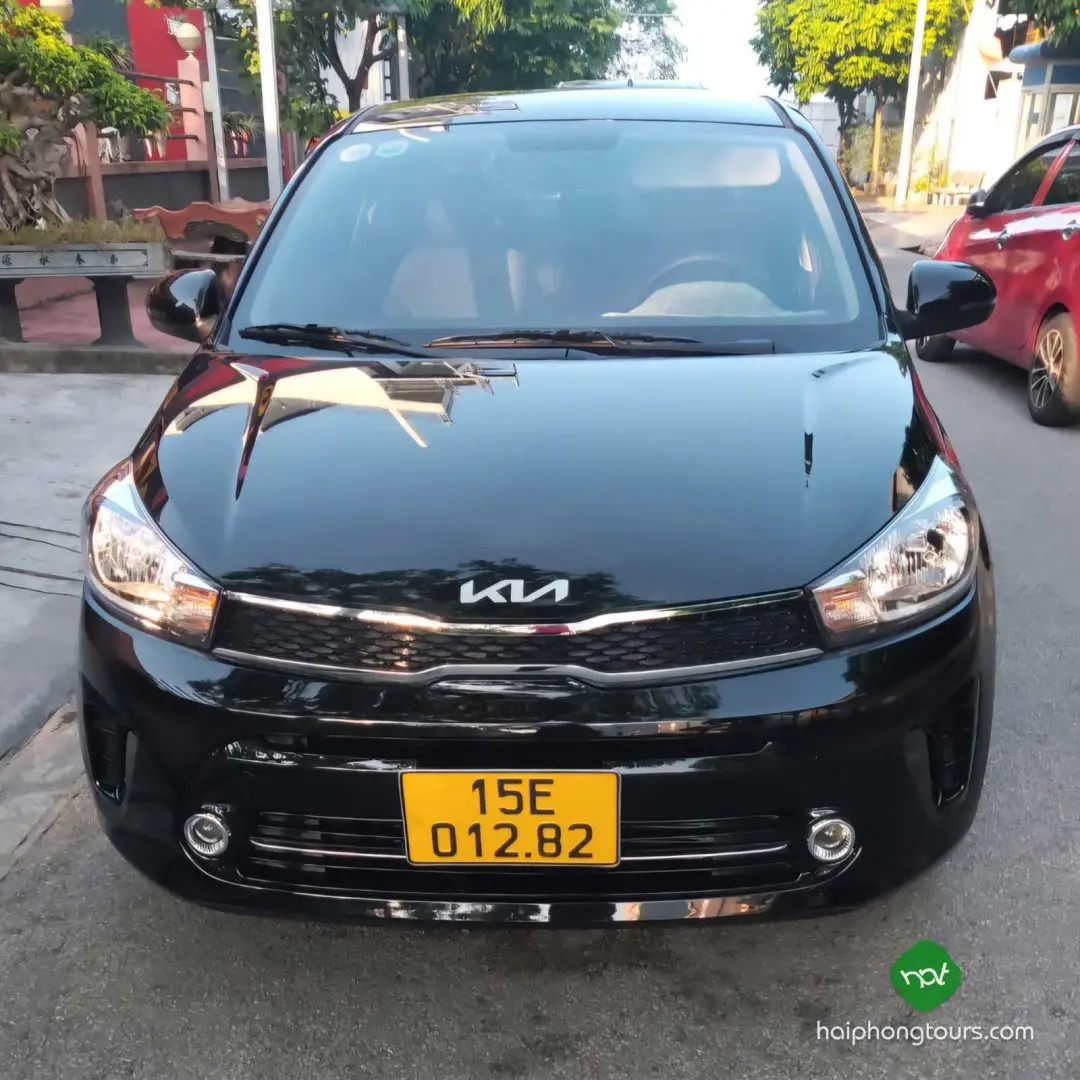
Use a direct car when you have a flight, a fixed appointment, several large bags, young children, mobility constraints or a group that can share the cost. Public transport is strongest when time is flexible and both ends of the route are close to useful stops.

Travel-day checklist
- Exact destination and entrance saved offline.
- Route number and direction confirmed.
- Boarding side and return stop identified.
- Current payment method and backup cash ready.
- Final walking route and weather considered.
- Last useful return and backup transport planned.
Useful guides for your trip
Would a private transfer make this journey easier? Contact us with your travel date, exact pickup and drop-off, number of travelers and bags. Include any flight, train or cruise deadline so we can assess a suitable plan and quotation.
