
If you miss the last confirmed Dong Bai ferry to Cat Ba, stop planning for a same-night crossing. The safe recovery is to document what happened, notify every affected provider, stay on the mainland, and rebuild the road–ferry–road journey for the next operating day. Do not wait for an unconfirmed late sailing or accept an unofficial boat offer.
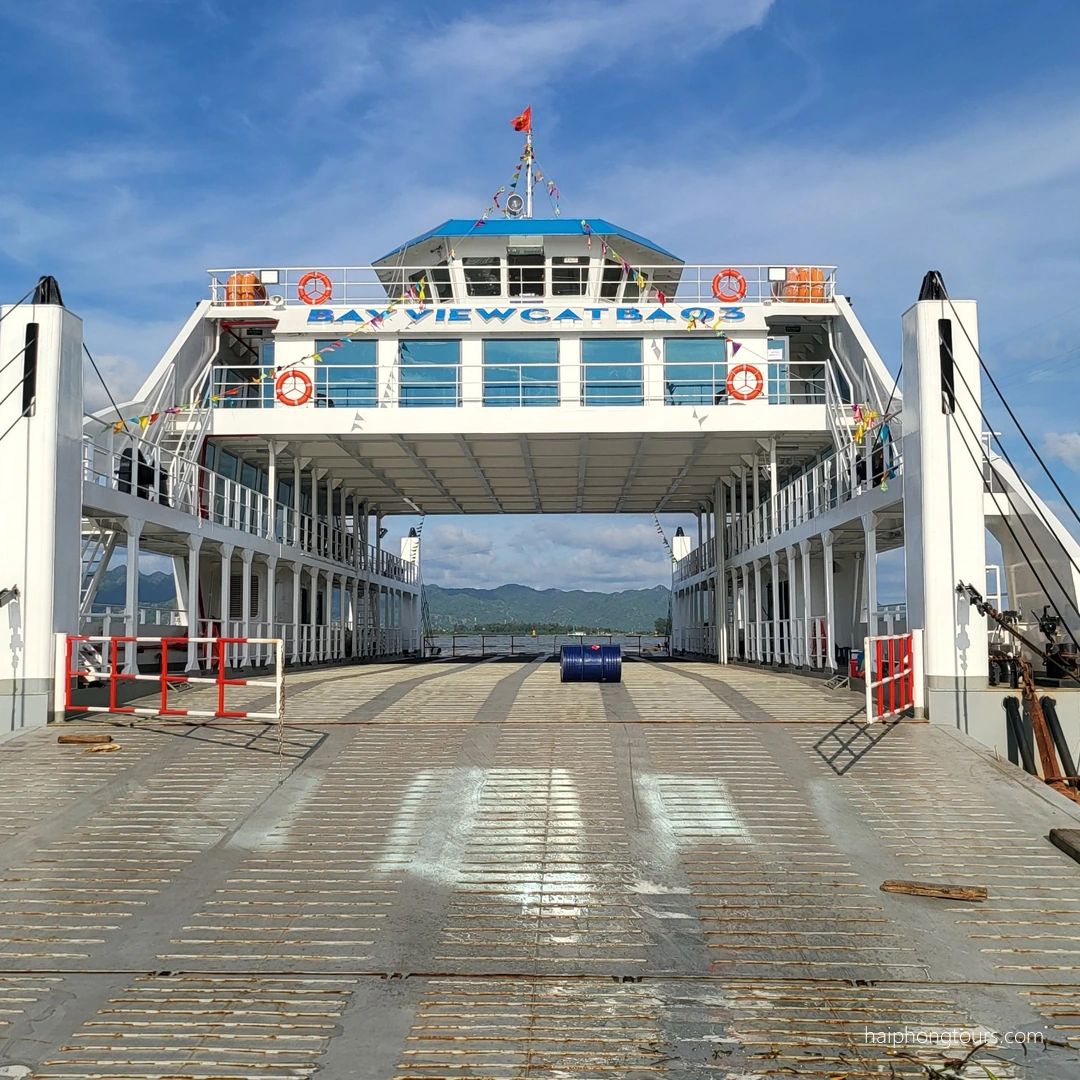
The current official September–December 2026 operating plan schedules the terminal from 05:00 to 18:00, with the last scheduled departure at 17:30 and arrival on the opposite side at 18:00. Operations may be adjusted for weather, demand, or ferry type. A possible extension to 19:00 is discretionary, so it is not a connection you can book or rely on.
First confirm that the last operating ferry has gone
Ask terminal staff for the last confirmed departure, whether boarding has closed, and whether your passenger or vehicle category could still be accepted. A queue at the terminal does not prove another ferry will sail. Photograph the notice board if permitted and save any message from your driver, transfer provider, hotel, cruise operator, or ticket seller.
If the terminal says service has ended, treat that answer as final for the night. A road driver cannot override the terminal, and a transfer company cannot create an extra public crossing. Avoid anyone offering an improvised night passage outside the official operation.
Identify which traveler problem you have
Foot passenger
Your main tasks are finding a safe mainland overnight, protecting your luggage, and arranging transport back to Dong Bai before the next confirmed crossing. Ask where the next-day passenger queue forms and how early terminal staff recommend arriving.
Private vehicle
You need secure overnight parking as well as accommodation. Confirm whether the vehicle may remain where it is, whether the parking area closes, and how you will return to the correct vehicle queue. Do not leave passports, medicine, electronics, or other essential items in an unattended car.
Through-transfer passenger
Ask the provider to state in writing which part of the service was completed, what happens to the mainland and island vehicles, and whether the booking can be moved to the next operating crossing. Do not assume the island driver will wait overnight unless the provider confirms it.
Take these actions before leaving Dong Bai
- Record the time you arrived and the last confirmed ferry information.
- Save ticket receipts, booking references, driver messages, and any terminal notice.
- Tell the Cat Ba hotel, cruise operator, or host that you will not arrive that night.
- Ask whether a prepaid room, cruise, or transfer can be moved, credited, or refunded.
- Confirm a safe mainland room before traveling away from the terminal.
- Write down the next-day pickup point, pickup time, contact number, and no-show procedure.
Keep the messages factual: you reached Dong Bai after boarding closed or after the last confirmed departure, and you are requesting the next safe operating option. Do not promise a next-day arrival until the ferry status and both road vehicles are reconfirmed.
Choose the right mainland overnight
The closest room is not automatically the most practical. Compare late check-in availability, safe access from Dong Bai, secure parking if you have a car, an early departure arrangement, and the distance back to the correct terminal entrance. Travelers with a morning flight or train after Cat Ba may instead need to abandon the island night and protect that fixed connection.

If mobile service is weak, ask terminal staff or your current driver to help identify a legitimate accommodation contact. Save the address offline and agree on a meeting landmark. A screenshot of a map pin is useful when different drivers use different place names.
Rebuild the next operating-day sequence
A complete recovery plan has four responsibilities: mainland pickup, arrival and check-in at Dong Bai, the confirmed foot-passenger or vehicle crossing, and the Cat Ba-side transfer from Cai Vieng to the final hotel or pier. Name the provider responsible for each part.
For a foot-passenger transfer, send the exact mainland hotel pin, passenger count, luggage list, Cat Ba hotel or pier, and the earliest time you can be ready. Ask the provider to confirm that passenger ferry service is operating and that the island vehicle will meet the actual crossing, not a guessed arrival time.
For a private car, recheck whether the vehicle can board and which queue applies. Passenger service and vehicle carriage are different decisions. A foot passenger may be able to travel when a particular vehicle category faces a restriction or capacity problem.

Protect onward flights, trains, cruises, and hotels
Rank the next commitments by financial and practical risk. A flight departure, fixed cruise check-in, nonrefundable room, or last train may be more important than recovering the original Cat Ba night. Send evidence early and ask each provider for the latest decision time.
If a cruise departs from Cat Ba the next morning, do not assume the first ferry and road transfer will arrive before check-in. Ask the cruise operator for the latest accepted arrival and whether the booking can move. If the margin is not confirmed, keep the overnight on the mainland and choose a revised itinerary rather than creating another fragile connection.
Luggage and accessibility checks
Count every suitcase, stroller, wheelchair, mobility aid, and child seat. The recovery may require unloading from one vehicle, walking through the passenger terminal, boarding the ferry, and loading a second vehicle. Ask for assistance in advance and confirm whether the selected vehicles have usable luggage space after all passengers are seated.
Travelers with limited mobility should ask about boarding surfaces, walking distance, help with bags, and the island-side meeting point. Families should keep food, water, medicine, warm layers, and essential child items in hand luggage rather than in a vehicle that may be separated from them.
Who each recovery option suits
- Mainland overnight and next-day through transfer: suitable when Cat Ba remains the priority and the next operating crossing is confirmed.
- Keep the private car and rejoin the vehicle queue: suitable when secure parking and current vehicle acceptance are confirmed.
- Cancel the island night and protect an onward commitment: suitable when a flight, train, cruise, or expensive booking has little recovery margin.
- Independent road and ferry stages: suitable only when you can name every pickup, ticket, luggage handoff, and island-side vehicle.
Before you leave for the terminal again
- Check the current official ferry operation and weather notice.
- Use the last confirmed scheduled departure, never a possible extension.
- Confirm the correct Dong Bai entrance and passenger or vehicle queue.
- Send both mainland and Cat Ba pins.
- Confirm passenger count, luggage, mobility needs, and child equipment.
- Keep evidence from the missed crossing and all rebooking decisions.
- Carry an offline contact and no-signal meeting plan.
After the next operating crossing is confirmed, Hai Phong Tours’ Hai Phong-to-Cat Ba transfer can coordinate a mainland vehicle, foot-passenger ferry ticket, and Cat Ba-side vehicle between named addresses. It cannot provide a same-night crossing after the terminal closes or operate during an official suspension, so reconfirm the ferry and pickup before booking.
Useful guides for your trip
Would a private transfer make this journey easier? Contact us with your travel date, exact pickup and drop-off, number of travelers and bags. Include any flight, train or cruise deadline so we can assess a suitable plan and quotation.