
On an extreme-heat day in Hanoi, put short outdoor walking early and later, reserve the hottest period for an air-conditioned indoor block and shorten the list when an official warning or symptoms require it. Pushing through the original itinerary is not the goal.
There is no single temperature that is safe for everyone. Age, health, medication, humidity, sun exposure and acclimatization change risk, so follow official warnings and personal medical advice.
Use the early hours for outdoor stops
Choose one compact area rather than crossing the city repeatedly. Keep the walking route short, identify shade and toilets, and use a vehicle between distant stops. Carry water before you need it and do not rely on finding a seller at every site.
Protect the midday cooling block
Plan a long meal, hotel break or verified indoor venue across the hottest part of the day. Confirm that air conditioning is operating, that the venue is open and that you can reach it without a long exposed queue.
Hanoi Museum reopened its permanent exhibition in 2026 and can be considered as an indoor option when current hours fit. Hanoi Police Museum publishes limited weekday sessions. Do not assume either museum is open on your date; check official hours and any holiday closure before traveling there.
Restart in the evening only if the traveler is well
A later food walk or lake-area stroll can replace missed midday stops, but the evening plan should remain optional. Heat stored in streets and buildings can persist after the sun drops, and a crowded event can add load.
Hydration and medication planning
- Carry water and take regular cooling breaks.
- Use light clothing, sun protection and shade.
- Ask a clinician or pharmacist how personal medication interacts with heat; do not change a prescription on travel advice alone.
- Keep the hotel address and a transport option ready for an early return.
Know when to stop
Move to a cool place and seek appropriate medical help when a traveler becomes confused, faints, cannot keep fluids down or rapidly worsens. This guide cannot diagnose heat illness. Use local emergency support and professional advice rather than trying to finish the itinerary.
Choose lower-exposure transport
A door-to-door car can reduce outdoor time, but confirm the pickup point so you are not waiting in full sun. Short app-car rides may be more practical than a long walk. Motorbike transport adds direct heat, sun and traffic exposure and may not fit a heat-adapted day.

Use one compact early zone
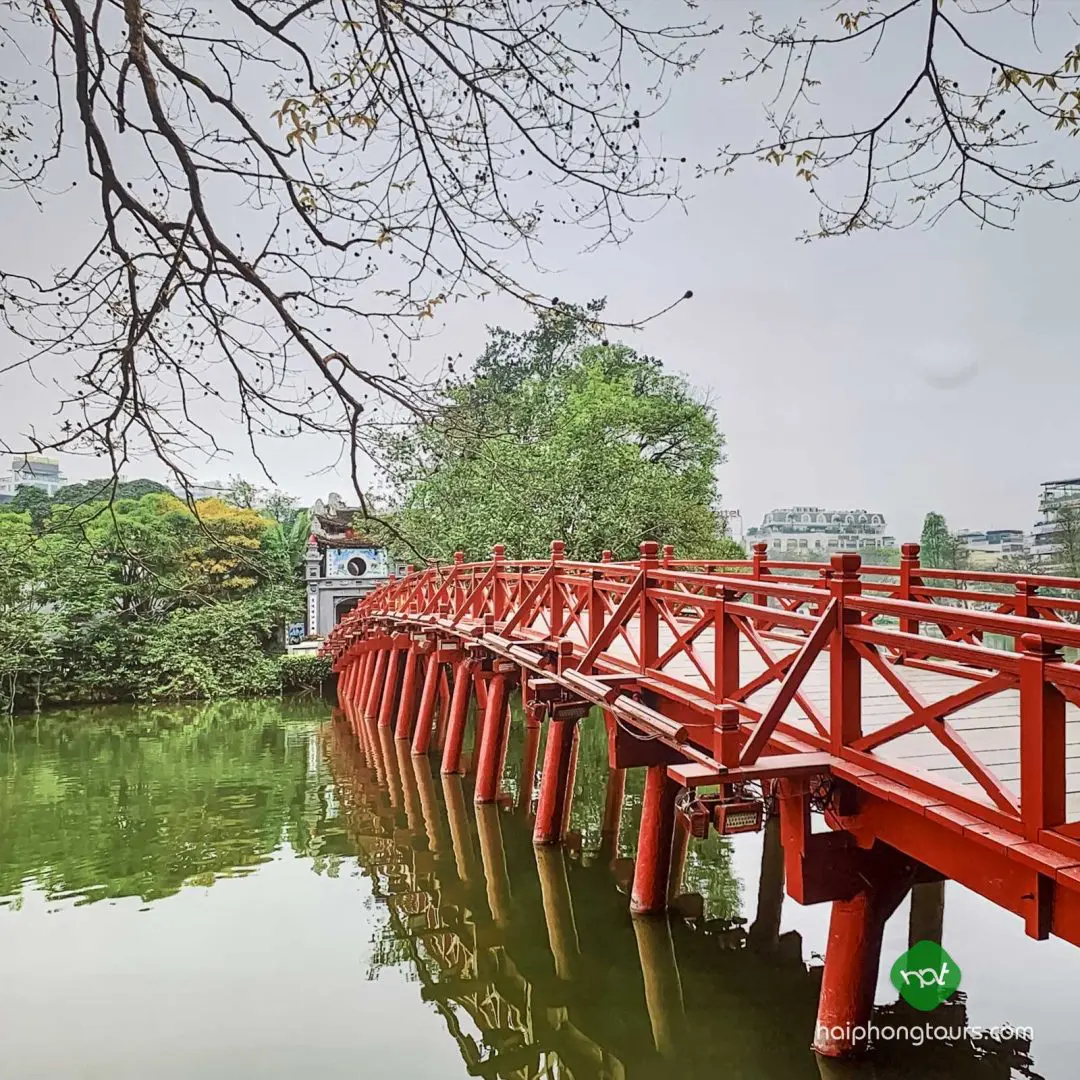
Choose Hoan Kiem and a short Old Quarter block, or one other nearby outdoor area, rather than walking between West Lake, Ba Dinh and the Old Quarter. Include breakfast, ticket queues and the return ride in the exposure time.
Verify the indoor anchor
Hoa Lo Prison or the Vietnam National Museum of History may be useful only after current hours, ticketing and cooling are checked. The hotel remains the guaranteed fallback when a venue is closed or crowded.
Confirm vehicle cooling and pickup
Set a precise shaded pin and ask whether the assigned car’s air-conditioning works. A short ride reduces walking but does not help if the group waits in sun or enters a parked hot vehicle.
Do not treat sunset as automatic clearance
Evening humidity and heat can remain high. Recheck the current warning and the traveler’s recovery before restarting. Carry water and use electrolytes only when suitable for the person’s medical needs.
Keep the evening close to the hotel and drop it entirely when the group has not recovered.
Build one compact morning, not a city marathon
Use Hoan Kiem and the Old Quarter as one early zone rather than walking between West Lake, Ba Dinh and the Old Quarter in the same morning. Start after breakfast and return before the current official warning window intensifies. Add the ride back, ticket queue and exposed street crossings to the heat load; attraction time is only one part of the day.
If you need an indoor anchor, check the current opening and closure day for Hoa Lo Prison or the Vietnam National Museum of History before leaving. A hotel room or air-conditioned café remains the dependable fallback when a museum is closed or crowded.
Prepare the pickup before you need cooling
Pin a specific entrance where a car can stop and confirm air conditioning before the driver arrives. A short app or private-car transfer may reduce walking, but a vehicle parked in the sun can be dangerously hot. Allow it to cool and do not use an exposed motorbike ride as the substitute for recovery.

Children, seniors and travelers with underlying conditions may need a smaller morning and no evening restart. Store medication according to its instructions, carry water and use electrolytes only when medically suitable. Confusion, fainting, severe symptoms or inability to drink require urgent help, not another sightseeing stop.
Decide the evening at the hotel
Sunset does not guarantee a safe temperature. Recheck the actual warning and the traveler’s recovery after food, water and cooling. If the group restarts, choose one nearby meal or short walk with an easy return. If anyone remains unwell, keep the evening indoors and reduce the next day rather than trying to catch up.
Hai Phong Tours recommends treating the midday break as a fixed booking and the attraction list as flexible. Recheck the official heat warning, venue hours and personal medical guidance on the day.
Tell one companion the hotel, planned indoor stop and pickup contact before the group separates. That small handoff prevents a heat-related early return from becoming a search across several Hanoi districts.
Useful guides for your trip
Would you like to include local food in a city visit? Contact us with your destination, date, group size and dietary needs to discuss a suitable tour or private itinerary.