
For a Dong Bai ferry connection, aim to reach the terminal 60 to 90 minutes before the sailing you hope to use, then keep at least one later authorized departure available. This is a practical planning margin, not an official minimum. It works because it allows time for a road delay, terminal queue, ticket check, luggage handoff and one missed departure without turning the last ferry into the only plan.
The buffer must continue beyond the crossing. Cai Vieng is the Cat Ba Island terminal, not Cat Ba Town, so the connection is not complete until the island vehicle or bus is confirmed and the bags are loaded.
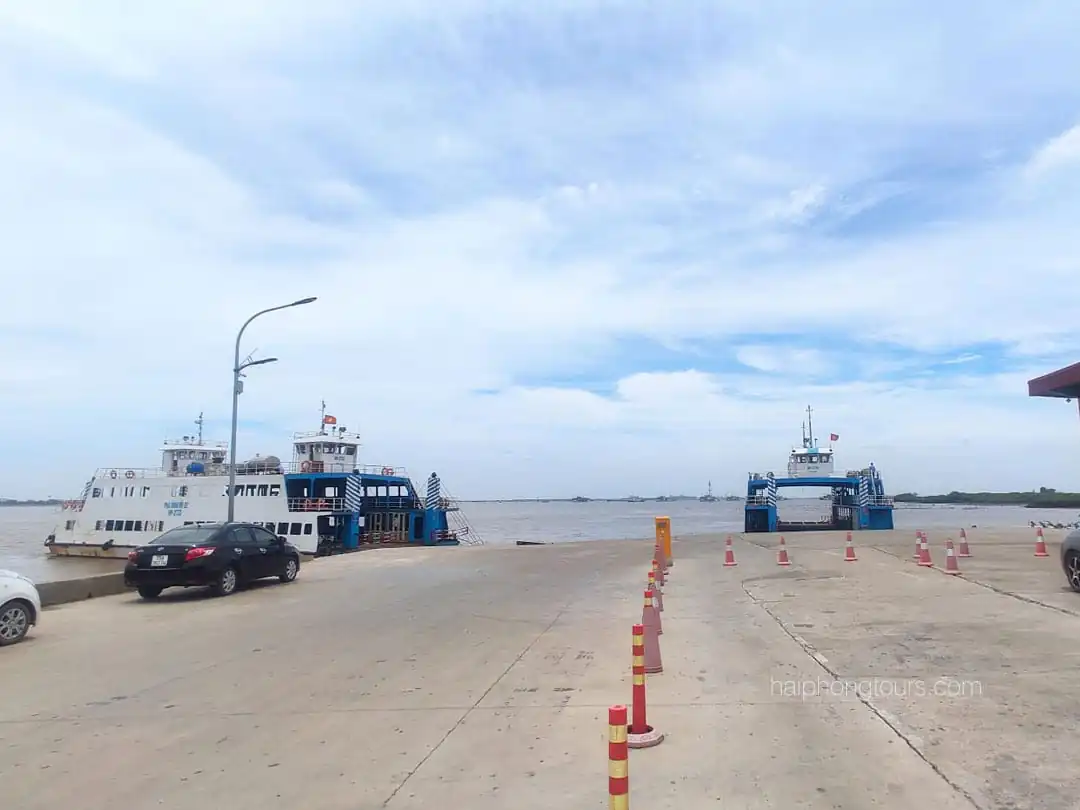
Use the current schedule as a limit, not a target
Dong Bai and Cai Vieng operating hours are published in dated notices on the Hai Phong city portal. The current notice names Bayview Cat Ba as the timetable operator and states that terminal management can adjust departures, with a maximum interval of 40 minutes in that notice. The final service and any extension remain conditional.
A possible extension is not a dependable backup. Terminal management can adjust operation for traffic, weather or safety. Check the current notice for your exact day and direction instead of copying an old “last ferry” time.
When an official weather suspension is issued, the crossing stops until the competent authority permits operations to resume. Waiting for the authorized restart is the plan. A smaller or unofficial boat is not a safe alternative.
Build the buffer from the time you are actually ready
Start the clock when every passenger and bag is in the first vehicle. A hotel checkout time, aircraft landing time or train arrival time is not the same as road-ready time. Add the minutes needed to collect luggage, meet the driver, use the restroom and load any stroller or mobility aid.

Then add road uncertainty. Peak travel days, rain and local traffic can all slow the approach. The terminal portion includes unloading, finding the correct passenger process, ticket or booking checks, waiting for boarding and moving the bags.
After the ferry, add disembarkation, finding the island driver, loading again and the final road to the actual hotel. A plan that reaches Cai Vieng on time but leaves the family without a vehicle is not a successful connection.
Choose the margin that fits the consequence
A traveler with a flexible hotel check-in and no evening commitment can accept a smaller margin than someone meeting a boat, tour or non-refundable room. Families, large groups and anyone with limited mobility should allow more time because each handoff takes longer.
The useful test is simple: if you miss the intended ferry, is there another confirmed authorized option and enough time to reach the hotel? If the answer is no, move the mainland departure earlier or stay overnight on the safer side of the crossing.
Do not add a single universal number to every trip. A weekday passenger with one backpack is different from a holiday vehicle queue with children and six cases. The 60 to 90 minute rule is a starting point, not permission to ignore the day’s conditions.
Know whether the vehicle crosses
Some journeys use one vehicle through the crossing. Others use a mainland vehicle, a passenger ferry and a second vehicle on Cat Ba. Ask which arrangement applies before payment.
For a two-driver handoff, obtain both names, phone numbers, registrations and meeting points. Ask who buys the ferry ticket and who helps with the luggage. Send the island driver the intended sailing and a revised message when the queue changes your arrival.
If the same vehicle is expected to cross, ask how the vehicle queue affects the plan. Passenger access and vehicle boarding are not always interchangeable. A booking should explain what happens if a temporary vehicle restriction is introduced.
Use public buses only with a flexible connection
Hai Phong’s Department of Construction identifies route 16C, operated by Thinh Hung Transport, between Thuong Ly Bus Station and Dong Bai. The same official notice identifies a route 14 stop at Cai Vieng for travel toward Cat Ba Town. This creates a useful lower-cost route for a traveler with manageable luggage.
It is still a chain of separate services. The bus, ferry and onward bus do not form a protected ticket, and one delay does not require the next operator to wait. Check route 16C and route 14 in the Bus HP app, then compare those times with the Bayview Cat Ba notice on the city portal. If the public chain leaves no later ferry or island bus, depart earlier or use a coordinated private handoff.
A backpack or one suitcase is easier than several large cases. If you cannot lift the bag at each stage, ask about assistance before relying on the public chain. A lower fare is not a saving when an unplanned taxi or hotel becomes necessary after the final bus.
Count the luggage at four fixed points
Count bags when unloading from the mainland vehicle, before boarding, after leaving the ferry and before the island vehicle departs. Assign the count to one person. In a group, “everyone checks their own bag” often leaves a stroller, small case or child’s backpack between responsibilities.
Keep passports, medication, money, phone power and the hotel details in a small bag that stays with you. Do not pack the ferry tickets or second driver contact inside a suitcase that may be loaded out of reach.
For a folding wheelchair, stroller, bicycle or sports equipment, send dimensions before travel. Confirm how the item moves through the terminal and whether it fits the receiving vehicle. A nominal passenger capacity does not guarantee cargo space.
Treat the cable car as a different journey
The Cat Hai to Phu Long cable car may be useful when its operating window, baggage rules and location match the trip. It is not an automatic substitute for a missed ferry. You still need transport to the cable-car station and an island vehicle from Phu Long to the hotel.
Confirm current operating hours and item limits directly before changing modes. Do not split people and luggage between ferry and cable car without a written reunion point. Two improvised journeys create more risk than one delayed but coordinated plan.
Write the missed-connection plan before departure
If the last comfortable authorized option is gone, contact the island hotel and both drivers immediately. Reserve a named mainland hotel with staffed reception and an acknowledged room. Do not wait beside a quiet terminal for a departure that no current notice confirms.
The correct side for the overnight stay depends on the next fixed booking. Before an early flight or train from Hai Phong, remaining on the mainland removes the crossing risk. Before an island activity, a mainland night may mean a later start, which should be accepted and communicated.
Hai Phong Tours recommends checking the Bayview Cat Ba timetable notice, any suspension from Hai Phong’s transport authority, the Bus HP routes when using public transport and the named island pickup before the first vehicle moves. If any one of these removes the later authorized connection, change the departure time or sleep on the mainland. A strong buffer lets a normal delay remain a small inconvenience instead of becoming a night without a plan.
Useful guides for your trip
Would a private transfer make this journey easier? Contact us with your travel date, exact pickup and drop-off, number of travelers and bags. Include any flight, train or cruise deadline so we can assess a suitable plan and quotation.
