
Hanoi Railway Station does not have an operating metro stop. The public transport option to Yen Nghia requires a surface journey from the railway station to Cat Linh, followed by Line 2A from Cat Linh to its western terminus at Yen Nghia. A recorded direct road vehicle avoids that extra handoff.
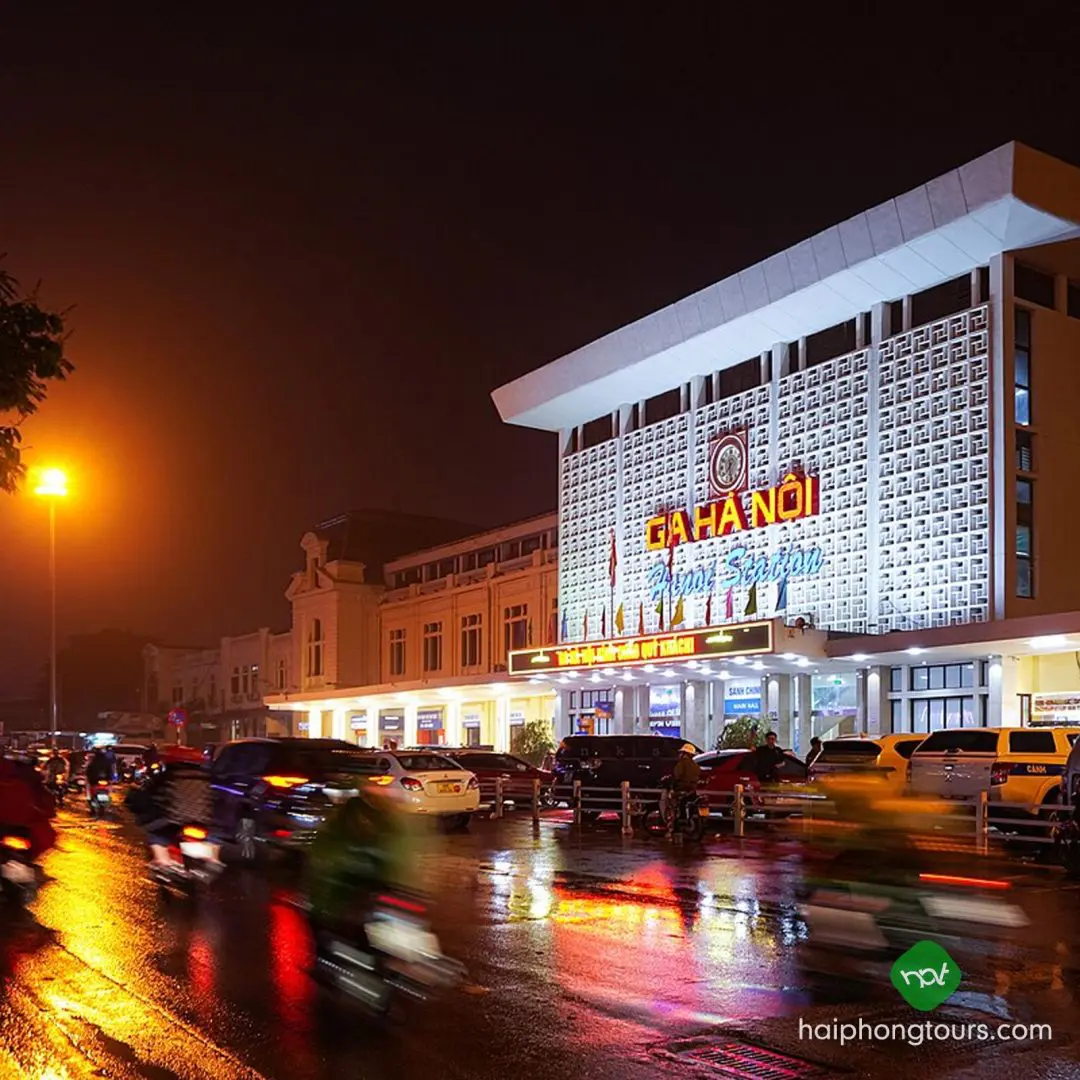
The best choice depends on the train’s actual release time, the side of Hanoi Railway Station you use, your luggage and the remaining metro operating margin. If the train is late or the Cat Linh surface stage is unclear, road transport to Yen Nghia or to your true final destination is more practical.
Leave Hanoi Railway Station from the correct side
Vietnam Railways currently lists Hanoi Railway Station at 118 Le Duan, but passenger movement can involve the Le Duan or Tran Quy Cap side. The issued train, platform arrangement and railway staff instruction control where you should leave. Do not arrange a pickup from a generic Hanoi station pin before you know the actual side.
Wait until the whole group and every bag are together in the staffed passenger area. If a driver or city route expects the other side, send the named street, a live pin and a visible entrance landmark. Do not make an unsafe crossing with luggage merely to preserve an old pickup instruction.

The practical start time is platform release, not the printed train arrival. Include the walk from the carriage, stairs or assistance, baggage collection and any station instruction. A late national train does not require the metro or a separate road provider to hold service.
The public route has two independent stages
Surface handoff to Cat Linh
Line 2A begins at Cat Linh for this journey and does not enter Hanoi Railway Station. Confirm a current city route, legal recorded taxi or other surface connection from the actual railway-station side to the signed Cat Linh entrance. A map line between the facilities is not a through transfer.
Do not freeze a city-bus number, fare or stop from an old itinerary. Check the complete route on the travel day, including the correct road side, final walk and luggage restrictions. With a short metro margin, a recorded point-to-point vehicle to Cat Linh may be simpler than waiting for another public service.
Line 2A from Cat Linh to Yen Nghia
Cat Linh and Yen Nghia are the two endpoints of operating Line 2A. At Cat Linh, follow current signs and confirm that service remains useful for the full journey. At Yen Nghia, use the signed metro entrance and exit. Do not substitute Yen Nghia Bus Station, which is a different facility.
Ask Hanoi Metro staff about the usable entrance, fare media, luggage and accessibility on the day. Do not promise a particular exit number, lift route or closing time. A public plan works only when the complete path from Cat Linh curb to Yen Nghia exit is available to everyone in the group.
Protect the operating margin
Count the sequence honestly: train release, station exit, surface pickup or city wait, road travel to Cat Linh, metro entry, fare control, platform wait and Line 2A travel. Add time to correct a wrong station side or entrance. A narrow timetable that ignores these steps is not a usable connection.
If the inbound train is delayed, recheck Line 2A before leaving the railway station. When the metro is ending, go by recorded road transport to the actual final destination. Paying for a short ride to Cat Linh only to find the station closed adds cost and another recovery problem.
Several bags, a stroller, a traveler who cannot use stairs, heavy rain or a group that separates easily all increase transfer time. Confirm vehicle cargo capacity for the surface stage and keep tickets, identity documents, medication and valuables with the traveler rather than in a case that changes hands.
Compare a direct road trip with the staged option
Use Cat Linh and Line 2A when the train arrives with a comfortable service margin, the surface leg is verified, luggage is manageable and the group can use the current station path. This option is most suitable when Yen Nghia Metro Station itself is the intended endpoint.
Use a recorded direct vehicle after a delayed or late train, with several bags, limited mobility, poor weather, low phone signal or an onward appointment. Give the driver the exact destination and confirm whether you need the metro station, the separate bus station or somewhere else in Ha Dong.
Hai Phong Tours uses the distinction between the railway-station side, Cat Linh entrance and Yen Nghia metro facility as the core planning check. No Hai Phong Tours product is listed for this exact urban transfer, so the editorial guidance should not be read as a transport booking or a protected connection.
Recovery decisions that prevent a worse transfer
- The train uses an unexpected side: Stay in the staffed area, update the Le Duan or Tran Quy Cap pickup and let the vehicle come to the legal public point.
- The Cat Linh surface route is unclear: Use a recorded vehicle to Cat Linh or go directly to Yen Nghia instead of improvising with luggage.
- Line 2A service is ending: Continue by road to the true final address or stay in Hanoi. Do not make an unnecessary trip to a closed metro entrance.
- A driver selects Yen Nghia Bus Station: Correct the destination to Yen Nghia Metro Station on Line 2A and resend the live pin.
- Accessibility cannot be confirmed: Ask metro staff for the current usable path; choose direct road travel when any stage remains unsuitable.
Checks before you leave the railway station
- Confirm the actual train release and whether the group exits on Le Duan or Tran Quy Cap.
- Verify the complete surface connection to the signed Cat Linh entrance.
- Check current Line 2A operation and the useful margin to reach Yen Nghia.
- State Yen Nghia Metro Station, not Yen Nghia Bus Station.
- Keep a direct road option or Hanoi stay ready if the staged route no longer works.
Useful guides for your trip
Would a private transfer make this journey easier? Contact us with your travel date, exact pickup and drop-off, number of travelers and bags. Include any flight, train or cruise deadline so we can assess a suitable plan and quotation.
