
Leave Cao Quy for Hai Phong Railway Station from the official conservation entrance or another public pickup approved by site staff. The wider village, a highway junction and Bach Dang Giang are different endpoints. For a fixed train, a booked return car is the safer plan; a licensed taxi called by staff suits a flexible visitor with a later train option.
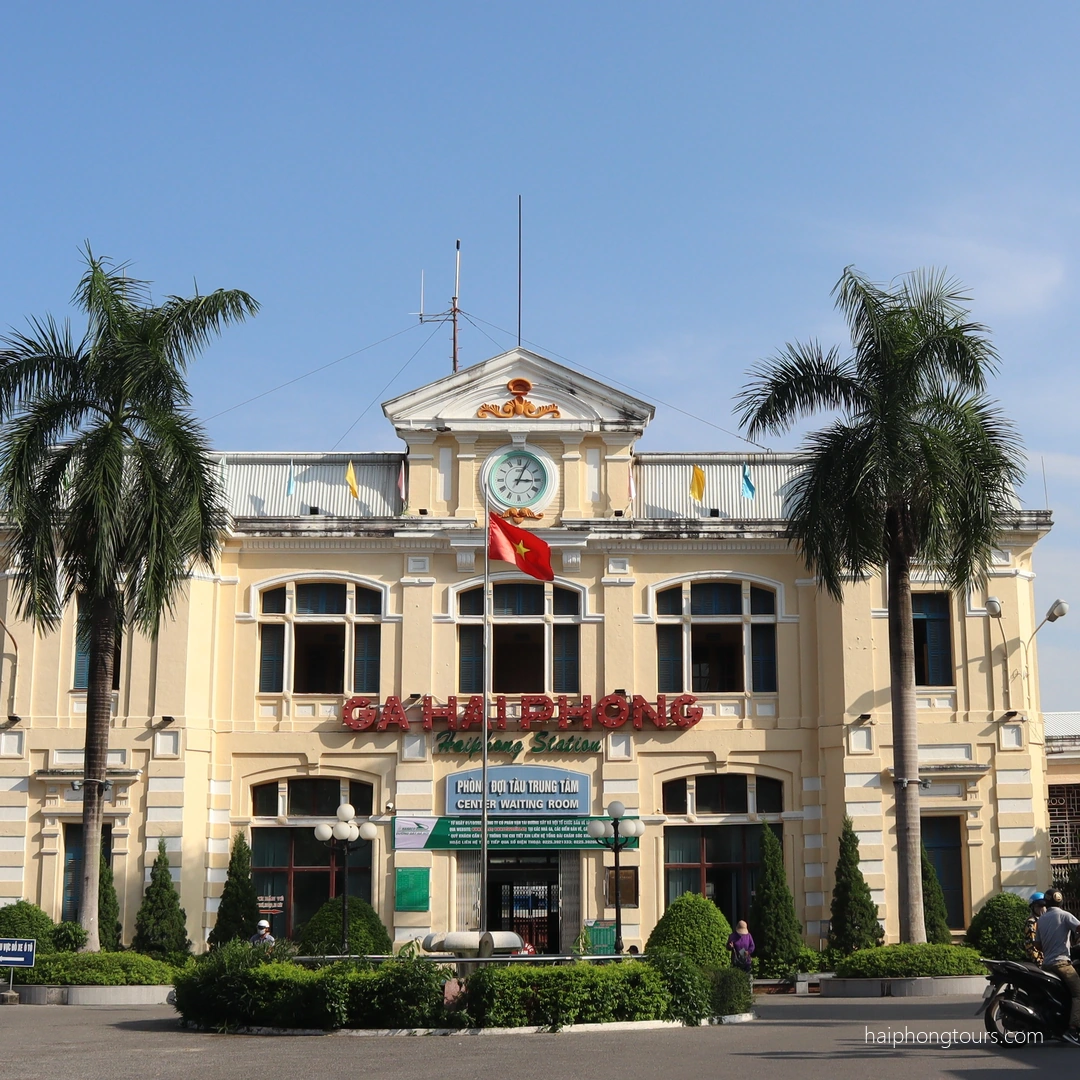
The site visit and railway are independent. Build the departure around the issued ticket’s reporting requirement, then allow for the walk out of the heritage area, luggage collection, vehicle loading and ordinary road variability.
Confirm the pickup before starting the visit
Record the official entrance used on arrival and ask whether departures use the same point. Save the pin, Vietnamese site name, staffed landmark, site contact and driver plate offline. A generic “Cao Quy” instruction can send a vehicle toward the village rather than the conservation site.
If the same driver waits, confirm the legal waiting location and paid waiting terms. If a new taxi will be called, ask site staff which licensed provider currently serves the entrance and how long the dispatch may take that day. Do not rely on finding a passing car at a rural gate.

Choose a public backup point only with staff approval. A highway shoulder, closed lane or excavation access is not a safe meeting place even if it looks closer on a map.
Work backward from the train
The 2027 ticket must name Hai Phong Railway Station, the train, date and direction. Current corridor announcements cannot guarantee the exact departure. Recheck the official journey record, carriage, luggage rule, change terms and station reporting requirement.
Start with the reporting time and add station entry, unloading, normal traffic, possible gate correction, loading, the walk from the public heritage route and a modest visit overrun. Share the resulting leave-by time with the group and driver.
If conservation controls or a ceremony delay the public exit, move the train while a lawful option remains. Site staff and drivers should not be pressed to shorten safety procedures or use a restricted route.
Vehicle options for the return
Booked or retained car
This choice is useful for a fixed train, group, several bags, reduced mobility or uncertain rural taxi supply. The confirmation should name the official entrance, pickup time, Hai Phong station entrance, vehicle and cargo capacity, waiting rule and delay procedure.
Licensed taxi arranged by site staff
A taxi can work when the traveler is flexible and staff confirm the vehicle. Match the plate before moving luggage and keep a receipt. Make sure the driver accepts the complete station trip rather than a drop at a general city point.
Any public route needs a current operator check for the boarding point, day, direction, luggage rule and final station walk. A connection from a rural junction should not be built around the last practical train.
Luggage and accessible exit
Assign bag custody before entering the site. Full-size cases may stay in an attended retained vehicle or confirmed staffed storage only when responsibility is clear. Never leave them beside a reconstructed display or conserved area.
Count bags at the heritage entrance, before the car leaves and at the station curb. Keep the ticket, passport, medicine, phone and valuables in a personal bag. Market-style informal helpers should not receive luggage or travel documents.
For reduced mobility, confirm the permitted path back to the vehicle stop, its surface, steps and resting points. Rain may slow the walk. A road car cannot collect a traveler from inside a restricted archaeological zone.
Weather and controls belong in the margin
Check local rain and road conditions before the pickup. Site control may also change for conservation work, ceremonies or maintenance. Accept the staffed public exit even when it adds walking or vehicle time.
A missed train is an inconvenience, but entering a closed lane or asking for unsafe driving creates a larger risk. Keep a later train or overnight in Hai Phong as the fallback.
Two failure points and the safer alternative
Plan B: If the driver is waiting at another Bach Dang site, remain at the staffed Cao Quy entrance. Resend the exact pin and site name, verify the plate, and move the train if the correction consumes the margin.
Plan B: If ceremony control, conservation work or a road issue delays release, use a later train. Follow staff instructions and never shorten the public exit through a protected area.
Complete the station handoff
Use Hai Phong Railway Station’s passenger entrance and unload in the lawful area. Recount all bags before releasing the car, then allow time to reach the correct platform and satisfy the ticket’s reporting rule.
Hai Phong Tours does not present this exact heritage-to-station ride as an HPT product. Its practical recommendation is to preserve the identity of Cao Quy and make one accountable pickup from the official entrance. A private car is worth the cost when it protects that handoff and the fixed train.

- Official Cao Quy exit and staff-approved backup pickup.
- Issued Hai Phong ticket and current station entrance.
- Hard leave-by time including the heritage-path walk.
- Driver, plate, waiting terms and usable cargo space.
- Public access, ceremony or conservation control and weather.
- Later train or Hai Phong overnight fallback.
Useful guides for your trip
Would a private transfer make this journey easier? Contact us with your travel date, exact pickup and drop-off, number of travelers and bags. Include any flight, train or cruise deadline so we can assess a suitable plan and quotation.