
Dong Hoi railway station is the main conventional rail arrival for a Dong Hoi or Phong Nha stay. Your train ticket gets you to the station, not to the caves or the beach. The most important arrangements are the road transfer after arrival and somewhere to rest if your train reaches the city before dawn.
A station stop can feel rushed when you are half asleep with bags. Save the station name, prepare your day bag before arrival and know who is meeting you. Those three steps make the transition much easier.
Find the correct station
Search for Ga Đồng Hới. Vietnam Railways’ organizational directory places its Dong Hoi branch in Tổ dân phố 4, Nam Lý, an address often retained in older maps and bookings. Use the railway-station entrance pin rather than relying on a street number copied from an unofficial ticket website.
Do not confuse Dong Hoi with Dong Ha, farther south, or Dong Le, another station with a similar-looking name. A cheap search result for a wider “Quang Binh” region may not refer to the station you intended.
The tourist train branded Hue–Phong Nha uses Tho Loc as its northern terminus and also calls at Dong Hoi. That does not place a train station in Phong Nha village. If you are comparing that service, see the Dong Hoi to Hue guide and choose the actual boarding station deliberately.
Read your ticket before the travel day
| Ticket detail | What it means for you |
|---|---|
| Ga đi | Your boarding station, which must match the station where you wait |
| Ga đến | The destination on the purchased rail segment |
| Ngày đi and departure time | The local calendar date and time you board, including departures just after midnight |
| Train code | The service to identify on the departure board and with staff |
| Toa | Your coach or carriage number |
| Chỗ | Your seat or berth number |
Save the complete issued e-ticket, not just a payment screenshot. It should show the passenger, journey and reserved accommodation. Vietnam Railways requires the identity information on the ticket to match the passenger’s valid identification. Carry your original passport and avoid entering a nickname when booking.
A date mistake is particularly easy with a departure after midnight. For example, a ticket departing at 00:20 on Tuesday means you normally go to the station late on Monday evening. This is a calendar example, not an advertised train time.
Arriving at Dong Hoi: a simple sequence
- Be ready before the stop. Pack small items, collect chargers and keep your shoes and ticket within reach. Ask the carriage attendant if you are unsure about the approach to Dong Hoi.
- Check the station name. Follow the announced stop and your ticket rather than leaving the train because other tourists do.
- Use the permitted exit. Follow railway staff’s directions. Do not take a shortcut across tracks to reach a waiting driver.
- Keep the group together. Count bags and children before leaving the station area.
- Meet the booked vehicle. Check the driver or vehicle details and show the final hotel pin.
If your train is delayed, update the person meeting you as soon as you have reliable information. Give the train code as well as the revised arrival estimate. A driver who knows only “the morning train” has less to work with.
Where to go after the station
For a Dong Hoi stay, use the actual accommodation address. A Nhat Le beach hotel and a Bao Ninh resort are not interchangeable city-center drops. If the hotel offers collection, ask whether it is included in the room or charged separately.

For Phong Nha, allow roughly an hour or a little more by road, depending on the accommodation and conditions. Do not buy a station-to-city ride first unless you have a reason to stop in Dong Hoi. A direct transfer to your inland hotel usually avoids that extra handover. The Dong Hoi to Phong Nha transport guide compares local buses, taxis and booked cars.
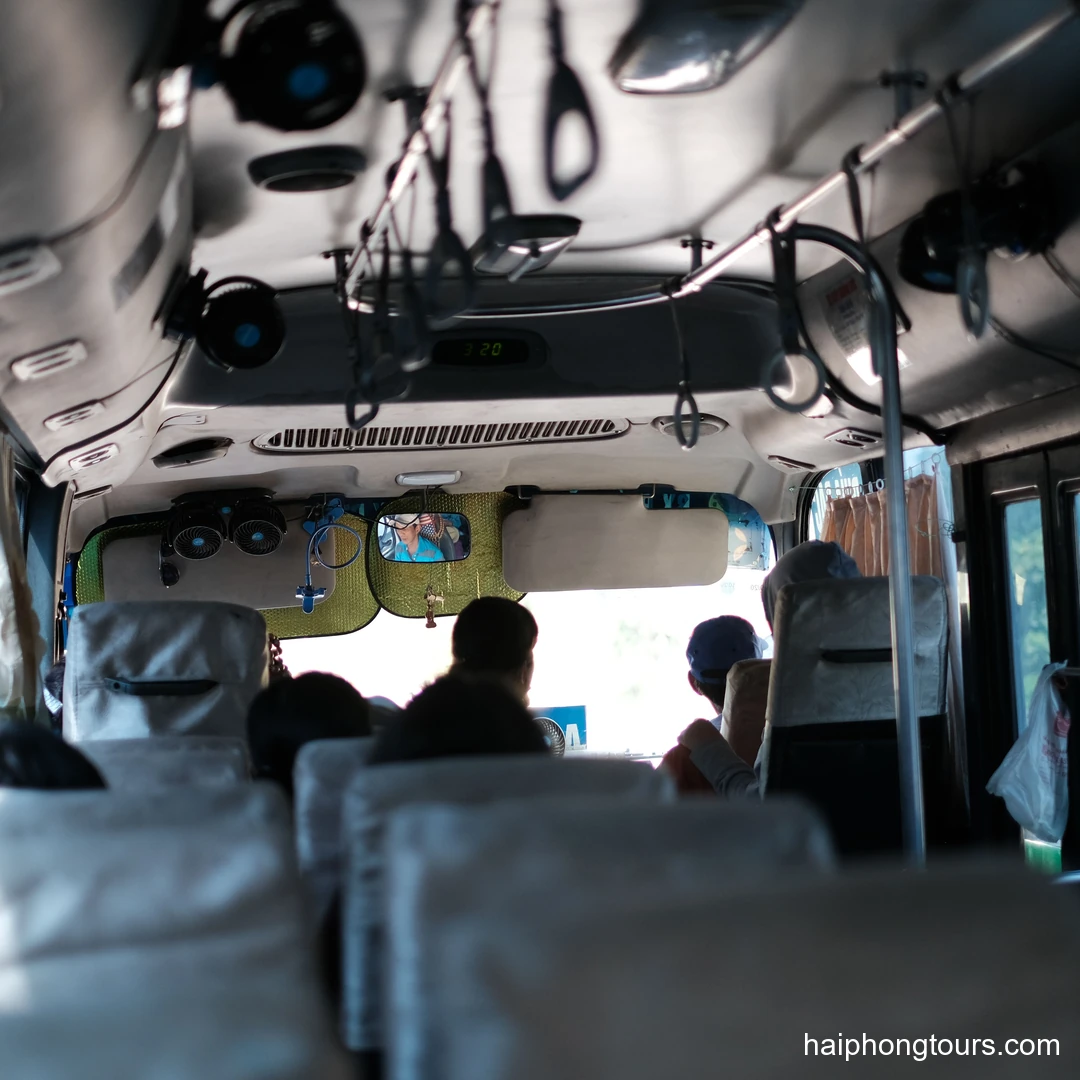
Public-bus descriptions do not establish that a bus will collect you at the railway-station entrance. If you want to use one, identify the operating departure, boarding point and fare before leaving with your bags. A very early train arrival is not proof that a connecting bus is already running.
Before-dawn arrivals and hotel access
Some useful southbound trains reach Dong Hoi in the early morning. Decide whether you want a bed immediately, a prearranged breakfast stop, or a direct road transfer to Phong Nha. Do not leave that decision until you step onto the platform tired.
For immediate room access, ask the accommodation which night to reserve and how to notify them of a late arrival. Paying for a previous night can be worthwhile after a difficult overnight journey. A promise to store luggage or let you use a lounge is different from a confirmed room.
Do not assume that a station waiting room, restaurant or hotel reception will provide the particular overnight facilities you need. Travelers with children, mobility limitations or medication that needs special handling should make a definite reception and rest plan.
Departing from Dong Hoi
For a straightforward departure, aim to be at the station about 30–45 minutes before the train. This is our suggested buffer, not a universal railway check-in cutoff. Allow longer if you need ticket help, assistance boarding or time to organize a larger group.
When leaving Phong Nha, a practical starting point is to arrange pickup about two to two and a half hours before departure. That combines the inland road journey, station time and some margin. A remote homestay, heavy rain or a road disruption can require more; do not use the shortest possible driving estimate as your entire connection allowance.
- Settle your hotel bill and collect stored bags before the vehicle arrives.
- At the station, compare the train code and destination with the departure information.
- Ask staff where to wait for your carriage; platform assignments and boarding arrangements are operational details, not permanent travel-guide facts.
- Show the ticket to the carriage attendant and check the berth or seat number before settling in.
Buy water and a simple meal beforehand if you need predictable food choices. Keep valuables, documents and anything needed during the journey in a small bag that stays with you. A suitcase stored out of the way is inconvenient when you need a charger or a child’s change of clothes immediately.
Can you visit a cave between trains?
It depends on the entire sequence, not only the attraction’s advertised visit duration. Count the drive inland, ticketing or boat arrangements, the visit, a meal, the return drive, bag collection and station time. A timed cave trip with no spare margin is a poor fit between two independently booked trains.
Do not assume there is a staffed luggage-storage service with suitable opening hours at the station. Ask your hotel or a known tour provider to confirm storage in advance, including collection hours and responsibility for valuables. For a fuller stay, use the two- or three-day itinerary.
Mobility needs and missed connections
A reserved lower berth reduces climbing inside a compartment, but does not by itself solve access from the station to the train. Explain any difficulty with steps, walking distance or boarding to the railway and your transfer provider before buying. Request a specific assistance plan rather than assuming step-free access.
If you miss a train, take your ticket and identification to the railway’s staffed service point or the seller who issued it. Ask about the fare’s change conditions and the next available service before purchasing a replacement. A ticket for one train does not automatically permit boarding another.
Continuing north? The existing Dong Hoi to Ninh Binh train guide focuses on arrival-hour choices for that route, without making you work through the station basics again.
Have a train connection after a northern Vietnam tour? Contact us with the train code, departure or arrival date, hotel area and group size. We can help you assess the road-transfer margin and where a rest stop belongs in the plan.