
Dong Hoi to Hue is a manageable next leg after a beach or Phong Nha stay: allow roughly three to four hours for a direct train or road journey, depending on the service and route. Choose the train for a straightforward station-to-station trip, or a private car if you want to turn the transfer into a day visiting historical sites.

There is one important geographical correction: the famous Hai Van Pass lies between Hue and Da Nang, not between Dong Hoi and Hue. Do not buy this journey expecting that particular coastal railway section.
Choose the journey that fits your day
| Option | Useful time allowance | Best reason to choose it |
|---|---|---|
| Regular North–South train | Published examples take about 2 hours 50 minutes to 3.5 hours, plus station transfers | A reserved seat and no road-transfer negotiation |
| HQ1 heritage train | A published Dong Hoi–Hue example takes 3 hours 29 minutes | An afternoon rail journey on the service branded Hue–Phong Nha |
| Direct private car | Plan around 3.5–4 hours, allowing for a short break | Door-to-door travel and control over your departure time |
| Car with historical stops | Allow most of a day if visiting more than one site properly | Combining the transfer with the former demilitarized-zone area |
| Scheduled coach | Use the complete operator itinerary, including collections and the final drop | A suitable fare and convenient named boarding point |
Road providers commonly describe the direct city-to-city journey as approximately 170 km. A rural Phong Nha start, a visit to Vinh Moc or a drop at Phu Bai Airport is a different itinerary and needs its own quotation.
Taking a regular train to Hue
Search for Dong Hoi to Hue, not simply “Quang Binh to Thua Thien Hue.” Regional search results can include other stations. For a short daytime trip, a soft seat is often a sensible purchase; there is no need to pay for a sleeping berth unless its extra space or timing suits you.
These reference departures illustrate the choice between a morning and late-afternoon journey:
| Train example | Leave Dong Hoi | Reach Hue | How to use the day |
|---|---|---|---|
| SE1 | 07:33 | 10:25 | Arrive before lunch, subject to the train running on time |
| SE7 | 16:27 | 19:38 | Keep the morning in Dong Hoi and plan dinner, not a major monument visit, after arrival |
Times are reference examples and may change. Buy against your travel date and follow the issued ticket. A long-distance train can also reach its intermediate stops late, so do not schedule a separately booked Hue departure immediately after the nominal arrival.
As a rough fare comparison, ticket sellers have listed many ordinary-seat departures around VND 150,000–300,000 per passenger. This is a working benchmark rather than a tariff or an upper limit. Train, seat type, booking date and seller charges can change the final amount.
If you start in Phong Nha, first arrange the road journey to the station and leave time for bag collection and boarding. Our Dong Hoi railway-station guide covers that handover.
What is the Hue–Phong Nha heritage train?
Vietnam Railways markets the HQ1/HQ2 heritage service between Hue and Tho Loc, with Dong Hoi among its stops. “Phong Nha” is the destination brand: the train does not arrive at the village boat landing or a cave entrance.
For travel south from Dong Hoi, the published HQ1 reference is 13:56 to 17:25. The earlier 13:15 departure belongs to Tho Loc, not Dong Hoi. Select your real boarding station when comparing the fare and timetable.
The service advertises dedicated seating, cultural and food facilities. Check the purchased class for its inclusions. A stop at a station near a historical attraction is not an included guided excursion, and the train will not wait while you independently visit a monument. Temporary promotional discounts should not be treated as a permanent fare.
Using a private car
A car is particularly useful if you have several bags, want a direct hotel drop, or intend to stop between the cities. Published sedan examples from established transfer sellers are around VND 1.9–2.2 million per vehicle for the Dong Hoi–Hue journey. Treat these as comparison benchmarks, not Hai Phong Tours prices or a guarantee for every date.

Ask the provider to distinguish a direct transfer from a sightseeing transfer. The quote should state the passenger and baggage capacity, pickup and final address, waiting time, tolls, parking, any detour charge and whether a guide is included. A driver who speaks some English is not automatically a licensed historical guide.
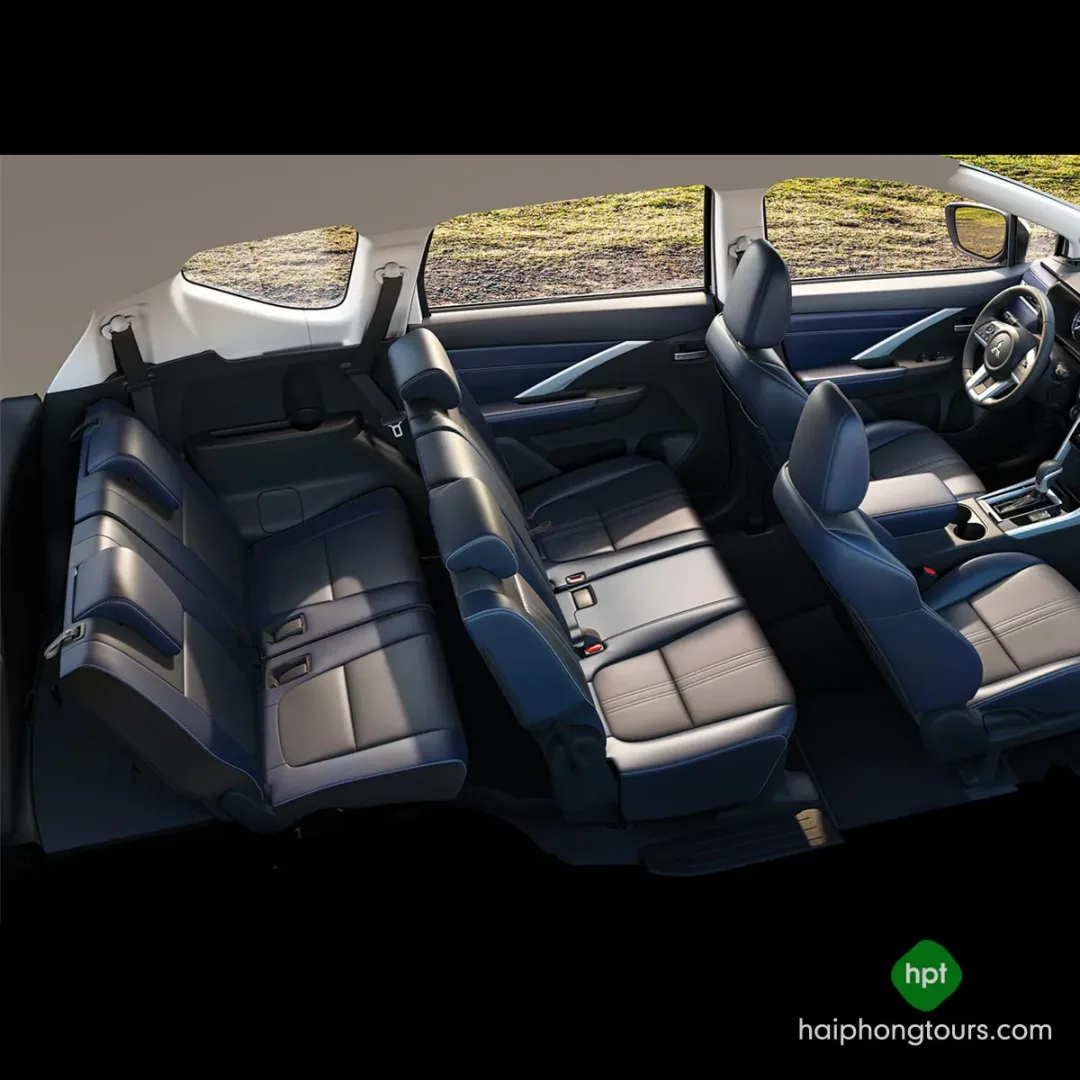
A booked SUV or seven-seat vehicle is not necessarily suitable for seven people with full-size suitcases. Give the actual bag count and ask how the luggage is carried. For families, request the required child restraint before paying rather than discovering at pickup that only adult seat belts are available.
Historical stops worth considering
The road south offers a way to learn about the former division of Vietnam. Choose a small number of meaningful visits instead of adding every site with “DMZ” in its description.
- Hien Luong Bridge and the Ben Hai River: a useful stop for understanding the former dividing line. Allow time to visit the memorial setting rather than only photograph a bridge from a moving car.
- Vinh Moc Tunnels: a separate coastal detour with an underground visit. It is not an attraction you pass through automatically on the direct road. Discuss steps, confined spaces and an above-ground alternative if these matter to your group.
- La Vang: an optional religious stop if it matches your interests. Include it explicitly in the route instead of expecting an unquoted diversion.
For planning, allow around 45–60 minutes at Hien Luong and 60–90 minutes at Vinh Moc, plus the detour and a meal. These are suggested visit allowances, not official opening hours or fixed tour durations. Book the attraction access, guide and admissions separately if they are not included in the car price.
Khe Sanh lies inland and changes the scale of the day. Do not treat it as a quick extra on an otherwise direct coastal transfer. If that history is your main interest, ask for a dedicated itinerary with realistic driving and visiting time.
When a scheduled bus makes sense
A coach can be a reasonable choice when its pickup is convenient and the arrival point is near your Hue accommodation. Check whether the ticket is for Dong Hoi city, an office outside the center or a highway stop. Also establish whether it arrives at a city office or a bus station farther from your hotel.
For this relatively short journey, an inconvenient pickup and two taxis can remove much of the apparent saving. Compare the final door-to-door cost with a train seat, not only one headline bus fare. If you are still in Phong Nha, compare a confirmed Phong Nha–Hue service before paying for an unnecessary ride back to Dong Hoi.
Arriving in Hue
Hue railway station is at 1 Bùi Thị Xuân. It is a city station, but not the entrance to the Imperial City. Send your accommodation’s actual address to the pickup driver and allow time to check in before sightseeing.
If your destination is Phu Bai Airport, code HUI, say that clearly. A “Hue transfer” quoted to a central hotel is not automatically an airport transfer. Likewise, an afternoon city arrival should not be connected to a tight flight simply because the map distance looks small.
Keep important travel documents and one change of clothes in your day bag. If heavy rain is affecting central Vietnam, check the route and railway status before leaving Phong Nha; an extra night in the right place can be more useful than attempting a fragile chain of separate bookings. Our weather and closure guide explains how to keep that decision practical.
Building a north-to-south Vietnam itinerary? Contact us with your Dong Hoi or Phong Nha hotel, travel date and whether you prefer a direct journey or historical stops. We can help you compare a realistic onward plan without overloading the transfer day.