
Large luggage changes a Hai Phong stop from a simple sightseeing problem into a custody and routing problem. The reliable sequence is to count the bags, confirm that the vehicle can carry them, leave them only with a provider that accepts responsibility in writing, and finish your city time in the direction of the final airport, station or transfer pickup.
Do not choose a vehicle by passenger seats alone. Four travelers with four large hard-shell suitcases, hand luggage and a stroller may need more cargo space than a nominally larger group carrying backpacks. The driver or operator should confirm the complete load before the trip begins.
Make a bag inventory that a driver can understand
List every item, including pieces that are easy to forget when requesting a quote:
- large, medium and cabin-size suitcases;
- backpacks and shopping bags;
- strollers, wheelchairs or other mobility aids;
- sports equipment, boxed items or fragile purchases;
- one day bag that must stay with each traveler.
Add approximate dimensions for unusually large pieces and send a photograph of the full group of bags when cargo fit is uncertain. Ask for written confirmation that the named vehicle can carry both the passengers and the declared luggage without blocking seats or requiring bags to be held on laps.
Separate storage availability from storage responsibility
An airport, railway station, hotel or attraction may look like a logical place to leave bags, but that does not prove a staffed luggage service exists on your date. Confirm the service directly. If the answer is vague, treat storage as unavailable and redesign the route.

A usable storage confirmation should answer:
- who accepts the bags and where the handoff happens;
- whether a receipt, numbered tag or written message is issued;
- where the luggage is kept and who can access it;
- the earliest drop-off and latest collection time;
- whether only hotel guests or ticketed passengers may use the service;
- whether stairs, curbs or a separate entrance affect the handoff;
- what identification is needed to collect the bags.
Photograph the bags and any tags at drop-off. Keep passports, cash, medication, electronics, keys and irreplaceable documents with you. Do not store valuables merely because the larger suitcase is inconvenient to carry.

Choose one storage point, not several small handoffs
Every extra handoff creates another opening-hour risk, vehicle-loading delay and opportunity for a bag to be misplaced. Whenever possible, use one secure point between the arrival and final departure. Return once, identify every item and load directly into the onward vehicle.
Hotel storage is often practical when you are staying there before or after the city visit, but confirm whether bags can be left before check-in or after checkout and until what time. Do not assume the night receptionist and day staff follow the same procedure.
Build a no-backtracking route through Hai Phong
Map four points before choosing activities: arrival, storage, the short city block you want to use, and final departure. A sensible route moves through those points once. Crossing the city again to recover luggage can consume the buffer needed for an airport, train or island transfer.
Keep the activity area compact and avoid adding a distant stop simply because the bags are no longer with you. Account for walking back to storage, waiting for staff, checking tags, using the toilet, loading the vehicle and reaching the correct departure entrance.
Match the final corridor
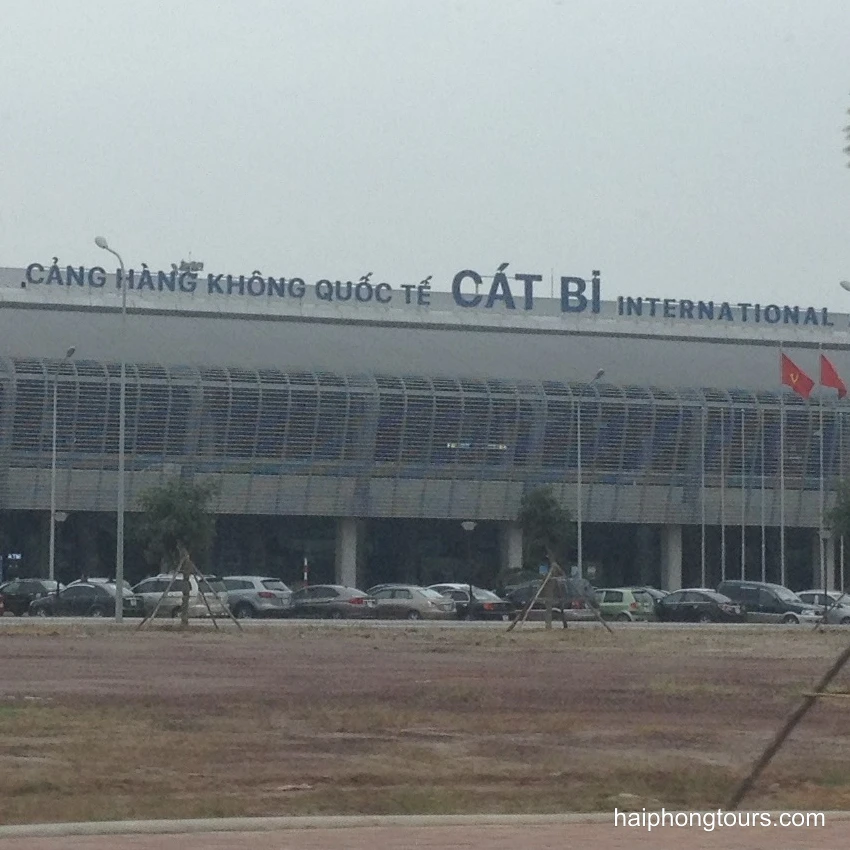
Cat Bi Airport
Confirm the live flight and terminal instructions, then send the driver the correct passenger entrance. Airport proximity should not be used as evidence that terminal storage exists; ask the airport or airline about current passenger services if you need them.
Railway departure
Use the station named on the issued ticket and allow time to unload on the correct side, move the bags to the platform and resolve ticket questions. Ask Vietnam Railways or the current station contact about baggage assistance rather than assuming a porter will be available.
Cat Ba, Ha Long or another road transfer
Tell the operator the final destination, crossing or port, not only “Cat Ba” or “Ha Long.” Large luggage may require a different vehicle on each side of a crossing. Confirm who is responsible at the handoff and whether the next vehicle has received the same inventory.
Check accessibility along the bag route
A storage desk may be only a short distance away but still involve steps, broken pavement, a narrow doorway or a curb that is difficult with a trolley. Travelers with limited mobility should ask whether the vehicle can stop at the actual entrance and whether staff can assist without leaving other bags unattended.
In rain, use waterproof covers for soft luggage and keep a dry layer around electronics and documents. Do not leave bags on the pavement while one traveler searches for the entrance.
Protect the collection deadline
Set a collection time earlier than the provider’s final cutoff. Call or message before returning if the city visit is delayed. If the storage desk closes before your train or flight, collect the bags first and wait with them rather than relying on an exceptional late opening.
Send the onward driver two pins: the storage entrance for loading and the final departure entrance. Include the number of travelers, the full bag inventory and the collection time. Hai Phong Tours recommends keeping the storage confirmation and transport booking in the same trip record so there is no disagreement about the load.
The practical decision
Use large luggage to design the route, not as an afterthought. Confirm cargo fit, store once with evidence, keep valuables with you and end the city block close to the final travel corridor. If secure custody or collection cannot be confirmed, skip the sightseeing detour and keep the luggage under your control.
Useful guides for your trip
Would you like help fitting this experience into your trip? Contact us with your travel dates, starting point, available time and group size. Tell us about walking limits or special interests so we can suggest a practical itinerary.