
Bus 91 is a useful low-cost way to reach Quang Phu Cau if you allow time for the city connection and the walk to your chosen courtyard. The bus ticket pays for transport; it does not include admission to a photography yard, a craft lesson or a guide.
Reach the right bus station first
One public-transport approach is metro line 2A from Cat Linh to Yen Nghia, followed by the change to bus 91. Reaching Cat Linh from your hotel is another part of the journey. Do not compare the bus fare with a door-to-door car price while leaving out this first leg.
At Yen Nghia, leave the railway station and find the ordinary city-bus boarding area. Look for 91 / Phú Túc on the vehicle. Intercity coaches and suburban buses share a wider transport interchange, so the name Yen Nghia alone does not identify your platform. Keep fifteen minutes in the plan for leaving the train, orienting yourself and reaching the bus.
Save the Cau Bau stops, not just the village name
| Direction | Roadside stop | Coordinates |
|---|---|---|
| Towards Phu Tuc | Trước cầu Bầu 70m | 20.776933, 105.790733 |
| Back towards Yen Nghia | Qua cầu Bầu 20m | 20.777067, 105.790267 |
These are useful reference stops for the Cau Bau visitor area. The numbers describe positions relative to the bridge, not walking distances to a photo courtyard. Save the entrance pin for the place you intend to visit as well as these two bus pins. The final pedestrian route depends on that entrance.
Leave before the terminus, following your saved stop sequence. Do not select another stop merely because its name includes Quang Phu Cau. Show the conductor your destination before boarding; an entrance photograph can help when several nearby yards advertise similar incense displays.
On arrival, move away from the stopping area before opening your map. Use a safe crossing point, keep cameras packed while crossing and follow the local lane to the agreed entrance. If you need collection rather than a walk, arrange it for the named bus stop; the bus does not deliver passengers to a workshop reception.
Current bus hours and fare
| Information checked 16 November 2026 | Published data |
|---|---|
| Departures from Yen Nghia | 05:00–21:00 |
| Departures from Phu Tuc | 05:00–20:45 |
| Current fare formula | VND 3,000 + VND 450 per kilometre, with system rounding |
| Route fare ceiling | VND 17,000 |
Timbus lists intervals of 14, 15, 20 or 30 minutes. Allow for a wait after each change instead of assuming a bus will arrive as you reach the stop. The departure windows above belong to the terminals, not to Cau Bau.
Using the ceiling gives a bus-only allowance of VND 34,000 per adult return, or VND 68,000 for two adults. Add the journey to Yen Nghia and your chosen visitor activities. Read the Hanoi bus payment guide for cash versus electronic charging and validation. Old fixed-fare references do not establish the fare for this trip today.
Choose the visit before choosing a departure time
The city’s tourism portal places the craft destination in Ung Thien commune, Hanoi. It describes bamboo preparation, colouring, incense making, drying and packing, with both handwork and machinery. Those processes explain why a working village and a carefully arranged photography space are different experiences.
Pick your main purpose before travelling:
- Photography: reserve time in the specific courtyard whose layout you want. A wide view, a portrait and a close-up of the bundles make a more varied set than spending the whole visit at one standing position.
- Understanding the craft: choose an explained production visit. Compare an uncoated bamboo core with a finished incense stick and follow how the coating changes its appearance and use.
- Trying the work: arrange an actual hands-on session, allowing time for instruction and packing the result. Do not assume this comes with a photography admission.
A November 2026 report from the local tourism cooperative describes a structured reception with ticketing, visitor guidance, photographs and craft activities. In the reported session, a worker demonstrated rolling fragrant powder around the core; visitors tried the technique and had the finished sticks wrapped to take home. This gives you a concrete experience to request, rather than asking vaguely to “see incense”.
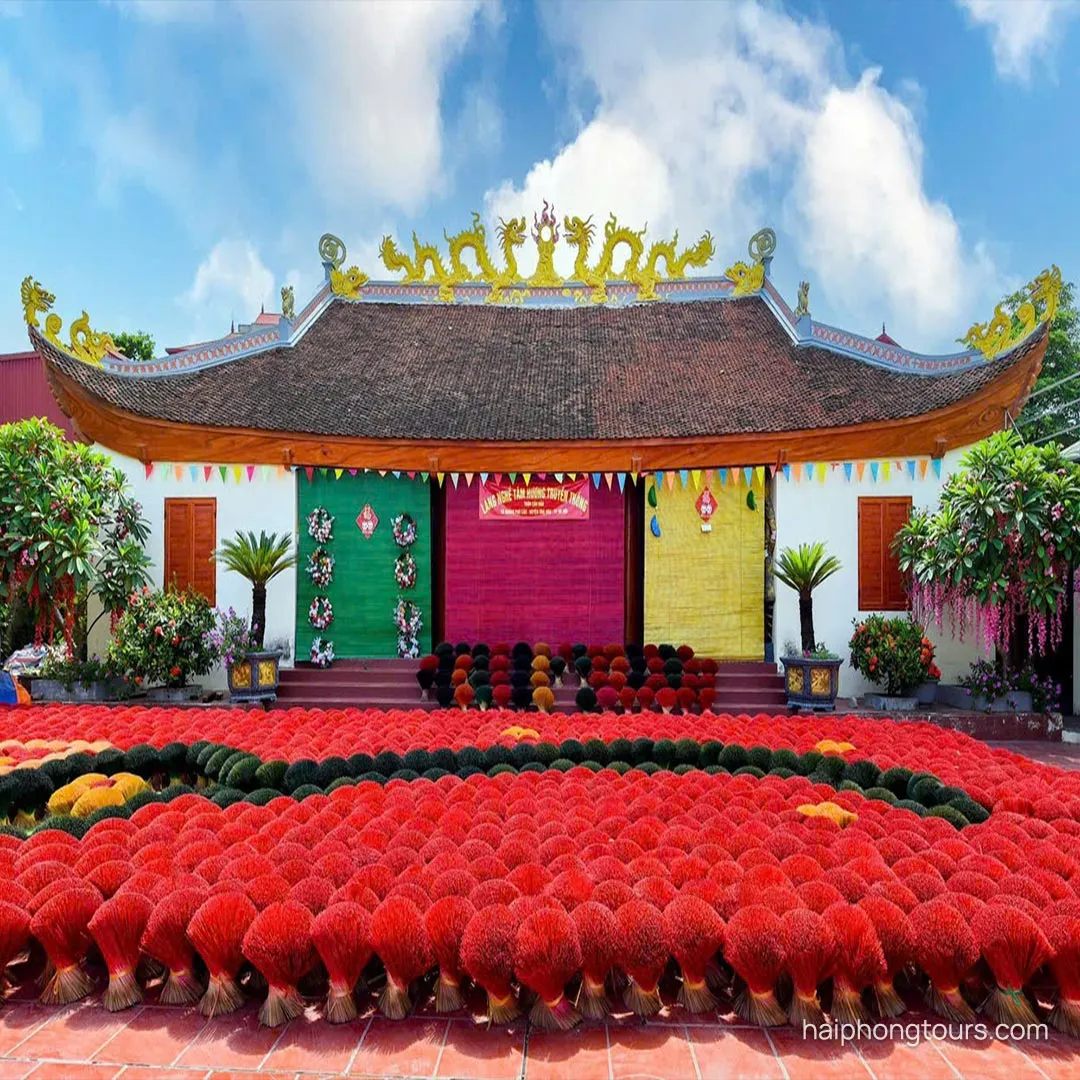
The same report describes the cooperative’s deliberately composed displays, including a Vietnam-map arrangement and flag shapes. Photographing those layouts and observing ordinary production answer different interests. Allocate your time accordingly, and leave room to watch a demonstration before reaching for the camera.
Admission and the visitor contact
The city portal labels the destination free to visit. That listing does not give a tariff for each privately managed photo yard, clothing rental or lesson. Obtain one price for the visit you actually want, with the unit stated per person or per group. A fee for photographs should not be treated as a ticket covering every household in the village.
Tourism-point visitor hotline: 0985 384 098; international +84 985 384 098.
Use that contact to settle the entrance, arrival time and included activity together. Bring the agreed information with you so you can distinguish the venue you booked from another roadside invitation. For the broader craft background and weather considerations, see our Quang Phu Cau visitor guide.
A realistic morning plan with an early-afternoon return
Here is a planning example, not a bus timetable. Starting at 06:30, allow seventy minutes for the hotel-to-metro journey, railway trip and transfer at Yen Nghia. Add twenty minutes waiting, sixty-five minutes on the suburban bus and twenty minutes for the final walk and reception. That places the start of your visit around 09:25.
Allow roughly two hours for one courtyard and an arranged craft experience. If you leave the visitor area at 11:30, the reverse allowances bring you back to your city starting area around 14:25. Traffic, a longer walk or a missed connection can extend that. This is why an independent bus outing should have more room than a tightly scheduled morning car trip.
Carry drinking water, a snack and a small bag for any purchase. Keep the return pin accessible offline. If you add another village or continue to Ninh Binh, arrange a separate onward vehicle rather than treating bus 91 as that connection.
For a fixed photography appointment, a group carrying equipment or less walking, compare the private transfer and group-tour options. Tell Hai Phong Tours which courtyard or craft activity matters most so the transport plan serves the visit.