
When a Hanoi bus live-arrival estimate disappears, freezes, or conflicts with the road, do not treat the missing countdown as proof that service has stopped. Confirm the route, direction, stop, and current operating window, then use the published timetable or frequency only as a planning range. Set a waiting cutoff and keep another verified route or mode ready.
Transerco’s official Tìm Buýt service can provide route, stop, timetable, frequency, and arrival information. Those fields answer different questions. A timetable describes planned operation, frequency describes an expected interval, and a live estimate tries to describe current movement; none is a guarantee that a bus will reach your stop at an exact minute.
Identify what has failed
A blank arrival field may be a connection problem, a temporary data gap, or a route state that needs another check. A frozen estimate repeats the same number without counting down. A stale display may show a bus that should already have passed, while the road remains empty. Conflicting estimates may appear after refreshing or when comparing two devices.
First rule out a planning error. Check the full route number, any branch letter, travel direction, and stop name. A live result for the opposite direction or a similarly named stop is not useful evidence for your boarding point.
Reconstruct the journey from stable facts
Confirm the route and direction
Open the current official route view and verify that the stop is still served in the direction you need. Compare the displayed terminus with your destination. If the route no longer lists the stop, look for a current operator notice rather than waiting for live data to return.
At the street, inspect the stop information and the destination display on arriving vehicles. Do not cross repeatedly between opposite-side stops to chase a moving estimate. Use a pedestrian crossing only after confirming which side serves your direction.
Check the operating window
Verify that the current time falls within the published service window for the route and direction. Be careful near the first or last service: a system may show general route information without proving that another vehicle will serve your specific stop.
If a Transerco notice changes operating time, frequency, or the route path, use its effective date and scope. Do not combine an old timetable with a new route map or present a temporary operating pattern as permanent.
Use frequency as a range
Frequency can help decide whether a wait is still reasonable. It cannot produce an exact arrival time at an intermediate stop because traffic, boarding, diversions, and operating conditions affect the journey. Start the waiting clock when you reach the verified stop and observe actual vehicles, not only the screen.
If one normal interval passes without a bus, refresh the official information and check for a notice. If the wait approaches your preset cutoff, switch plans. Repeatedly adding another interval can consume the margin needed for the rest of the trip.
Create a timetable fallback
- Record the verified route, direction, and stop.
- Confirm the current service window.
- Note the published frequency as a range, not an appointment.
- Add walking, interchange, and disruption time.
- Choose a latest departure time for protecting the next commitment.
- Prepare a separately verified alternative.
For a flexible sightseeing trip, a longer wait may be acceptable. For a train, flight, tour departure, medical appointment, or timed ticket, the cutoff should be earlier because the consequence of delay is higher. Work backward from the required arrival time rather than forward from a hopeful bus estimate.
Use offline information carefully
Transerco describes offline route lookup as a feature, which is useful if mobile data becomes unreliable. Save the stop name, direction, terminus, and route path before leaving a connection. However, offline information cannot tell you about a notice issued after the last update, so refresh current details whenever you regain service.
Keep the destination name and address in Vietnamese on your phone. This helps when asking a uniformed worker or official support adviser whether the route and direction are correct. Avoid handing an unlocked phone to an unknown person or sharing unnecessary personal information.
Ask the operator a focused question
If the route should be operating but the live estimate remains absent, contact the official Hanoibus support channel. State the route number, direction or terminus, stop name, current time, and what the display shows. Ask whether the stop is currently served and whether a notice affects the route.
Do not ask for a guaranteed arrival minute. The useful answer is whether the route and stop are valid and whether a known adjustment applies. Keep a note of the advice, but continue to use street conditions and your cutoff.
Hai Phong Tours recommends separating the municipal-bus estimate from any later booking deadline. A tour or transfer provider cannot restore the operator’s live feed, so preserve enough time to change mode before the missing data threatens the separate reservation.
Choose a safe alternative
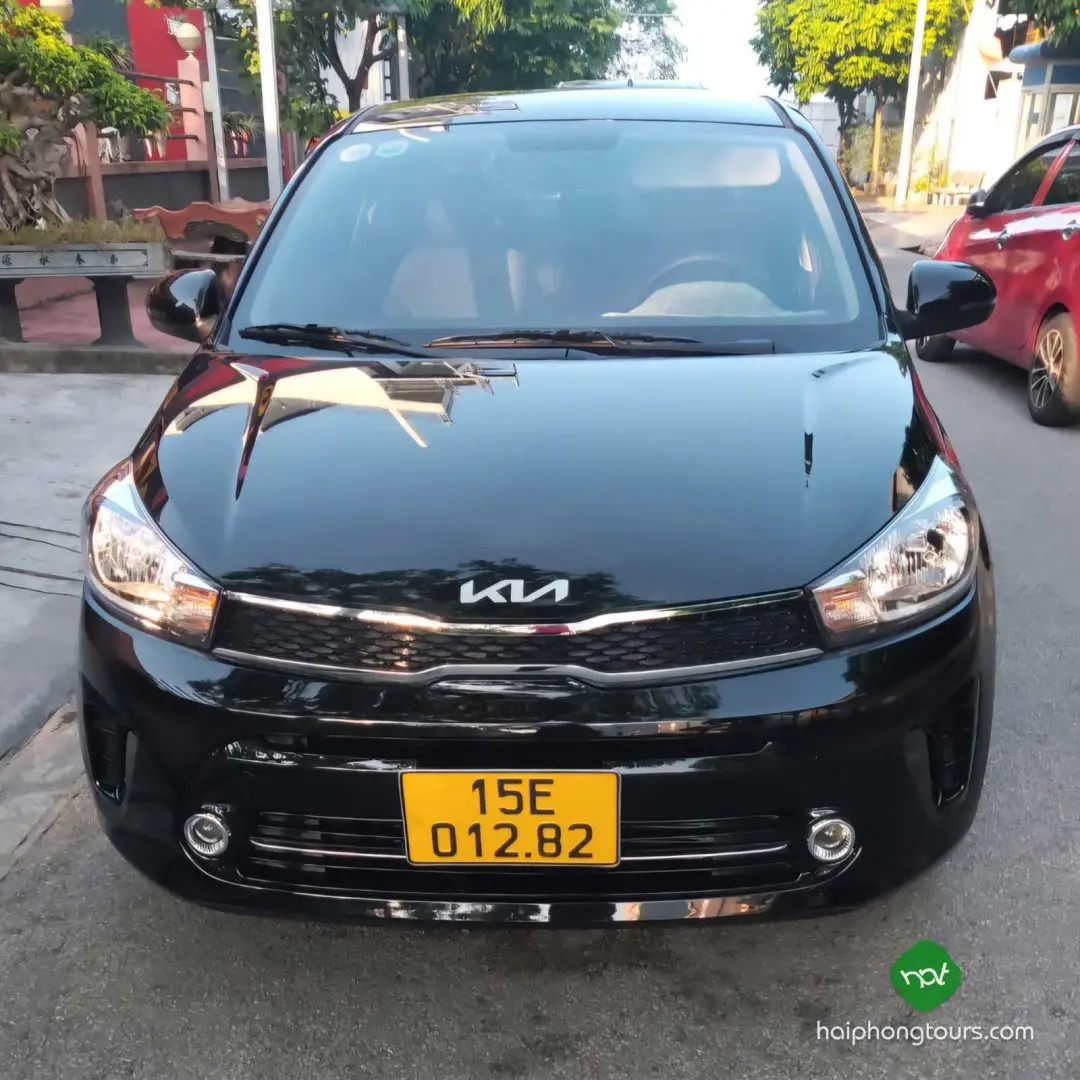
A second bus route is useful only after you confirm its boarding stop, direction, operating window, and interchange. Do not assume a nearby route avoids the same traffic or disruption. If time is limited, a licensed taxi or app-booked car may be more predictable, but confirm the vehicle and use a safe curbside pickup point.
With luggage, children, reduced mobility, heavy rain, or darkness, avoid a fallback that requires long walks between uncertain stops. Safety and a clear boarding point matter more than preserving the cheapest option.

Make the wait-or-switch decision
Continue waiting when the route, direction, stop, and operating window are confirmed, the observed wait remains reasonable, and your schedule has a real margin. Switch when the stop is no longer served, a current notice changes the plan, the wait reaches your cutoff, or missing live data leaves a fixed connection at risk.
The absence of a countdown is a signal to rebuild the decision from verified facts. Route, direction, valid stop, service window, frequency range, observed conditions, and a defined fallback provide a usable plan without turning a timetable into a promise.
Useful guides for your trip
- How to pay for Hanoi buses: Cash, QR tickets and passes
- Hanoi Bus Stations: My Dinh, Giap Bat, Nuoc Ngam and More
Would a private transfer make this journey easier? Contact us with your travel date, exact pickup and drop-off, number of travelers and bags. Include any flight, train or cruise deadline so we can assess a suitable plan and quotation.
