
Hanoi’s open-top sightseeing buses suit a first overview of the city or a day with a few selected stops. Choose a one-loop ticket if you want to remain on board, and a timed hop-on hop-off ticket if you want to leave the bus and rejoin later. Check the provider, daytime stop service and final pickup before paying. A 24-hour ticket does not mean buses operate continuously through the night.
Two booking names you are likely to encounter are Transerco/BRT’s Hanoi City Tour and Anh Viet Hop On–Hop Off. Their public information overlaps in sightseeing areas, but the ticket terms and booking channels should be treated separately. Use the route map issued with your own ticket and do not assume another branded bus will accept it.
Compare ticket types and published prices
| Ticket | Published adult price | Best use |
|---|---|---|
| Hanoi City Tour, one round | 150,000 VND | A continuous overview without independent attraction visits |
| Hanoi City Tour, 4 hours | 300,000 VND | A short sightseeing session with a limited number of stops |
| Hanoi City Tour, 24 hours | 450,000 VND | More flexibility within the operating timetable |
| Hanoi City Tour, 48 hours | 650,000 VND | Spreading selected visits over two days |
| Anh Viet, 4 hours | 300,000 VND | A continuous four-hour daytime hop-on hop-off window |
| Anh Viet, 24 hours | 450,000 VND | A longer ticket-validity window, subject to the daily service |
Anh Viet lists its child category as ages 5–11 and under 1.3 metres: 200,000 VND for four hours or 300,000 VND for 24 hours. It lists 100,000 VND for children under five on both products. Do not assume that a small child travels free, and ask how the fare applies if age and height fall into different categories.
Attraction admission, meals and hotel transfers are not automatically included in a bus pass. Add those costs separately when comparing the bus with walking, public transport or a private sightseeing arrangement.
Where does the route go?
The published sightseeing circuits cover the lake and central city, Ba Dinh, the West Lake approach and major museums or monuments. Think of them as a moving overview between neighborhoods, with walks required from the stop to the actual entrance.
| Area along the published routes | Sights to consider | Planning implication |
|---|---|---|
| Hoan Kiem and the central streets | Lake, cathedral area and Opera House | Several places also work well on foot; avoid using a limited pass for very short adjacent hops |
| Ba Dinh and the citadel area | Ho Chi Minh memorial area, One Pillar Pagoda and Thang Long Imperial Citadel | Choose the attraction first, then its nearest designated stop and entrance |
| Thanh Nien and West Lake approach | Quan Thanh Temple and Tran Quoc Pagoda | Useful for a waterside break, with a clear reboarding plan |
| Southern part of the central circuit | Temple of Literature, Hoa Lo and Vietnamese Women’s Museum | Long indoor visits need enough ticket time afterward |
Stop names can survive changes at an attraction. In particular, the Opera House is closed for restoration, even though its area remains a sightseeing landmark and possible bus boarding point. A bus stop beside a monument does not establish that the monument admits visitors that day.
Find the correct starting point
The operators’ published information uses the Hoan Kiem Lake or Dong Kinh Nghia Thuc Square area for ordinary weekday departures and the Opera House area when the lakeside pedestrian zone changes road access, particularly at weekends. Friday-evening arrangements also appear in Anh Viet’s meeting instructions.
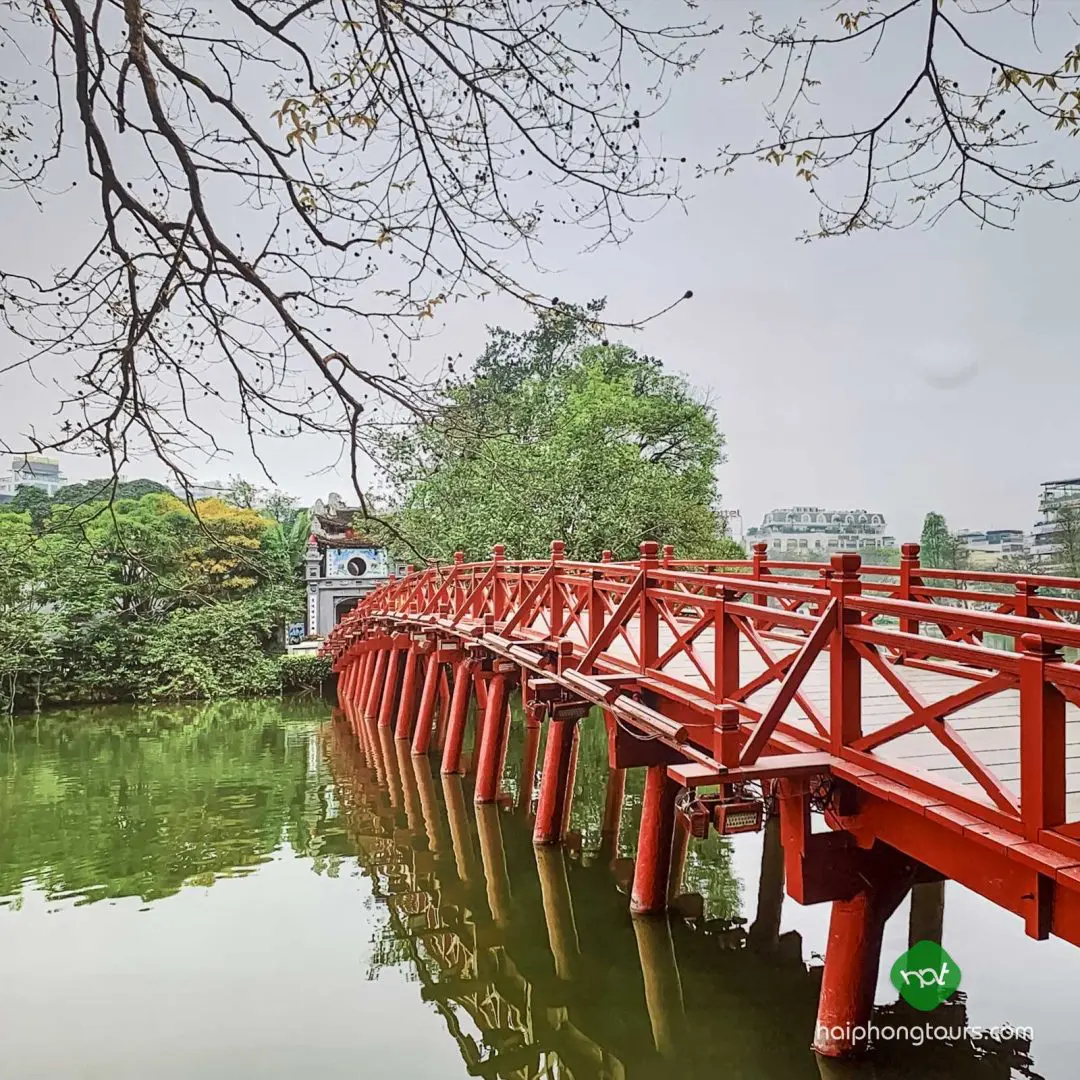
Get the exact pin from your booking confirmation on the day, rather than relying on a general address copied from another product. The public Anh Viet pages contain differing street numbers and timetable descriptions, so the confirmed departure message is the most useful guide for reaching the right bus.
Arrive with the issued ticket available offline and enough time to locate the staff. Anh Viet asks passengers to report 15 minutes before the selected departure. A hotel pickup is not part of the ordinary bus product, so budget the journey to the meeting point separately.
A one-loop ride or a hop-on hop-off day?
Choose one loop for a simple overview
A continuous ride is useful on a first afternoon when you want to understand the city’s layout, or when you prefer to stay seated. The sightseeing loop is commonly advertised at around an hour, though product descriptions and traffic conditions vary. Treat the duration as approximate and leave a margin before a meal or performance reservation.
You will see the outside of places as the bus passes. That is a different experience from exploring an interior, reading museum displays or walking into a temple compound. Choose the ride for the panorama and commentary.
Choose four hours for one or two focused stops
A four-hour pass sounds generous until you include the initial ride, the walk to an entrance, admission queues, the actual visit and the next bus wait. For a comfortable pace, select one main visit and a shorter second stop rather than trying to complete the entire monument list.
For example, combine a substantial visit around Ba Dinh with a short waterside stop, or pair the Temple of Literature with one museum. These are planning examples, not promises that every attraction is open or that the bus follows a particular stop order on your date.

Choose a longer pass only when the timetable makes it useful
A 24-hour pass can be valuable when it covers useful portions of two operating days. Before activation, ask when its validity ends and which services you may board the next morning. A pass activated late in the day may provide little extra value if you leave Hanoi early the following day.
Daytime stops and evening panoramas
Anh Viet’s four-hour page explicitly describes hop-on hop-off as a daytime product and says buses after 17:00 run without sightseeing stops. Its public pages contain inconsistent first and last departure details, so ask for the day’s stop timetable before setting off on foot.
Evening buses can be enjoyable for illuminated streets, but should be treated as a panorama unless the selected product explicitly includes stop-and-rejoin travel. Do not leave an evening bus assuming another one will collect you after dinner.
The same distinction applies to longer ticket validity: remaining hours on a pass do not keep the stop service running after its daily finish. Ask for the last useful pickup at the specific stop where you plan to end your visit.
Frequency, weather and practical comfort
Published service descriptions commonly refer to departures around every 30 minutes, with some route information giving a wider interval. Congestion and temporary road closures can extend the wait. Keep a photograph of the current stop sign or map and make sure you know which direction the route runs.
On the upper deck, protect yourself from sun or rain and keep hats, phones and bags secure. Use stairs only as directed and settle into a seat before the vehicle moves. For a wheelchair user or someone who cannot climb stairs, ask about the actual bus, boarding equipment, lower-deck space and stop conditions before purchase.
Keep the day’s itinerary flexible. If the next bus is delayed, spending longer at one good attraction can be more pleasant than rushing through several sites to recover a planned timetable.
Build the bus around your Hanoi priorities
Use the Hanoi sightseeing guide to select your main visits before buying a duration. The One Pillar Pagoda guide helps with the short Ba Dinh stop, while our Hanoi evening guide offers ideas after the bus day ends.
For a private transfer or a sightseeing plan linked to an airport, train or onward northern Vietnam journey, contact Hai Phong Tours with your dates and the places you most want to visit.
