
For a business visit to a Hanoi industrial park, choose transport by the factory’s actual location: north toward Noi Bai, east around Long Bien, west along Thang Long Boulevard, or south toward Phu Xuyen. A direct car is useful for a fixed appointment or several sites. Public buses can work well for a regular daytime visit when the boarding stop and final connection fit the factory.

Start with the full park name and the tenant’s visitor entrance. “Thang Long,” “Noi Bai” and “Sai Dong” can each describe more than one place. This guide helps foreign specialists, engineers and visiting managers identify the right corridor, compare independent travel and prepare a useful private-car request.
The Hanoi factory destinations to distinguish
| Destination | Where to orient yourself | Important naming detail |
|---|---|---|
| Thang Long Industrial Park, or Thang Long I | Thien Loc, in the familiar Dong Anh area north of the river | Different from Thang Long II in Hung Yen and the Thang Long park in the former Vinh Phuc area |
| Quang Minh Industrial Park | Quang Minh Commune, northern Hanoi, near the Vo Van Kiet corridor | Keep Quang Minh distinct from similarly named Minh Quang |
| Noi Bai Industrial Zone | Provincial Road 131 in the Soc Son area | A factory destination outside the airport passenger terminals |
| Sai Dong B Industrial Park | Long Bien ward, on Hanoi’s eastern side around the Nguyen Van Linh industrial corridor | Specify the letter B and the tenant; a wider Sai Dong locality pin is insufficient |
| Hanoi–Dai Tu Industrial Park | 386 Nguyen Van Linh, Phuc Loi, as shown by an official tenant address | Different from Sai Dong B; retain your own tenant’s lot number |
| Nam Thang Long Industrial Park | The northwestern city-side industrial area around Thuong Cat, with older Thuy Phuong references | Different from Thang Long I and from Nam Thang Long bus terminal |
| Thach That–Quoc Oai Industrial Park | The western Thang Long Boulevard corridor | Do not substitute the whole Thach That or Quoc Oai locality for the factory |
| Phu Nghia Industrial Park | Highway 6 between the Chuc Son and Xuan Mai areas | Different from Phu Vinh craft village, even where locality names overlap |
| HANSSIP, Hanoi Southern Supporting Industrial Park | The Phu Xuyen/Cau Gie corridor south of central Hanoi | Use HANSSIP plus the tenant, rather than a generic Phu Xuyen town stop |
| Hoa Lac Hi-Tech Park | Western Hanoi via Thang Long Boulevard and the relevant internal campus road | A related technology and research destination; identify the organization and campus, not merely “Hoa Lac” |
This is a practical visitor selection, not a complete register of every planned Hanoi industrial development. Familiar former district names are included for orientation because invitations and map listings still use them. For paperwork and navigation, keep the current address supplied by the receiving company.
Choose a base that serves the working week
If most appointments are at northern parks, compare a West Lake or northern/western Hanoi base with accommodation nearer the host. For Long Bien factories, an eastern base can avoid building a river crossing into every morning. My Dinh and western Cau Giay deserve comparison for the Thang Long Boulevard corridor, while Ha Dong can suit Highway 6 work.
These are starting points for comparing the route, not universal hotel recommendations. Put the exact apartment and factory pins into the same plan. Two hotels advertised under one district name can have very different access to the road you need.
For a one-day visit after a flight, avoid an unnecessary city-center detour. The Noi Bai to northern Hanoi industrial parks guide covers airport-side destinations. For several days, choose the hotel around the recurring commute and add the airport transfer separately.
What public transport can realistically do
A public bus is a serious option when you can travel with a small bag, the shift is predictable and the host is near a usable stop. Start at the correct terminus or an identified intermediate stop, travel in the right direction, and arrange the final approach before boarding.
| Corridor | Bus option to investigate | Where the journey still needs attention |
|---|---|---|
| Thang Long I | Route 07 from the Cau Giay interchange toward Noi Bai; routes through the northern corridor can also be relevant | Alight by the industrial-park approach, not at the airport; the stop does not identify your tenant gate |
| Quang Minh | 53B from My Dinh bus station toward Kim Hoa | The current route continues beyond Quang Minh; choose the stop for your factory |
| Noi Bai Industrial Zone | 56A from the My Dinh stadium area toward Nui Doi via Road 131 | My Dinh stadium and the intercity bus station are separate boarding areas |
| Sai Dong/Nguyen Van Linh | VinBus E02 toward Ocean Park, including the published stop at 23 Hang Tre | Match the Khu CN Sai Dong stop area to the tenant entrance; a safe walking route is not established for every gate |
| Hanoi–Dai Tu | Route 11 from Thong Nhat Park towards Vietnam National University of Agriculture via Nguyen Van Linh | Get off in the industrial corridor and complete the journey to the tenant at 386 Nguyen Van Linh; do not ride to the university terminus |
| Nam Thang Long Industrial Park | Bao Yen 57 from Do Nhuan beside Hoa Binh Park towards Phu Nghia, using its Tan Phong section | The Nam Thang Long bus terminal is separate from the industrial estate; arrange the final factory leg before boarding |
| Thach That–Quoc Oai | Bao Yen route 74 from My Dinh toward Xuan Khanh | Use the industrial-park stop and arrange the factory leg rather than continuing to the final terminus |
| Phu Nghia | Bao Yen route 57 toward Phu Nghia, including the Yen Nghia corridor | Allow for the internal road to the tenant and the separate return departure |
| HANSSIP | 06A from Giap Bat toward Cau Gie, then a prearranged local connection | Cau Gie is a transfer point, not an automatic factory drop-off |
| Hoa Lac | E07TC from Long Bien or E06TC from Giap Bat | The campus stop and the building may be separated by a further journey |
The individual route guides should be used for boarding instructions and last-mile details. Operator planning tools include Tim Buyt, VinBus’s Hanoi map and Bao Yen’s route pages. Save the Vietnamese stop name so you can show it to staff.
For help, use the current passenger-support channel of your route’s operator, such as Transerco, VinBus or Bao Yen. The 1900 hotlines are domestic Vietnamese numbers; use the websites when calling from overseas. These are bus enquiries, not factory reception lines.
How bus payment changed
Do not rely solely on an old flat fare shown in a route-launch article. Hanoi’s published subsidized-bus framework uses an electronic single fare of VND 3,000 plus VND 450 per kilometer. Cash charging uses the remaining distance to the route terminus. The operator’s June 2026 rollout notice explains validation when boarding and alighting.
A hypothetical 20-kilometer validated electronic ride therefore calculates to VND 12,000. That is an arithmetic example, not a quoted fare to any factory. Use the vehicle’s ticketing system for the recorded distance and retain the ticket. Bring small Vietnamese banknotes if you have not set up a compatible transport account; a foreign bank card is not a universal fallback on every vehicle.
Special services outside the subsidized network can have separate fares. The last-mile car is also a separate cost unless your employer provides it. Compare the complete cost and travel time, rather than treating the city-bus fare as the whole journey.
Train and metro: useful connections, limited factory access
National rail can help an intercity visitor reach Hanoi, but a railway station is not a factory gate. For an arrival from Hai Phong, choosing Gia Lam can be worth comparing for Long Bien appointments if the actual train sells that stop. For a western or northern park, calculate the onward road journey before committing to the rail ticket.
The existing metro can help you reach an interchange, such as the Yen Nghia end of the Ha Dong corridor, before a further bus or car. Do not treat a proposed metro line on a map as an operating service. Hoa Lac’s July 2026 transport overview describes Line 5 as a project in development, while identifying buses as current public-transport connections.
When a private car adds useful value
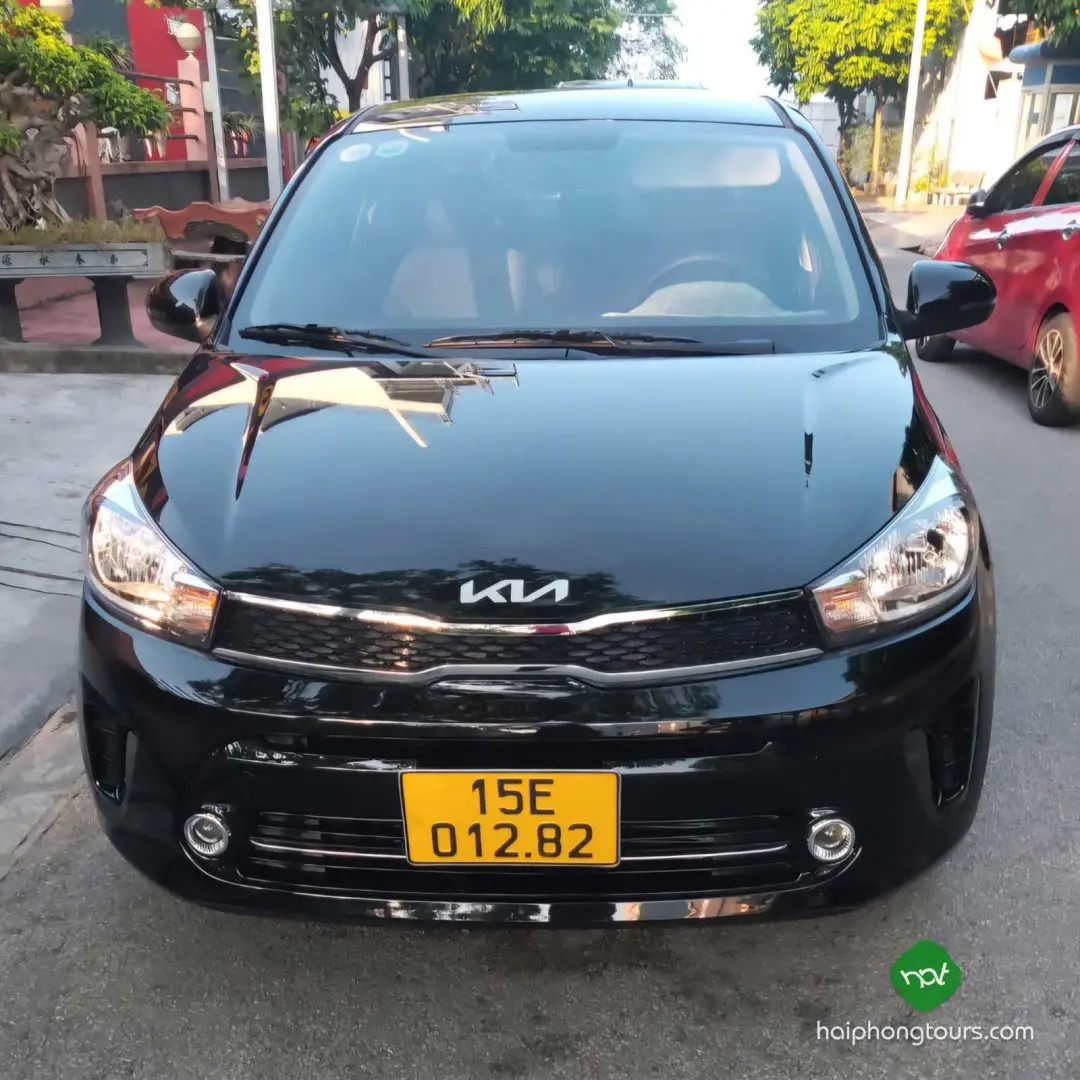
Consider a direct car when the appointment cannot move, you have equipment cases, several passengers share the trip, or the final bus stop is awkward for the receiving site. The useful service is the agreed hotel-to-entrance journey and return arrangement. The car’s badge or model matters less than whether that duty is clear.

A simple drop-off is enough when the host arranges the rest of the day. Two booked transfers can suit a long session at one factory. A retained car makes sense for several gates or a variable finish. Ask for a written quote covering the exact duty, including tolls, parking, waiting, additional distance and overtime.
There is no single reliable “Hanoi industrial park transfer price” across all these destinations. A short airport-side pickup, a cross-city commute and a whole day of factory visits are different jobs.
Four details that prevent most arrival problems
- A complete destination: park, company, plot/building and visitor entrance. A management-office map pin may be useful for orientation but can be the wrong meeting point.
- A real receiving time: distinguish gate registration from the meeting start. Work backward using the road or bus journey plus the final connection.
- A reachable host: keep the local telephone number and destination in Vietnamese offline. Ask the tenant for its own access requirements.
- An agreed finish: decide where and when the return car or bus connection begins. If meetings can overrun, identify the fallback before work starts.
For several sites, use the multi-factory visit guide to structure the day. Keep two substantial appointments as the starting plan and add more only when the actual gates, travel and hosts’ schedules support them.
Ask for a car using a clear route brief
If a bus and host pickup fit your day, the operator contacts above let you arrange them independently. If you prefer a direct vehicle, WhatsApp or email. Include your date, pickup address, full factory name and gate pin, passenger and bag count, reception time, and whether you need one-way travel, a return or waiting.
Confirm availability and inclusions for your particular route before making a booking.
Sources and updates
Hotel-base comparisons, service choices and scheduling advice are editorial judgments; no live road journey or specific tenant-access approval is implied.
- Transerco: current 53B route and September 2026 timetable.
- Transport journal: authority-announced 56A routing.
- Bao Yen: route 57 and route 74.
- VinBus: current Hanoi route planner.
- Hoa Lac Hi-Tech Park: current road, bus and planned rail context.
- Hai Phong Tours: official contact channels.
Useful guides for your trip
Would you like help fitting this experience into your trip? Contact us with your travel dates, starting point, available time and group size. Tell us about walking limits or special interests so we can suggest a practical itinerary.