
Choose an urban green day when the traveler needs flexibility, little road time and an easy hotel return. Choose Ba Vi National Park only when the group accepts roughly 60 kilometers each way, mountain roads and real climbing. Do not combine West Lake, Ba Vi and another outer park under a “quiet nature” label.
Hanoi’s official tourism platform currently lists eight verified nature and eco destinations, including West Lake, Ba Vi National Park, Ao Vua, Khoang Xanh Suoi Tien and Hanoi Botanical Garden. That list identifies candidates. It does not prove that every site is open, quiet, level or suitable for the same traveler.
Use West Lake for the low-road city branch
West Lake is the official platform’s featured natural landscape in Tay Ho. Use one short lakeside sector and a nearby meal rather than attempting the whole shoreline. The useful decision is which hotel-to-lake entrance and return work in current city traffic, not whether the lake appears close on a map.
Set a turnaround before fatigue, heat or rain makes the return difficult. Pavement quality, road crossings and construction can change by sector. A lake walk is removable, which makes it stronger than an outer road day when the traveler is recovering or protecting an evening booking.
The trade-off is urban exposure. Traffic, cafés, weddings, school groups and weekend events mean West Lake cannot be sold as silent nature. A quieter hour may occur, but the plan should work even when other people are present.
Use Ba Vi only for a full outer day
HanoiGo places Ba Vi National Park about 60 kilometers west of central Hanoi and gives the park an area of more than 9,700 hectares. It names three peaks: Vua at 1,296 meters, Tan Vien at 1,227 meters and Ngoc Hoa at 1,131 meters. These figures show why Ba Vi is not a city stroll.
The official listing says the route to Vua Peak involves more than 1,300 stone steps. It also warns that the steps can be slippery from mist and that the summit is colder than the foot of the mountain. Choose the French ruins, pine forest, a lower viewpoint or one summit route according to the group. Do not describe the entire park as an easy green day.
A vehicle reaches the park road, not the top of every walking route. Confirm whether the driver waits, where the car can collect the group and the latest departure for Hanoi. A one-way drop-off is not a day hire.

Compare 120 kilometers of road with one city return
A Ba Vi day begins with roughly 120 kilometers of outward and return road before park driving and walking. The exact time depends on the Hanoi hotel, traffic and chosen entrance. Count the hotel pickup, city exit, park gate, internal road, walking, meal and the same chain back.
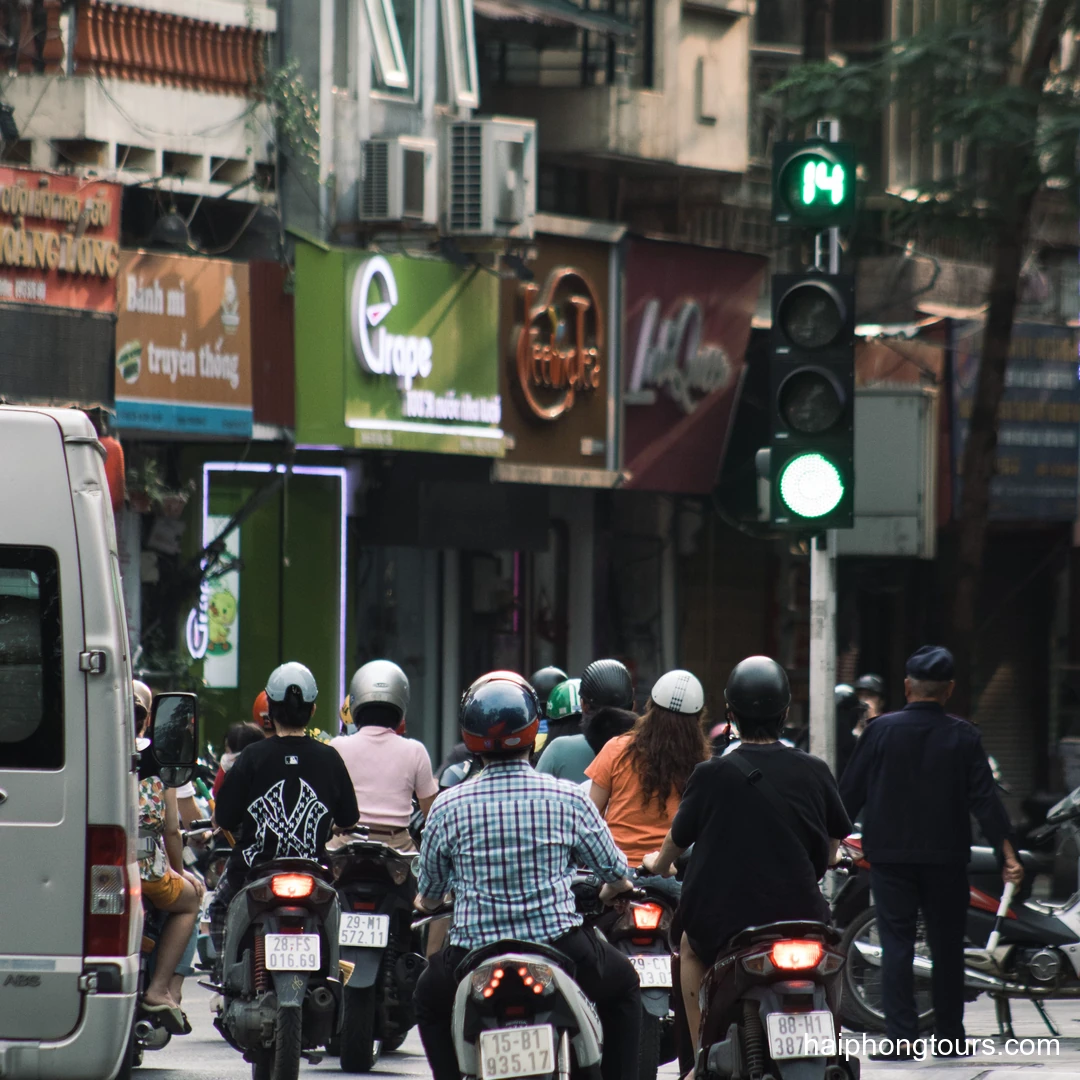
The urban branch can stop after one walk and return by an ordinary city vehicle. The Ba Vi branch has higher scenery potential but more road, stairs and weather exposure. Choose the outer branch for a traveler who wants the mountain and accepts the effort, not for someone who simply wants a restful green label.
Write the vehicle and turnaround before departure
Record the Hanoi hotel pin, named destination entrance, passenger-ready time, vehicle plate, waiting arrangement, chosen walking route, lunch and latest return. If the driver is not waiting, identify the actual return service and coverage before leaving the city.
Leave main luggage at the Hanoi hotel. Carry water, identification, weather protection, medication and a charged phone. Ba Vi’s road and summit paths are not suitable places to move large cases, and a parked vehicle should not become unattended luggage storage.
Use the walking facts, not the word nature
For Ba Vi, ask about the exact step count, slope, wet stone, handrails, toilets and seating on the selected route. The 1,300-step Vua Peak route is a specific physical commitment. A traveler who cannot or does not want to climb can choose a lower park stop, but the driver and park staff must confirm current access.
For an urban green stop, inspect road crossings, shade, benches and the distance back to a vehicle pickup. Neither branch should be called accessible without evidence for the exact entrance and route. A companion’s past visit does not prove today’s surface or construction condition.
Check weather at both elevations
Use NCHMF for the regional forecast and the current park notice for Ba Vi. Mist can make upper stone steps slippery and remove long views even when central Hanoi is dry. Heat can make an exposed lake walk uncomfortable while the mountain has rain. One city forecast icon cannot settle both branches.
If thunder, heavy rain, strong wind, a closure or low visibility affects the mountain, remain in Hanoi. Do not replace Ba Vi with Ao Vua or Khoang Xanh merely because those names also appear on the official nature list. They are separate outer sites with their own transport and operation.
Keep food and the fallback ordinary
Choose a confirmed meal near the selected urban sector, or carry normal day supplies to Ba Vi under the park’s rules. Do not rely on a remote café opening or recommend collecting plants or food in the park. Take all waste out and use only areas where picnics or camping are permitted.
If Ba Vi fails, keep the Hanoi hotel and use one verified city green stop or a full rest day. If the city walk becomes busy or wet, return to the hotel instead of driving to the mountain late. A point-to-point transfer should not be presented as a waiting and return vehicle.
Match the branch to the traveler
The city branch suits someone protecting energy, an evening reservation or a next-day departure. Ba Vi suits someone who accepts a long road day and chooses one named forest or summit route. Neither is clinical wellness, guaranteed solitude or an accessible itinerary.
Hai Phong Tours recommends making the return the controlling fact. A useful nature day ends at the planned Hanoi hotel with every traveler and bag, even when the walk becomes shorter than expected.
Useful guides for your trip
Would you like help fitting this experience into your trip? Contact us with your travel dates, starting point, available time and group size. Tell us about walking limits or special interests so we can suggest a practical itinerary.