
This plan is for an early rail departure from Hilton Garden Inn Hanoi, when checkout, stored luggage, a quiet-hour pickup, and the correct boarding station must all be settled the night before. Start at the confirmed guest entrance for 20 Phan Chu Trinh Street and let the issued ticket, not the phrase “Hanoi station”, control the destination.
Copy the train number, travel date, departure station, scheduled time, carriage, and passenger identity into one departure record. Work backward from a platform-ready target. Protect time for luggage release, loading, the road journey, finding the correct entrance, document checks, and moving through the station.
Complete the hotel tasks before sleeping
Ask reception which entrance will be staffed for the pickup hour and whether a vehicle can stop there. Settle the room account, confirm any wake-up request, and learn how stored bags will be released. If a claim ticket or guest signature is required, keep it with the traveler rather than inside a suitcase waiting in storage.
Lay out tickets and identity documents separately from large luggage. Charge phones and save the ticket where it can be shown offline. Put one small essentials bag under the control of its owner. The departure can fail even when the car is on time if a passport, ticket, or medication pouch is buried in a locked case.
Make one station decision from the ticket
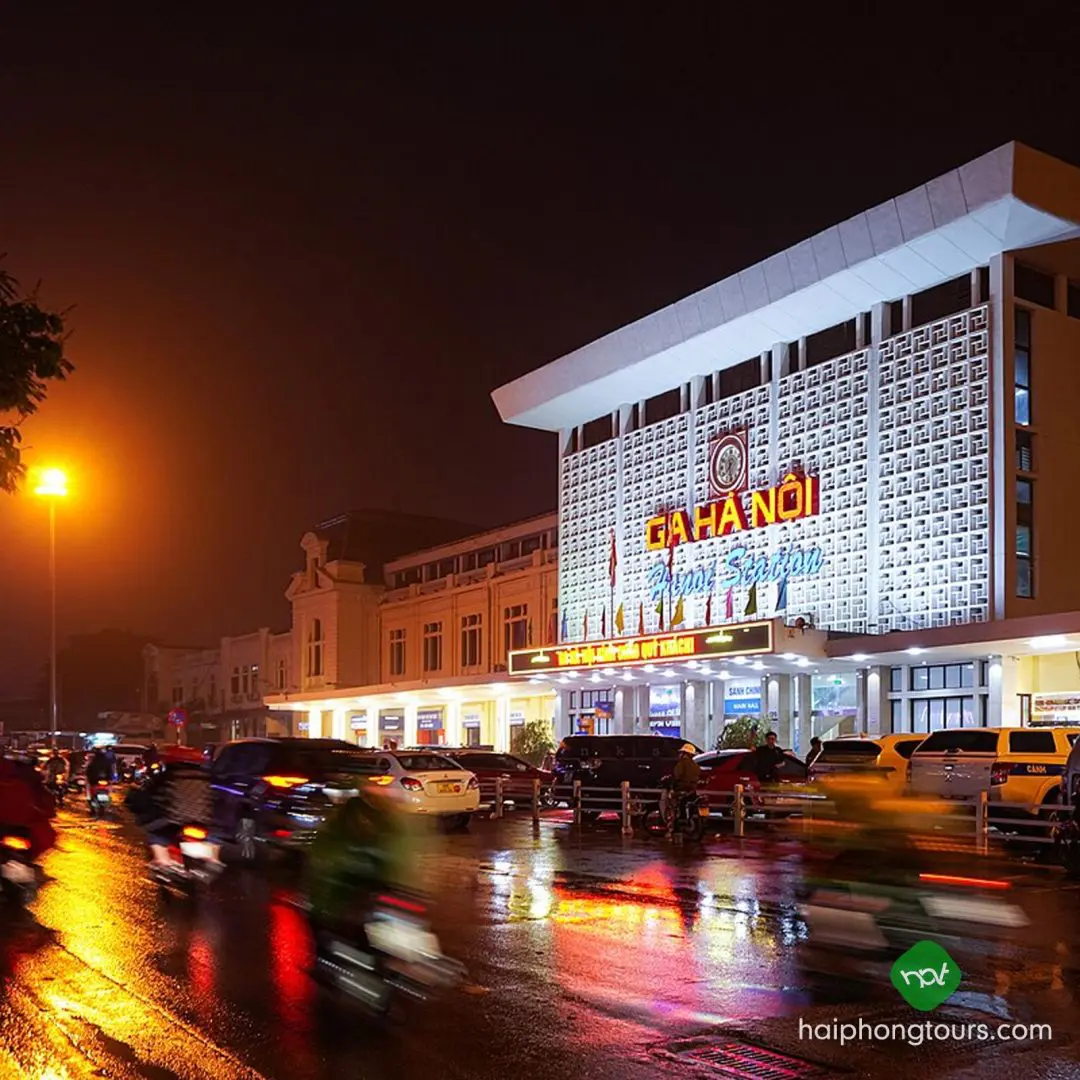
Do not shorten the destination to “Hanoi Railway Station” unless the current ticket names that station. Hanoi departures can use different rail points, and the driver needs the exact one printed or supplied by the carrier. Add the entrance or map pin only after checking that it corresponds to the ticketed station.
Ask the driver or dispatcher to repeat the hotel entrance and the station name. A car that arrives at 20 Phan Chu Trinh but is routed to the wrong rail point has not been correctly booked. Keep the train number in the message because it gives the provider another way to identify an obvious mismatch.
Choose the vehicle for the early-hour load
Count passengers, large cases, cabin bags, strollers, and mobility equipment. Confirm capacity before accepting the vehicle. For a family, assign one adult to supervise children and another to check luggage. For two cars, place a responsible passenger in each and send both drivers the same station record.
The early hour can reduce some daytime activity but does not guarantee a particular journey time. Roadworks, access restrictions, weather, or a missing vehicle can still affect the plan. The useful margin is the amount of time available at the station after arrival, not a claim that the drive will take a fixed number of minutes.
Set a lobby-ready time and a fallback time
The lobby-ready time should be earlier than the vehicle time. Everyone should be dressed, checked out, holding documents, and beside the counted bags before the driver is due. If a passenger remains in the room when the car arrives, the platform margin is already being spent.
Choose a separate fallback trigger. If the assigned vehicle is not confirmed by that point, contact the provider and ask reception to start an alternative. Waiting until the planned pickup time has passed may leave no practical recovery. Any replacement must accept the full luggage load and the exact ticketed station.
Manage the curb-to-carriage handoff
At the station, unload into one supervised area and recount bags before the car leaves. Check the entrance against the ticket and signage. Move as a group to the carrier’s current verification or boarding point; do not split with one passenger searching for a platform while another remains outside with luggage.

- Hotel: Hilton Garden Inn Hanoi, 20 Phan Chu Trinh Street, agreed guest entrance;
- Rail: exact ticketed station, train, date, time, and carriage;
- People: identity documents with each traveler and a lead phone number;
- Bags: numbered count, storage-release proof, and essentials kept accessible;
- Recovery: fallback trigger before the platform margin becomes unusable.
Give each traveler a boarding role
For a family, one adult should manage children and personal documents while another supervises the luggage count. A solo traveler with limited mobility should ask what assistance the station or carrier currently provides and where it begins. Do not assume the driver can leave the vehicle to carry bags through the station.
Keep carriage and seat details accessible. If food or water is needed, obtain it without sacrificing the station-ready target. Before leaving the hotel, agree that anyone separated from the group remains at a visible meeting point, calls the lead number, and does not board a different train based only on verbal advice.
The station segment deserves its own plan. A successful car ride is not enough if passengers, documents, and cases reach different entrances or the group cannot move the complete load to the carriage.
If the connection becomes threatened
Tell the provider the train details and ask for a realistic update. Do not ask the driver to compensate through unsafe driving. If the original station or train may be missed, contact the ticket seller or carrier for the current change, rebooking, or missed-train procedure. Do not assume the same ticket can simply be used later.
No catalogue link is inserted because Hai Phong Tours has no verified named-hotel-to-station product for this exact handoff. The value of the plan is operational: finish the hotel process early, preserve the correct rail endpoint, and trigger an alternative while there is still time to board.
Useful guides for your trip
Would a private transfer make this journey easier? Contact us with your travel date, exact pickup and drop-off, number of travelers and bags. Include any flight, train or cruise deadline so we can assess a suitable plan and quotation.
