
A photograph of Muong Hoa Valley does not tell you how much walking lies between its villages. Two tours sold as a “Sapa valley trek” can have very different climbs, finishes and transport arrangements. Choose the route first; the word “easy” on a booking page is not enough.
For a first full walking day, the Y Linh Ho, Lao Chai and Ta Van route is the more manageable of the two published Sapa O’Chau programs compared here. Its stated walking distance is 12–15 km, finishing with a car from Ta Van. The alternative through Sa Seng, Hang Da and Hau Thao is about 20 km and includes a higher village approach. Neither is a short, level promenade.
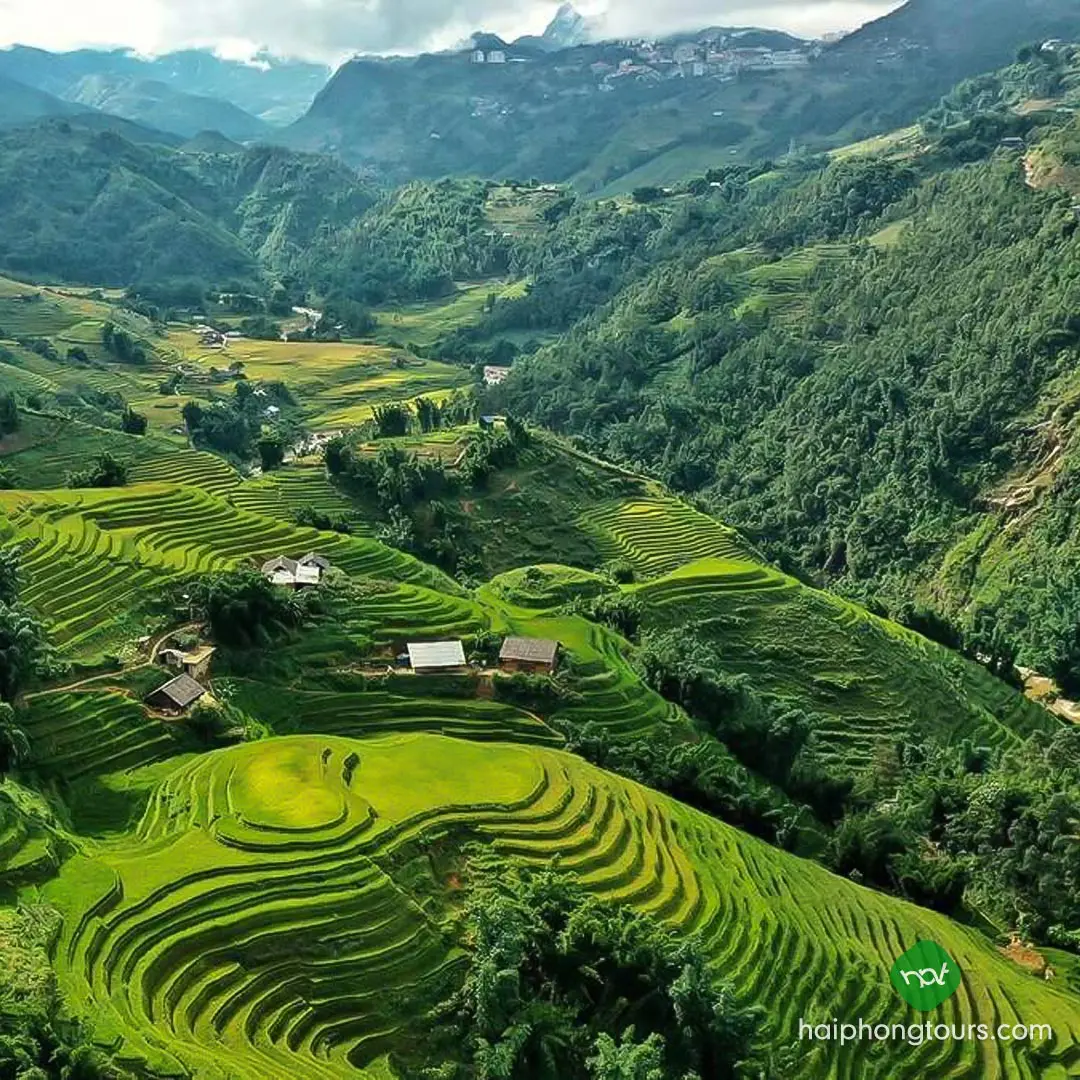
Two real routes, not one interchangeable valley walk
| Published Sapa O’Chau program | Walking sequence | Stated distance and grade | Return arrangement |
|---|---|---|---|
| Terrace View Trek, one day | Sapa, Y Linh Ho, Lao Chai, Ta Van | 12–15 km; labelled easy by the operator | Collection by car in Ta Van |
| Muong Hoa Valley Villages, one day | Road transfer, Sa Seng, Hang Da, Hau Thao | About 20 km; labelled medium | Collection by car in Hau Thao |
The first is a village-to-village day with the familiar lower-valley destinations. The second is a longer outing above parts of the valley. The listed distances describe those operator programs, not every route carrying the same village names. Guides may use different connecting paths, and a map line copied from another traveller is not proof of access through farmland.
Y Linh Ho, Lao Chai and Ta Van: the first-day choice
Sapa O’Chau’s Terrace View Trek proceeds from Sapa through Y Linh Ho and Lao Chai before reaching Ta Van. The program describes Hmong communities in Y Linh Ho and Lao Chai and a Giay community in Ta Van, with a picnic lunch during the walk.
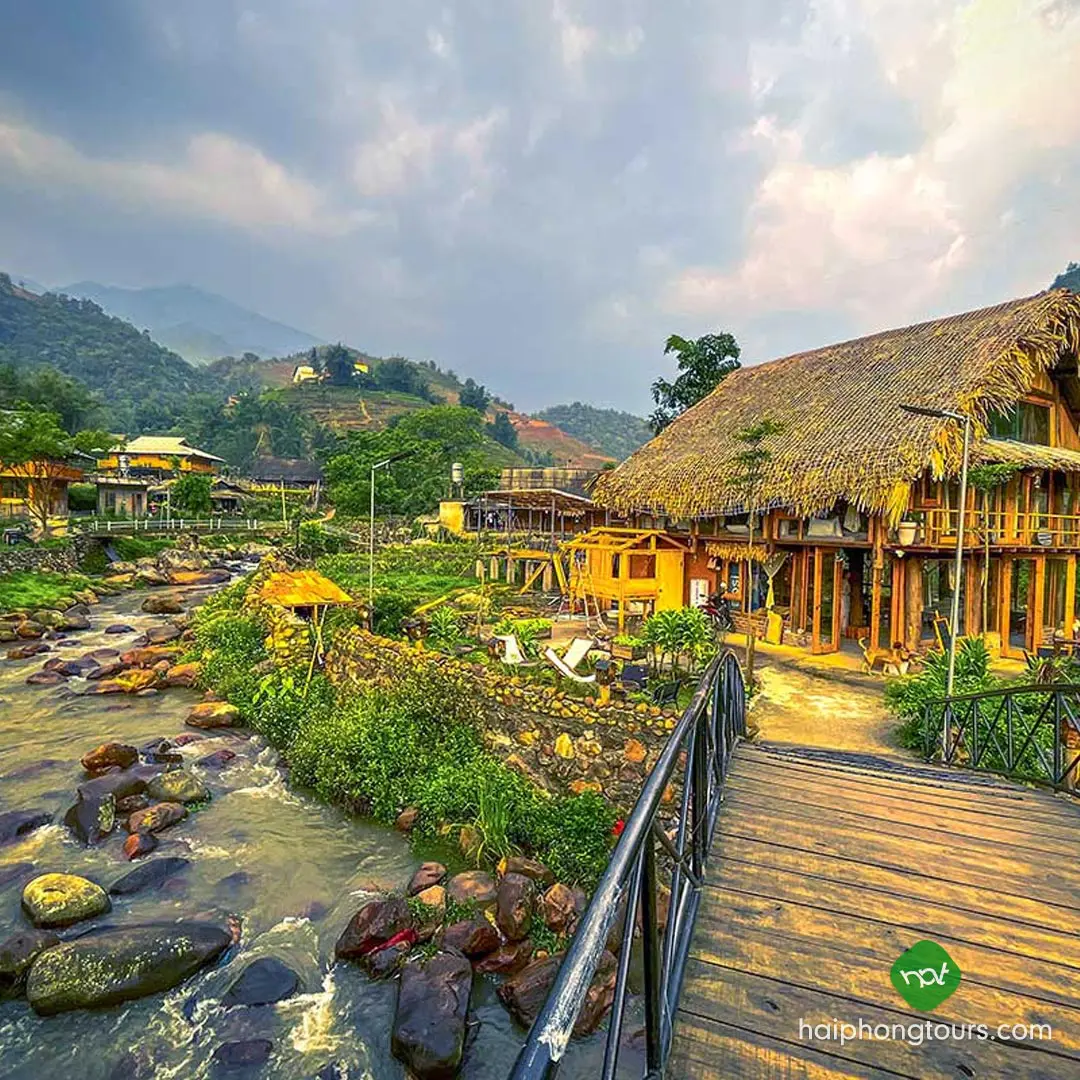
The useful planning feature is the finish. You do not need to walk back to Sapa to complete this particular outing. Once the group reaches the agreed Ta Van collection point, the return car closes the day. That makes it easier to judge the total walking commitment than an open-ended “explore the valley” arrangement.
Give this route a full day if you want time for conversation and stops. Dividing 12 km by a pavement walking speed does not provide a reliable finish time on village paths. A slow descent, a muddy section, lunch and waiting for a group can matter more than the raw distance.
Do not treat Ta Van as a single precise pin. Before setting out, have the guide and driver agree where the car can stop. The name on a village map is not necessarily the point at which your walking trail meets a road.
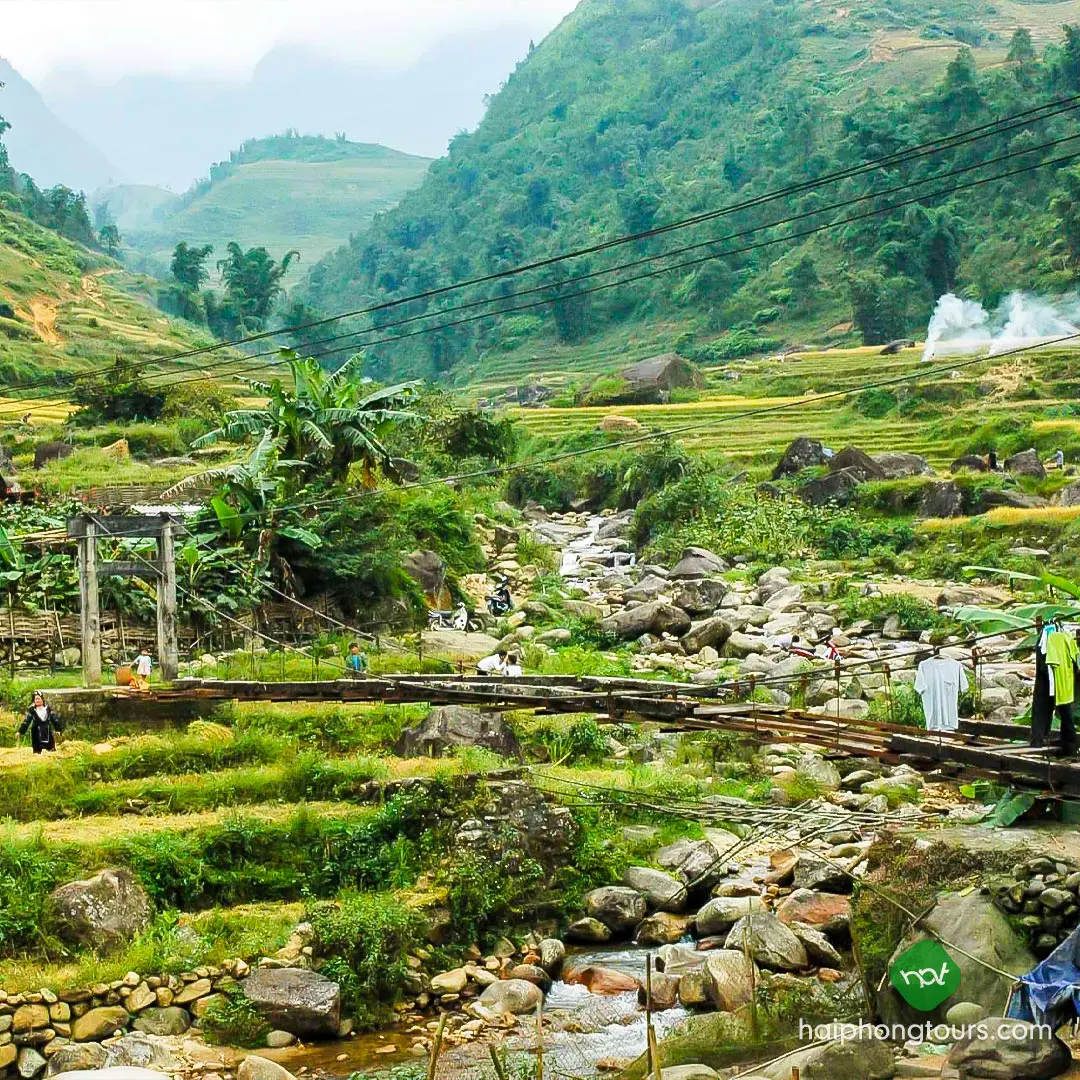
Sa Seng, Hang Da and Hau Thao: choose it for a longer hill day
The second Sapa O’Chau program begins with a short road transfer, described as about 3 km from Sapa toward Lao Cai, followed by an uphill approach to Sa Seng. It continues to Hang Da, where the itinerary includes a picnic and a church stop, then descends toward Hau Thao for collection.
This is the better candidate for a walker who actively wants the longer day. It is not simply the first route with a different lunch venue. About 20 km leaves less room to linger if you also need to reach a departure from Sapa that evening.
A church mentioned in an itinerary is not a promise of unrestricted entry during services or private events. Likewise, a higher route does not guarantee a panoramic photograph. If low cloud obscures the landscape, the additional walking remains additional walking.
Neither product publishes a dependable cumulative ascent figure on the pages checked. We therefore do not attach an invented elevation profile or a turn-by-turn GPS track. If elevation gain is decisive for your knees, fitness or rehabilitation plan, request the actual route for your departure and decide from that.
Can you book a shorter walk?
Yes, a shorter custom walk is a sensible request, but it should be quoted as a different itinerary rather than silently assumed to be the 12–15 km product. Specify the longest distance you are comfortable walking, whether long descents are a problem and whether you need to avoid rough paths.
The operator then needs to match the start and finish to road access. “We will call a car when tired” is a weak plan if the tired moment happens between villages. A useful shorter booking names the road drop, the walking section, the meal or rest stop and the road collection.
For someone who wants village scenery without a trekking commitment, a car-based outing with selected short walks may be more appropriate. That is a distinct service to request, not a guarantee that any of these published trekking paths is suitable for wheels or walking aids.
What the published prices cover
As a reference, Sapa O’Chau’s pages list US$32 per person for a party of two or three on Terrace View Trek and US$42 per person for the same party size on Muong Hoa Valley Villages. Those pages list transport, a guide, lunch and village entrance fees as included. Obtain a dated quote before paying; these are the operator’s displayed examples, not universal Sapa walking prices.
Read the exclusions as carefully as the total. Drinks, personal insurance and tips are not automatically covered. Nor should a shared itinerary price be assumed to include a detour to a remote hotel, forwarding a large suitcase or changing the final destination to Lao Cai station.
A sensible comparison is the complete day for your actual party: guiding, entrance arrangements, transport at both ends, lunch and any hotel collection supplement. A cheaper headline that leaves the return car unspecified is not yet a comparable quote.
Where you sleep changes the pickup plan
If you sleep in Sapa town: agree whether the guide meets you at the hotel or an office. Keep only the day’s essentials with you if you return to the same hotel. A spare dry layer in your daypack is more useful than carrying your whole travel wardrobe.
If you already sleep in Ta Van: say so before reserving a Sapa-start program. Travelling uphill to town only to walk back toward your accommodation may be unnecessary. A guide can propose a locally starting day, but its mileage and price will need a separate description.
If you want to finish at a Ta Van homestay: arrange luggage delivery independently of the walking group unless the operator explicitly includes it. Send the homestay’s exact entrance and host name; a village drop does not mean your bag has reached your room.
Lunch, toilets and wet paths
The two published programs specify picnic lunches. They do not promise a restaurant bathroom at each stop. Use facilities before departure and establish the planned toilet opportunity during the briefing, particularly if travelling with children or someone needing frequent access.
Choose footwear for grip and stability rather than a new pair bought only for photographs. A guide should decide whether recent rain requires a different path. Narrow terrace edges are working agricultural infrastructure, not a mandatory feature of a good trek. Stay on the agreed route and avoid stepping into planted fields for a clearer picture.
These walks also pass through lived-in communities. Ask before entering homes, photographing people closely or handling tools. A useful local explanation is part of the experience; a compulsory shopping stop should not be substituted for the walk you booked.
Make the route fit the rest of your trip
If choosing between communities is still the main question, start with our Sapa village comparison. If you know the route but are deciding how to arrange the guide, our private guide versus shared Sapa trek guide addresses that separate choice.
Need to connect a walking day with a hotel change or onward car? Send Hai Phong Tours your accommodation, preferred route and maximum comfortable walking distance. We can help assess the transport sequence without pretending that a transfer booking establishes trail conditions.