
Ngoc Son Temple is the small island temple reached by the red The Huc Bridge on Hoan Kiem Lake. Budget 50,000 VND for a standard adult ticket and allow about 45 minutes for the entrance monuments, bridge, courtyards and lakeside views. Enter from Dinh Tien Hoang Street on the lake’s northeastern side. A daylight visit makes it easier to appreciate the architecture and navigate the steps.
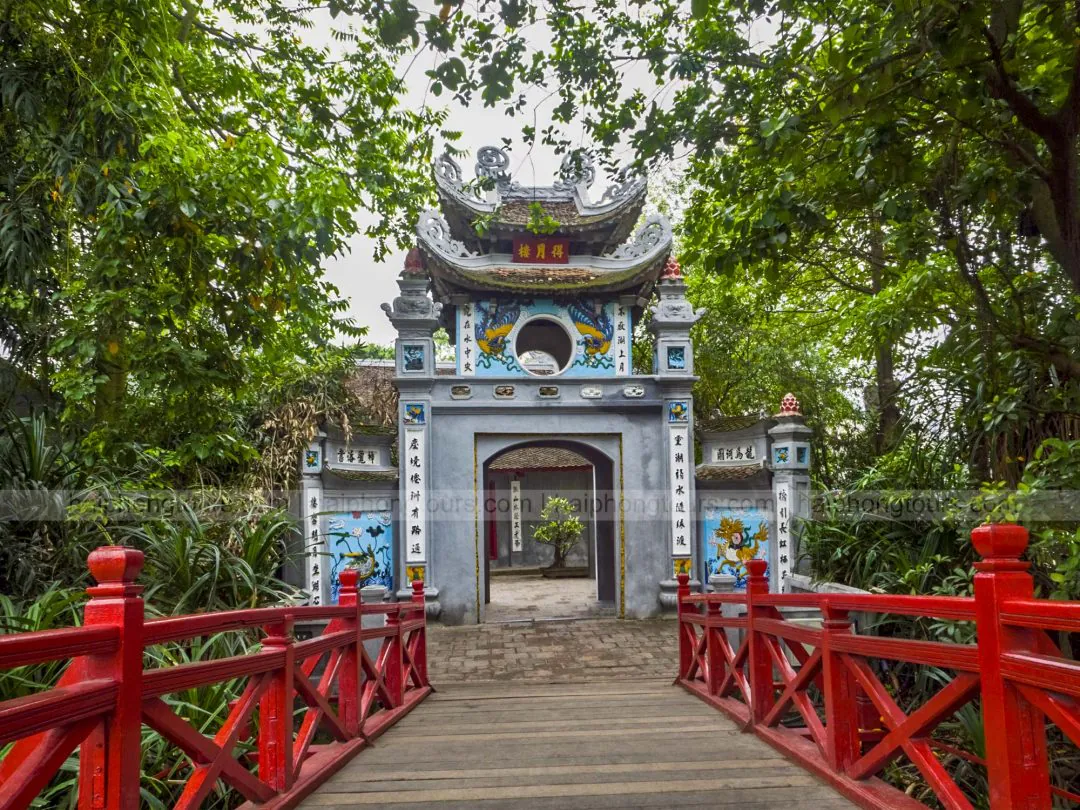
The temple works particularly well as the first cultural stop on a walk through central Hanoi. You can understand the layout in one visit without a long transfer, but there is more to see than the bridge photograph. The monuments around the entrance connect scholarship, religious devotion and the city’s relationship with the lake.
Tickets, timing and the entrance
| Planning point | What to know |
|---|---|
| Standard admission | 50,000 VND per person under Hanoi’s published monument fee schedule |
| Children | Under 16 qualify for free admission with age documentation; the regulation also provides a height criterion when documentation is unavailable |
| Entrance | The temple gateway on Dinh Tien Hoang Street, followed by The Huc Bridge |
| Suggested visit length | About 45 minutes; allow an hour if you read the displays and wait for quieter photographs |
| Access considerations | Steps, thresholds and a narrow bridge; do not assume a continuous step-free route |
Buy admission at the staffed ticket point and keep the ticket available through the entrance sequence. The lakeside promenade is a separate public space. If you only want a view of the red bridge, take it from the shore; do not assume that a lake walk includes admission to the temple or unrestricted access beyond its gate.
Discounts have eligibility conditions. In particular, the senior concession is defined for Vietnamese citizens, while student eligibility follows the categories in Hanoi’s regulation. An overseas student card or foreign passport showing an age over 60 should not be treated as an automatic discount.
Published opening-hour listings disagree, especially about evening access. For a dependable itinerary, place the temple in your daytime sightseeing and read the current ticket-office hours when you arrive. A lit bridge visible from the promenade does not prove that the inner temple is still admitting visitors. This matters if you are trying to fit the visit between an evening meal and a performance.
A simple route through the temple
1. Start with the Pen Tower and Ink Slab
Before crossing the water, pause at Thap But, the Pen Tower, and Dai Nghien, the Ink Slab. These are deliberate symbols of learning and writing, rather than unrelated decorations beside the entrance. The tower’s inscription, Ta thanh thien, evokes writing on the blue sky. Together, the two monuments introduce the scholarly character of the site.
Look at them from the approach before joining a queue. This is easier than stopping suddenly in a gateway while other visitors are moving toward the bridge. A guide or a good translation of the inscriptions adds more here than simply collecting photographs of every structure.
2. Cross The Huc Bridge
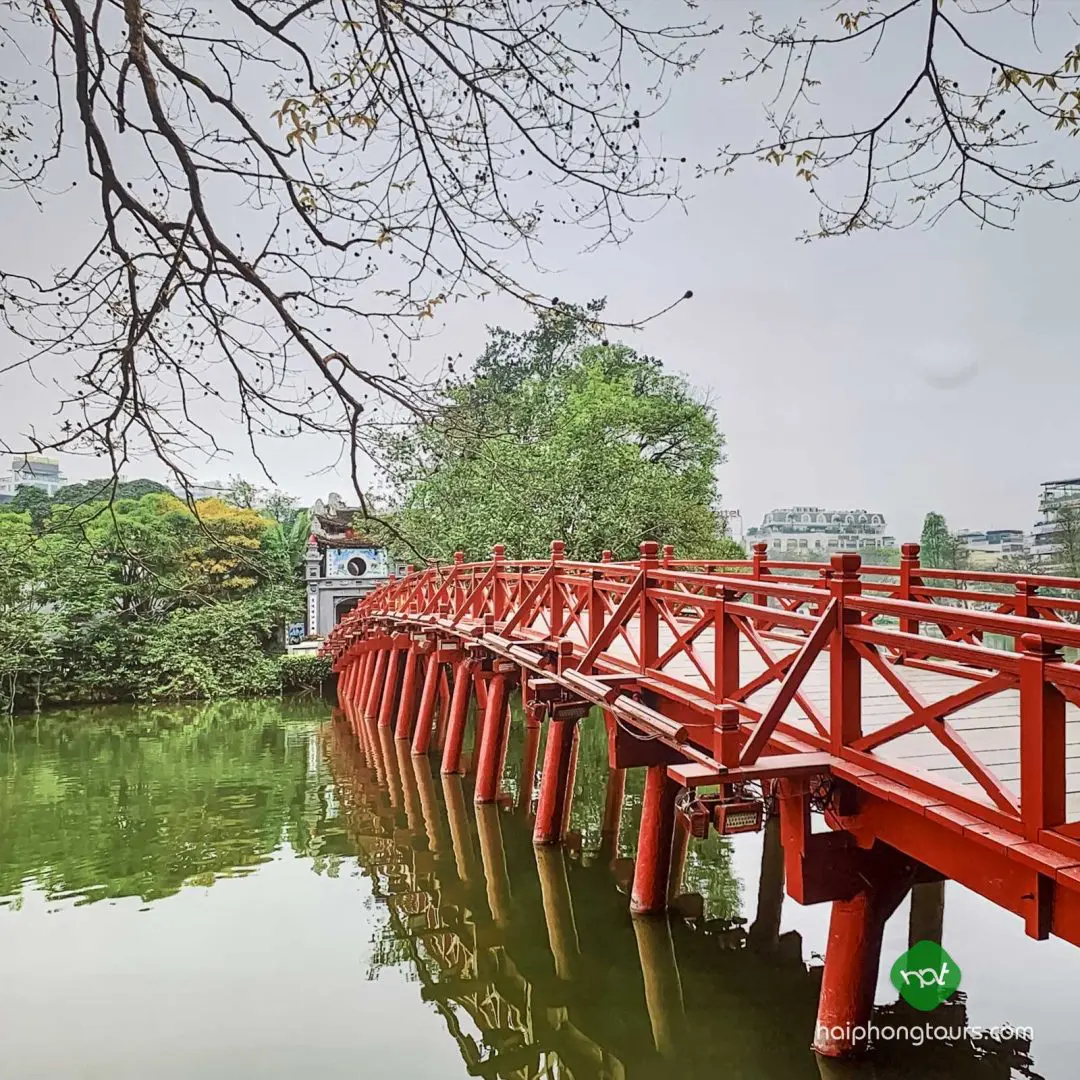
The red bridge connects the shore with Jade Island. Its name is associated with welcoming the morning light. Walk across at an ordinary pace and let people pass before stopping for a picture. The view back toward the lakeside trees is as useful for understanding the setting as the familiar outward photograph of the bridge.

On a busy visit, choose either a quick portrait or a clear architectural image from the shore. Trying to hold the bridge empty for a photograph disrupts both visitors and people arriving to worship. Wet surfaces also call for shoes with a secure grip.
3. Pass the gate and explore the worship spaces
The approach continues through Dac Nguyet, the Moon Viewing gateway, to the temple buildings. Ngoc Son honors figures including Tran Hung Dao, the celebrated military commander, and Van Xuong De Quan, associated with literature and scholarship. The site brings several strands of Vietnamese religious and intellectual life together.
Give worshippers space around the altars. Cover shoulders and knees, lower your voice and follow any instructions about photography or entering a particular room. Treat incense and offerings as part of a living place of worship. You do not need to perform a ritual to appreciate the temple respectfully.
4. Finish with the island’s lake views
Allow a few unhurried minutes around Tran Ba Pavilion and the accessible edges of the temple compound. Looking outward helps explain the appeal of an island sanctuary within a busy city. Keep to the designated surfaces rather than leaning over barriers or stepping into planted areas for a different angle.
The history behind what you see
A major reshaping of the complex took place in 1865 under the scholar Nguyen Van Sieu. The composition of temple, bridge, Pen Tower and Ink Slab is central to its identity. It gives a relatively compact visit an unusually clear relationship between architecture and ideas: crossing water, entering a sacred space and honoring learning.
Hoan Kiem Lake’s famous returned-sword story belongs to the city’s legendary tradition. It gives the surrounding landscape meaning, but it should be distinguished from documented construction and restoration history. Likewise, the Turtle Tower farther out in the lake is a different monument; crossing The Huc Bridge does not take you to it.
Fit Ngoc Son into a central Hanoi walk
For a relaxed morning, visit the temple first, continue along the lakeside promenade, then walk into the Old Quarter for a meal. The order avoids making the temple an afterthought when the group is tired or the ticket office is close to finishing admissions. Leave room for a coffee stop rather than filling every minute with another monument.
If architecture is your main interest, continue toward Trang Tien and the Hanoi Opera House area. The contrast between the island shrine and the broad streets around the theatre makes a useful introduction to two very different parts of the capital. Read the Opera House access information before expecting an interior visit.
Visiting with children or limited mobility
Keep children close on the bridge and around the water. Bring their age documents if you plan to request the child admission exemption. A light day bag is more convenient than a large backpack in the small rooms and entrance passages.
For a wheelchair user or someone who cannot manage steps, ask staff about the actual route before buying tickets. The shore offers good bridge views without requiring the full temple circuit. Plan the visit around the person’s comfort rather than assuming that a short distance means an easy accessible route.
For help arranging a Hanoi visit around an airport, train or onward northern Vietnam journey, contact Hai Phong Tours with your dates, group size and transport needs.