An orange-orchard visit in Quang Binh works best as a grower-led stop arranged before you travel. It can be a useful way to understand the area’s farming and buy fruit directly, but an orchard visible from the road is not automatically open for visitors or picking. Confirm the receiving grower and the activity first.
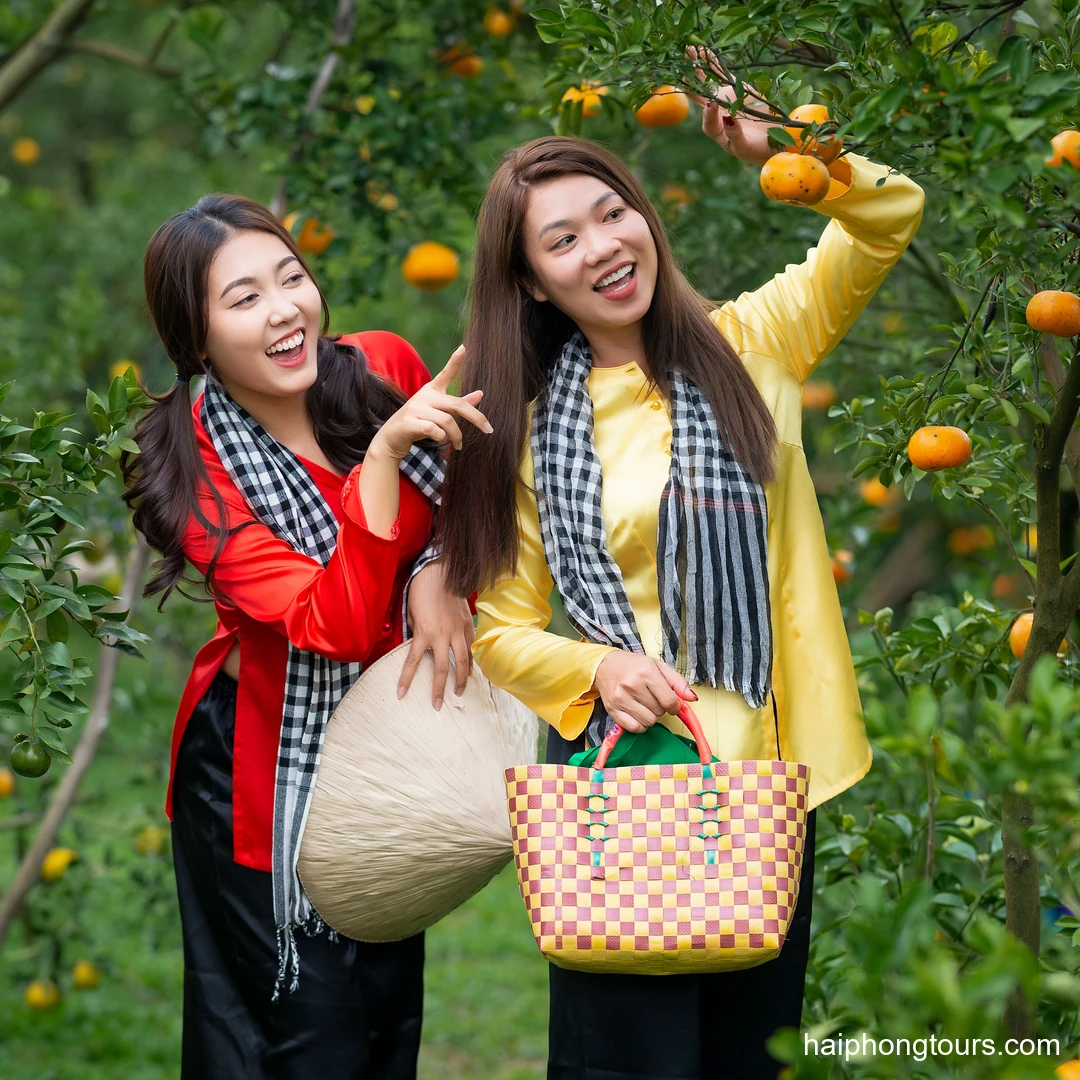
This is Quang Bình in the former Hà Giang region, now Tuyên Quang, not the central-coast destination associated with Phong Nha. Community-tourism reporting identifies Buông village in Tiên Yên with orange-garden experiences, making it a specific area to enquire about rather than a generic countryside detour.
What the local evidence establishes
Oranges are part of the agricultural identity of the Quang Binh and Bac Quang area. Provincial tourism reporting connects Buong’s community tourism with orchard visits. That supports the idea of a locally arranged grower experience, but it does not identify a continuously operating visitor farm.
A current public booking contact, fixed visitor fee and guaranteed picking season for a specific Buong orchard are not available in the verified descriptions. Use the provincial tourism portal to request a local referral. Ask for a grower receiving visitors in Buong, Tien Yen, and describe the visit you want.

Do not reserve a long transfer around a promise that “there are orange trees”. Obtain the grower’s agreement, a meeting pin and a direct contact before making the orchard the main purpose of the day.
Choose between looking, tasting and picking
| Visit format | What needs to be agreed |
|---|---|
| Grower-led walk | Route through the orchard, explanation and walking conditions |
| Tasting and buying | Available fruit, price basis and what is included in the tasting |
| Picking | Whether ripe fruit is available and which trees visitors may use |
| Family activity | A suitable supervised task and manageable access for children |
| Farming-focused visit | Interpretation about the crop and the work taking place that day |
A tasting can be worthwhile even when visitors are not invited to harvest. Conversely, a photograph among fruit trees does not include the right to pick. Keep these distinctions in the booking so the grower does not have to renegotiate the visit after you arrive.
Plan around the actual fruit
Ask what variety is grown, whether the fruit is ready and what work is happening during your dates. A rice-harvest photograph elsewhere in Ha Giang does not establish orange-picking conditions. The useful confirmation comes from the orchard receiving you.
If picking is your priority, ask for a recent view of the relevant trees and a clear description of the permitted activity. If the crop is not ready, choose a grower conversation or another confirmed experience rather than expecting an early harvest for visitors.
Be flexible about the length of the visit. A working grower may be able to host a focused stop but not an entire afternoon. Arrive at the agreed time and keep the party size consistent with the arrangement.
Make the conversation worth the detour
A good visit can explain how the grower judges ripeness, chooses fruit for sale and manages the work across the season. Ask which tasks take most time and what differences the grower notices between plots. These questions help you understand the orchard without requiring a staged demonstration.
If a label such as VietGAP or organic is important to you, ask what certification applies to that actual producer and crop. Regional reporting about some farms should not be used to label every orchard. Let the grower show the relevant information instead of treating attractive scenery as proof of a production standard.
Arrange interpretation if needed. A driver who can deliver you to the village may not be able to explain farming methods in detail. A short translated conversation can add more value than an unaccompanied walk between trees.
Pick and purchase on the grower’s terms
Stay on the agreed paths and use only the method the grower demonstrates. Do not climb trees, cut branches or pick from a neighbouring plot. If a tool is involved, let the host decide whether visitors can use it and how children participate.
Confirm whether fruit is charged by weight, by a set basket or within a visitor fee. Have the purchase weighed or counted clearly before payment. Hosting time, fruit and transport are separate costs unless the quotation explicitly combines them.
Buy an amount you can carry and eat during the journey. Keep fruit out of crushing luggage and ask the grower about storage. If you plan to take fresh produce across an international border, check the destination’s rules first rather than assuming a local purchase can travel with you.
Fit the orchard into a western day
Use the confirmed entrance to calculate the road stop, and arrange meals and toilets separately if the orchard does not offer them. Do not assume a farm has a café, visitor bathroom or shaded seating simply because it receives occasional groups.
If continuing to Hoang Su Phi, protect arrival time at the next accommodation. A short orchard visit should not turn the final mountain approach into an unplanned late drive.
If no grower can receive you, choose a verified alternative: a booked Phin Ho tea session offers another way to understand a local crop and producer. It is a different location and transfer, so redesign the day deliberately.
Useful guides for your trip
Would you like help fitting this experience into your trip? Contact us with your travel dates, starting point, available time and group size. Tell us about walking limits or special interests so we can suggest a practical itinerary.