
Attend a Pa Then fire-jumping event only when a community or public organiser has confirmed that visitors are welcome. It is a ritual and cultural occasion, not an activity travellers should expect to join. The rewarding part is understanding the setting, observing respectfully and allowing the community to control the ceremony.
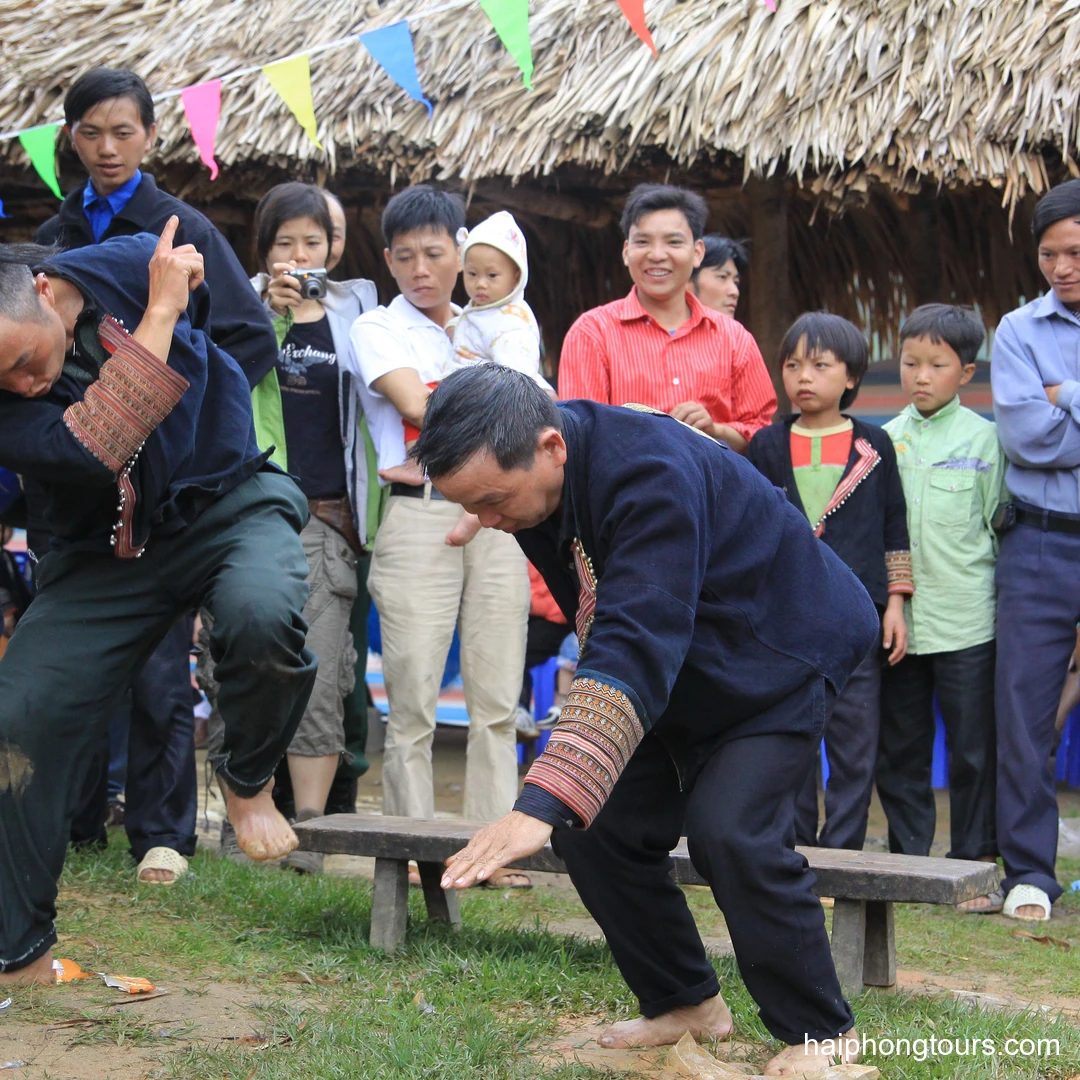
For the Ha Giang travel region, older notices often refer to the Tan Bac and Quang Binh area, now within Tuyen Quang province. Pa Then communities elsewhere in the province also have their own events. Confirm the exact village or public venue rather than booking transport simply to “the fire festival”.
Understand the tradition before watching
The ceremony is associated with gratitude after harvest and wishes for well-being and favourable seasons. Provincial cultural accounts describe a ritual specialist leading the proceedings with recitation and rhythmic accompaniment before participating community members move among the embers.
Spiritual explanations belong to the community’s beliefs. They should not be turned into a claim that fire cannot cause injury. Visitors should remain spectators, follow the organisers’ boundary and leave the ritual space to those taking part under the community’s direction.
The event is distinct from Red Dao fire-related performances or a hotel bonfire. If a tour advertises an evening cultural activity, ask which community and tradition it represents, whether it is a public festival or an arranged performance, and who is hosting it.
Use seasonal timing without assuming a fixed public date
Local accounts associate the tradition with the post-harvest period and the lunar calendar. One official description refers to the sixteenth day of the tenth lunar month, but a public tourism programme may use a separately announced date and venue. Do not convert one old event notice into a permanent annual appointment.
Request the actual organiser’s announcement for your travel period, including the venue, start time and whether visitors need a ticket or registration. A photograph of a previous festival is useful cultural context, not confirmation that another event will occur while you are there.
When no public event is confirmed, build the holiday around other arranged cultural interests. A household conversation about textiles or a village meal should have its own agreement, without asking residents to reproduce a ritual on demand.
Confirm the visitor programme
| Detail | Why it matters |
|---|---|
| Organiser and venue | Distinguishes a community ceremony from a separate tourism performance |
| Visitor access | Confirms whether attendance, tickets or registration are required |
| Programme sequence | Shows whether craft, food and music activities precede the ritual |
| Viewing arrangements | Clarifies standing areas, seating and boundaries |
| Return transport | Prevents an uncertain late-night journey after the event |
Official reports of public festivals describe accompanying weaving, food and craft displays. Treat those as examples of what an announced programme can contain, not permanent services available beside every ritual. Choose the event for its actual programme.
Use the provincial tourism portal to request a local information referral. Ask specifically about a Pa Then public event in the Quang Binh area and request the organiser’s contact. This is a referral route, not a standing festival ticket office.
Plan an overnight around the evening
Reserve accommodation near the confirmed venue before planning a late return to another mountain base. Give the host the event’s expected finish and establish how you enter the property afterward. A small household may not operate a hotel-style overnight reception.
Arrange dinner separately if the programme does not clearly provide it. A food display or stall area may not meet a particular diet or a child’s meal needs. The Ha Giang food guide helps recognise dishes, but the vendor must confirm the preparation and ingredients.

For transport, agree the vehicle’s waiting point and a contact method that will work in a crowd. Use a named landmark outside the event entrance rather than expecting the driver to stop directly beside the viewing area. Keep the accommodation pin available offline.
Watch without intruding
Follow the boundary given by organisers and keep access routes clear. Do not move closer to the embers for a photograph, touch offerings or interrupt participants. If the crowd shifts, move with the designated visitor area rather than pressing into the ritual space.
Ask before taking close portraits. Avoid flash or bright video lights when the organisers or participants request it, and do not fly a drone without the required permission. A camera should not obstruct another visitor or change how a community member can move.
With children, choose a position where you can leave easily and explain in advance that watching does not mean trying the activity. Consider the noise, crowd and evening length as well as the visual spectacle.
Give the rest of the journey a purpose
A confirmed event can anchor a western cultural trip, but do not fill the preceding day with a demanding summit and long transfer. Keep time to arrive, eat and understand the venue before the evening begins.
For an onward terrace stay, use the Hoang Su Phi guide to choose the next base and allow for the actual road transfer. The strongest visit respects the community’s timing while keeping your own evening logistics clear.
Would you like help fitting this experience into your trip? Contact us with your travel dates, starting point, available time and group size. Tell us about walking limits or special interests so we can suggest a practical itinerary.
