
Travel from Pullman Hanoi to the exact Hanoi rail departure point printed on the current ticket, starting from the vehicle entrance at 61 Giang Vo Street. Copy the departure station, train number, date, scheduled time, carriage, and passenger identity into the vehicle request. Do not let the phrase “Hanoi Railway Station” override a different ticketed station.
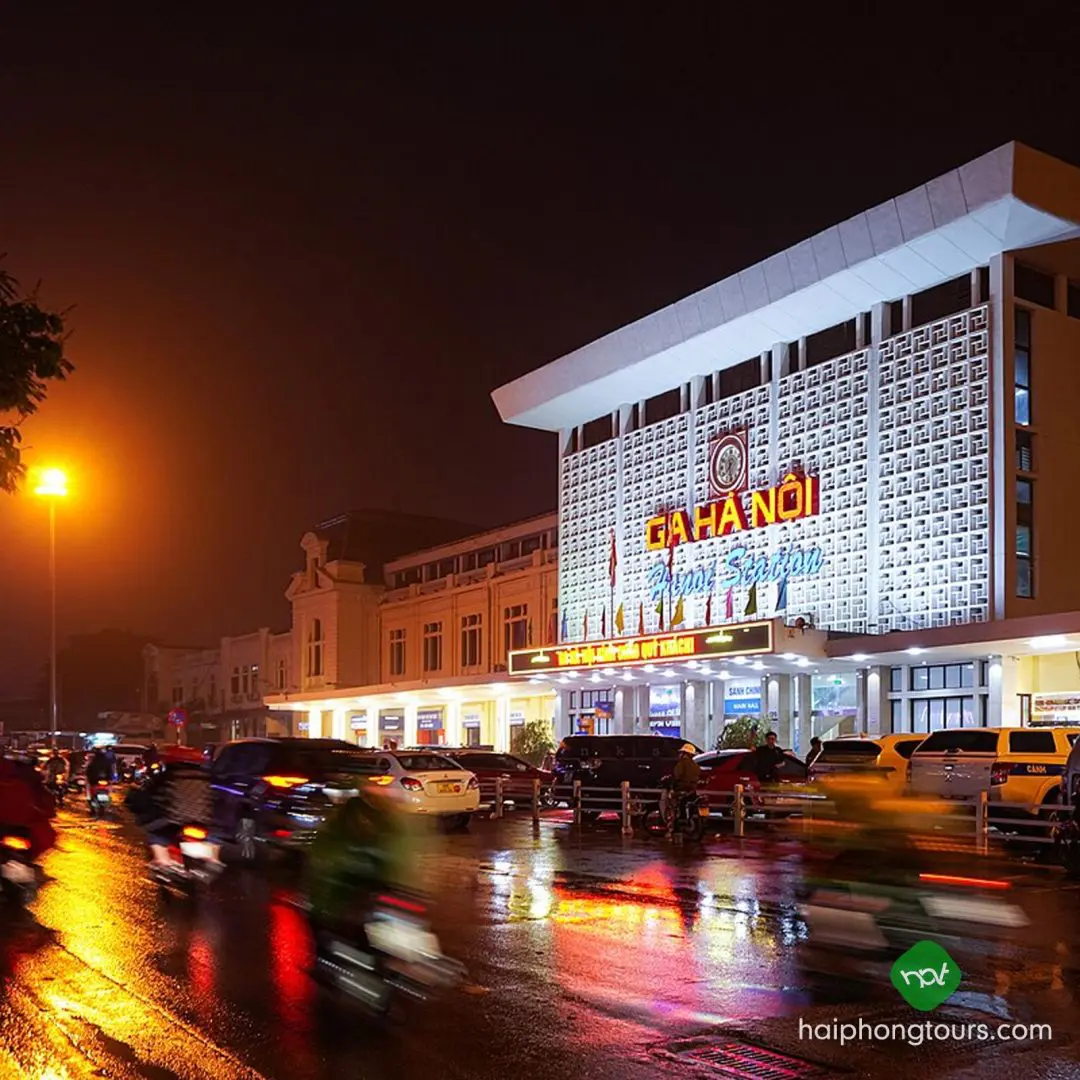
Work backward from boarding and protect separate time for hotel loading, road conditions, finding the correct station entrance, ticket or identity checks, platform access, and movement with luggage. No fixed drive estimate can replace this platform-entry margin.
Let the issued ticket control the destination
Vietnam Railways’ official booking flow requires an exact departure station, train, and date. Its ticket-verification process also uses the train, departure and arrival stations, date, and identity document. Those fields should be the source of truth for the handoff.
Save the current ticket offline and record the carriage, seat or berth, passenger name, and identity document. If the station wording is unclear, ask the ticket issuer to resolve it before travel day. A driver cannot safely choose a station from a city name or interpret an ambiguous booking at the hotel entrance.
The hotel publishes a 2.5 km and 10-minute drive estimate to Hanoi Railway Station. Use it only as orientation, and still follow the exact station on the ticket. Ask for a station entrance or operator-supplied pin where available and require the transport provider to repeat the destination in its confirmation.
Fix the hotel departure door
Pullman Hanoi publishes 40 Cat Linh Street; vehicle entrance at 61 Giang Vo Street. Confirm the exact vehicle entrance and put it in the booking. Bring all passengers and bags there before the pickup time; do not call the car while travelers are still collecting items from rooms.
If luggage is stored after checkout, confirm custody, claim procedure, retrieval point, and operating time directly with the hotel. Do not assume storage is available or immediate. Keep tickets, identity documents, medication, and valuables with the passenger rather than in stored or loaded luggage.
Nominate one person to handle driver communication and another to count bags. Record large cases, cabin bags, strollers, mobility aids, and loose items. Use the same count at the hotel and station.
Choose transport for the real load
A short-looking map route may still be unsuitable with rolling cases, children, limited mobility, rain, heat, or unfamiliar road crossings. Evaluate the complete path to the correct station entrance, not merely the distance to a general station marker.
For a vehicle, disclose every passenger and bag before assignment. Passenger capacity does not prove luggage capacity. Obtain acceptance of wheelchairs, strollers, instruments, bicycles, or other equipment that cannot be folded or stacked.
Reserve early enough to correct a vehicle-size or entrance mismatch. A fixed train is different from a flexible city appointment: relying on immediate street availability can consume the platform margin before the trip begins.
Build the timeline from the platform backward
Start at the scheduled departure. Allow time to enter the correct station, read current train information, locate the platform, present the ticket and identity document if requested, and reach the carriage with luggage. Add a road allowance and hotel-loading allowance before that.
Families, seniors, travelers with limited mobility, and groups with several cases should use more internal-station time. Follow any boarding instruction supplied by the issuer even if a general guide suggests a shorter arrival.
Set a lobby-ready time and a must-leave time. Share both with the group. If the vehicle is missing at the decision point, start the fallback instead of spending the entire margin on repeated calls.
Keep the endpoint record complete
- Pullman Hanoi, 40 Cat Linh Street; vehicle entrance at 61 Giang Vo Street, and the confirmed vehicle entrance;
- the exact ticketed departure station and station entrance or pin;
- train number, travel date, departure time, carriage, and ticket reference;
- passengers, luggage, mobility needs, and lead phone;
- pickup time, provider contact, and fallback decision time.
Compare the provider’s reply with the ticket. Resolve any different station name before the car arrives. Keep the ticket and confirmation on more than one device when a group is traveling.
Manage the curb-to-carriage handoff
At the station, ask the driver to stop at the confirmed entrance. Unload every bag into one supervised place and count the items before the vehicle leaves. One traveler can check current train and platform information while another remains with the luggage.
Keep the group together until the train and platform are confirmed. If travelers have different carriages, decide when to separate only after reaching the correct platform. Tickets and identity documents should remain accessible rather than inside a large case.
Prepare for a late car or missed train
If the pickup is late, remain at the agreed hotel door and call the provider with the full hotel and station details. At the preset trigger, ask the hotel to help arrange another suitable vehicle and repeat the exact station and luggage load.

If the connection becomes doubtful, contact the ticket issuer or official railway channel for current options. Do not assume a ticket can be used on a later train, at another station, or by another passenger. The completed route is not merely a car ride; it is an accurate hotel door, ticketed station, correct entrance, controlled luggage handoff, valid documents, and enough time to board.
Useful guides for your trip
Would a private transfer make this journey easier? Contact us with your travel date, exact pickup and drop-off, number of travelers and bags. Include any flight, train or cruise deadline so we can assess a suitable plan and quotation.
