
You can travel directly from Sapa to Mu Cang Chai by road without returning to Hanoi. Choose a seated bus when its departure point and town drop-off suit your plans; choose a private car when you need a specific hotel pickup, room for luggage or agreed stops along the way.

Allow roughly half a day for the direct journey, with about five hours as an initial planning allowance rather than a guaranteed arrival time. A village pickup, lunch, sightseeing or a final transfer beyond Mu Cang Chai town can turn it into most of a travel day. Decide exactly where you are sleeping before booking the vehicle.
Which transport option fits your trip?
- Seated bus: a useful budget option for travelers who can reach the stated pickup point and arrange the final leg from the drop-off. Confirm an actual departure for your date rather than assuming frequent service.
- Private transfer: better suited to a family, a group sharing the vehicle, substantial luggage or a particular accommodation address. Obtain confirmation that both properties are within the quoted pickup and drop-off area.
- Private car with sightseeing: the appropriate booking if tea hills, viewpoints or a village visit are part of the journey. Agree on stops, waiting time and the final arrival window before paying.
A car with a driver does not automatically include an English-speaking guide. If you want an interpreted farm visit or a guided walk, request that separately.
The route: Mu Cang Chai town and Tu Le are different destinations
The usual direct road connection leaves Sapa over O Quy Ho Pass, then follows the corridor through Tan Uyen and Than Uyen toward Mu Cang Chai. Tan Uyen and Than Uyen are separate places; use the correct spelling when adding a stop.
Tu Le lies farther along the wider terrace itinerary, beyond Mu Cang Chai town and the Khau Pha section when approaching from Sapa. A ticket ending in Mu Cang Chai town should not be treated as a through ticket to Tu Le. Equally, a hotel described broadly as being in the Mu Cang Chai area may be in a village some distance from the town drop-off.

Send the actual accommodation map pin to the transport provider. Ask them to identify the arrival point on the same map, then let your host confirm whether any further vehicle or walking section is needed. The Mu Cang Chai travel guide explains the differences between the town, terrace villages and Tu Le as overnight bases.
Taking a bus from Sapa
Seated services are advertised between Sapa and Mu Cang Chai town. Book against your travel date and ask for the operator name, meeting point, departure time and exact drop-off. A route page establishes an option to investigate; your confirmed ticket establishes the arrangement you can rely on.
Check whether the quoted pickup is at Sapa bus station, an office or your hotel. If an agent includes a shuttle to the main bus, ask when that shuttle arrives and whether you must change vehicles. Keep the meeting pin, vehicle contact and ticket details available offline.
- Seat: confirm that your booking is for a seated bus and ask what vehicle will operate. Do not assume a sleeper cabin or a spacious reclining seat from the word “limousine.”
- Luggage: give the number and size of bags, including trekking equipment, and ask about any separate charge.
- Arrival: ask whether the bus continues beyond town or whether your host must collect you. Agree on the connecting cost before departure.
- Changes: check how you will be notified if the time or vehicle changes, and what happens if the departure cannot operate.
Keep a shared bus day free of fixed sightseeing commitments. Ordinary passenger stops are not a substitute for a private photo itinerary, and leaving the bus at an intermediate village requires a separate onward plan.
Booking a private car: compare the complete journey
Private hotel transfers are offered on this route, with different vehicle sizes and flexible departure times. Compare quotations using the same addresses, passenger count, luggage and stops. A lower town-to-town price may exclude the very village approach that made you choose a car.
Hai Phong Tours recommends sending one written journey brief: pickup property and pin, departure date and time, destination property and pin, passenger ages, bag sizes and any planned stops. Ask the provider to return a total price and a clear list of exclusions against that brief.
Confirm whether the price covers fuel, road charges, parking and the driver’s time, and how extra waiting is charged. If you are retaining the car for the next day’s terrace visits, request that as a separate item, including the driver’s overnight arrangements. A one-way transfer normally ends at the agreed destination.
Choose the vehicle by usable seating and luggage space, not simply its advertised seat count. For young children, confirm a suitable restraint and its installation before booking; do not assume that a car described as family-friendly supplies one. Travelers who need easier access should ask about the vehicle step, seat height and the walk between parking and the room.
Village pickups and the last approach to a homestay
A stay in the valleys around Sapa needs a more precise pickup agreement than “Sapa hotel.” If your accommodation is in Ta Van or another village outside town, send the property pin and ask whether collection is included or whether you must first travel to a meeting point.
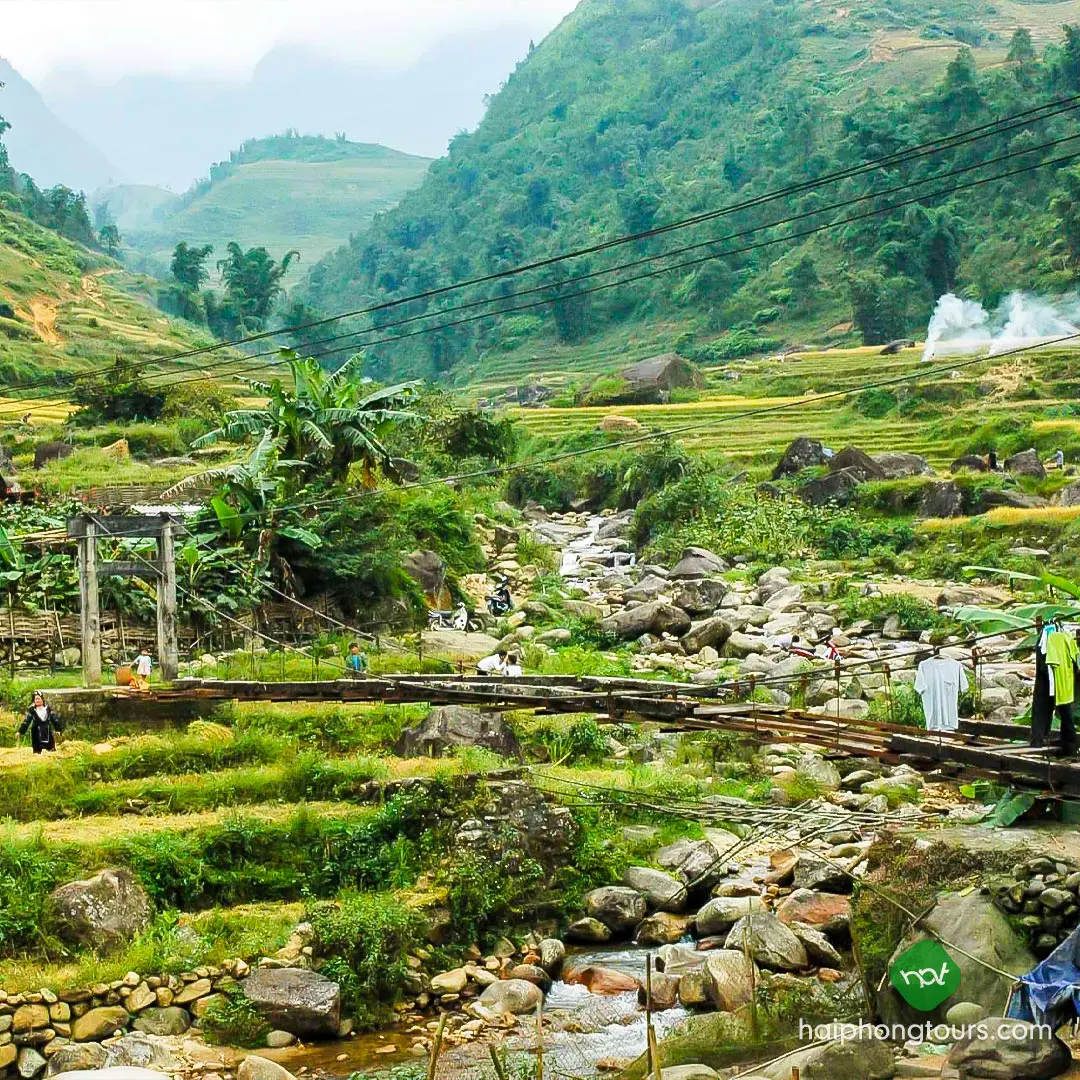 Ta Van is outside Sapa town; confirm your property’s pickup point.
Apply the same check at the Mu Cang Chai end. Ask the host whether the booked vehicle can currently reach the entrance, where it can turn or park, and whether the last section involves stairs, a narrow track or another ride. Wet conditions can change what is practical.
Agree on who handles the final transfer and the bags. If you cannot comfortably walk with luggage or use a motorcycle connection, choose a property with confirmed suitable road access before committing to the intercity ticket.
Adding stops without losing the whole afternoon
A stop around the tea hills of Tan Uyen can fit naturally into a deliberately planned private journey. Use the Tan Uyen tea-hills guide to distinguish a short landscape break from an arranged producer visit or tasting.
Name the stop and agree on its duration. A roadside photograph, lunch and a hosted tea experience involve different amounts of time; a driver cannot guarantee clear views or access to a working farm. Leave room to shorten the plan if the road is slow or visibility deteriorates.
For a first visit, pick one meaningful stop and protect the daylight arrival at your accommodation. Save distant terrace viewpoints for a separate local outing instead of adding them to the transfer after the car has been booked.
A workable arrival plan
Depart in the morning when practical, keep the arrival afternoon flexible, and tell your host the expected window rather than promising an exact minute. Ask the driver and host about current road conditions shortly before travel, especially after heavy rain. If conditions require a delay or a route change, adjust the itinerary instead of pressing for the original timing.
Two nights in the Mu Cang Chai area give you one full day between arrival and departure. This is a planning recommendation for a less rushed visit, not a requirement. With only one night, choose accommodation close to the activity you most want and arrange local transport before arriving.
For the onward journey, settle the pickup location and travel day before scheduling a final morning walk. Avoid building an airport connection around the fastest quoted mountain driving time.
Before confirming the booking
- Match the ticket or quotation to both exact property pins.
- Confirm the vehicle, passengers, bags and any child restraint.
- Separate direct transport from sightseeing time and next-day vehicle hire.
- Agree on the final homestay approach, additional charges and who meets you.
- Keep the driver’s contact and your host’s number available offline.
The most useful booking is the one that delivers you to the right place with enough time left to settle in. Choose the bus if its confirmed stops work for your stay; pay for a private car when the flexibility solves a real part of your journey.
Useful guides for your trip
Would a private transfer make this journey easier? Contact us with your travel date, exact pickup and drop-off, number of travelers and bags. Include any flight, train or cruise deadline so we can assess a suitable plan and quotation.