Visit Sung La and Lung Cam for a village and its buildings, with Pao’s House as one part of the experience. The film connection is an engaging introduction, but the most rewarding visit also notices how earthen walls, tiled roofs, yards and cultivated ground fit together. Give the household spaces the same respect you would give a home elsewhere.
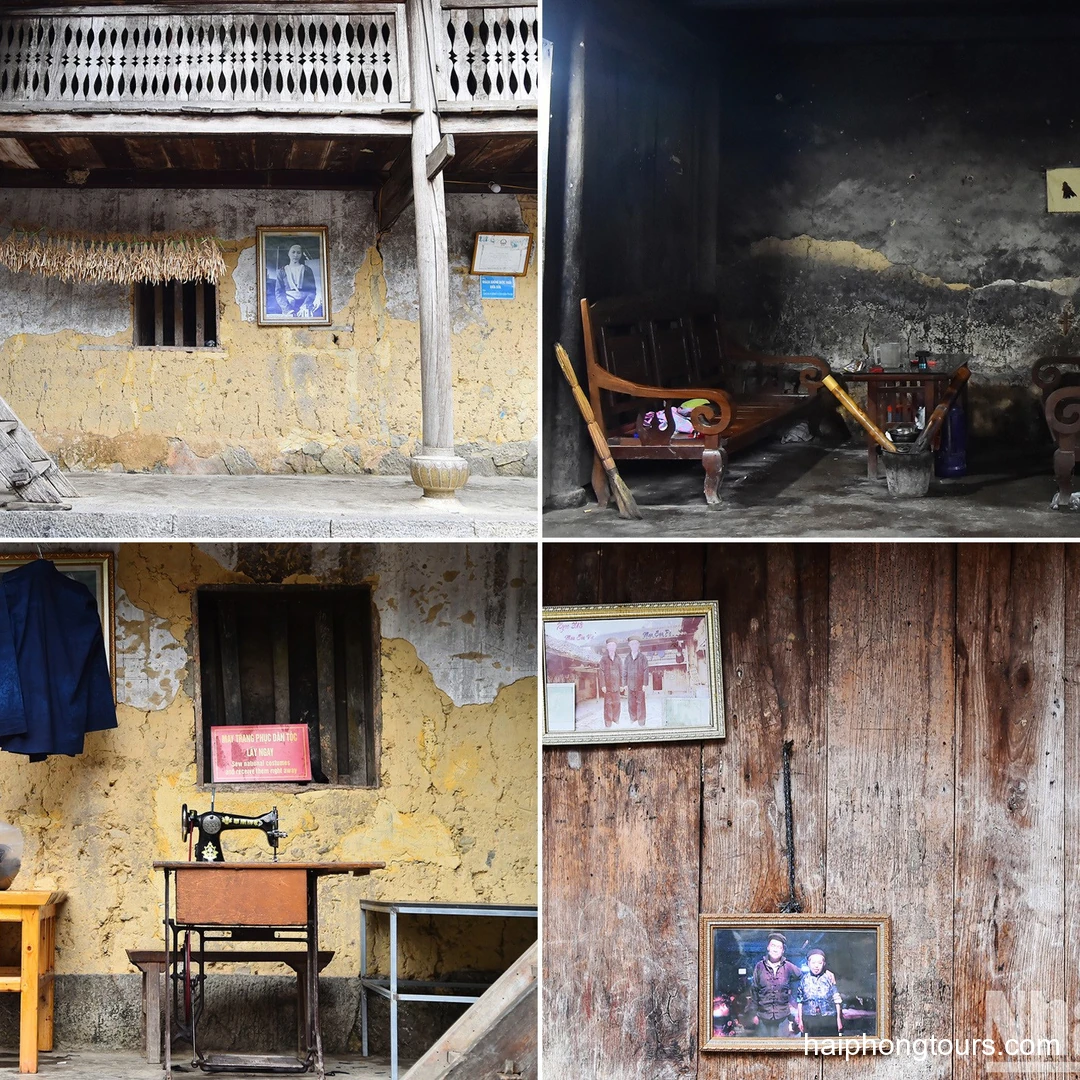
Sung La names the valley area; Lung Cam is the village associated with the famous filming location. Use both names, plus Nhà của Pao, when agreeing the stop. A broad “Sung La viewpoint” on an itinerary does not necessarily include the house or time inside the village.
Understand the film connection
The Vietnamese film Chuyện của Pao, commonly known in English as The Story of Pao, used a house in this area as a setting. The Vietnam Cinema Department identifies that screen connection as an example of film bringing visitors to a real destination.
The fictional story and the household’s real history are different things. A room that appears in a film does not prove that its residents lived the characters’ lives. If you have seen the film, enjoy recognising details while allowing a local explanation to tell you how the house actually functions.
People who have not watched it can still appreciate the architecture. Begin with the relationship between the entrance, courtyard and surrounding rooms rather than trying to recreate a scene you do not know. A short explanation of the building often adds more than a queue for one photograph.
What to notice in Lung Cam
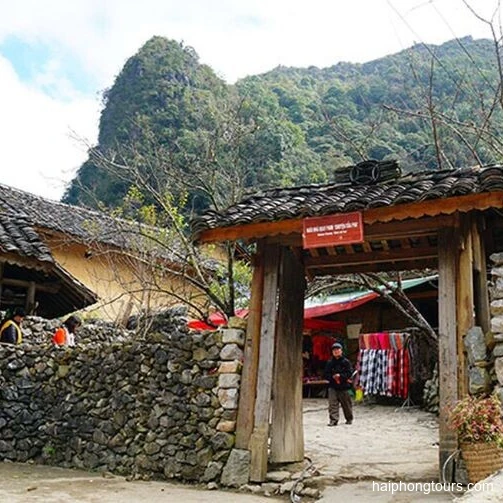
Vietnam’s tourism authority describes Lung Cam’s houses through earthen walls, timber frames, curved roof tiles and stone boundaries. It also identifies Hmong, Lô Lô and Hoa communities in the village. This is a living settlement with different households, not one uniform cultural display.
Look at how the roof sheds rain away from a wall, where a doorway creates a transition from lane to yard, and how the courtyard brings light into the building. These are practical aspects of the architecture, even when the materials also create an attractive photograph.
Keep to public lanes and the areas actually opened to guests. A neighbouring doorway may lead to a private home even when the next building sells tickets or drinks. One family’s participation in tourism is not permission to enter another family’s space.
Choose the depth of your visit
| Available time and interest | A worthwhile focus |
|---|---|
| A short stop during a road day | The house’s visitor area and a careful look at its courtyard and roof |
| An unhurried cultural stop | The house plus a guided village walk with a specific explanation |
| A food or craft interest | A separately arranged session with the person who will receive and teach you |
The tourism authority describes activities such as rice-cake pounding and textile work in the village. That establishes useful subjects to enquire about, not a daily walk-in class. Name the activity, expected duration and language when arranging it through a local host or guide.
For children, a small supervised task can be more engaging than a long explanation, but avoid joining someone else’s work uninvited. A host needs time, materials and a safe way for a child to participate. Watching can be a complete experience when participation is unsuitable.
Tickets, photography and purchases
A single authoritative, current public tariff for every Lung Cam visitor space is not established here. Read the charge displayed at the specific house or activity before entering, and distinguish admission from costume rental, a photo service or a purchase. An attraction’s film nickname does not define a package.
Take general architectural photographs from a permitted position, and ask before making a person the main subject. Do not lift household objects or rearrange baskets for a picture. A room used by visitors can still contain meaningful personal or cultural objects.
If you buy a textile or snack, choose something you actually want and pay the seller directly under the agreed terms. A purchase can support a business without creating an obligation for someone to pose. For a deeper textile visit elsewhere on your route, the Lung Tam weaving guide helps distinguish observation, a lesson and shopping.
Fields and flowers are a separate decision
Lung Cam is among the places promoted for buckwheat planting, but the visible crop depends on the field and its cultivation cycle. Do not assume that every visit to the house includes a flowering field. If flowers are important, identify a particular field that is receiving visitors and use its designated paths.
Keep a village visit worthwhile even without flowers: architecture, a meal and an agreed conversation remain meaningful. Crops are working plants, so a narrow planted edge is not a shortcut to a better camera angle.
Pair the stop with a different kind of building
The Vuong family residence at Sa Phin offers a useful contrast in scale, layout and historical role. Visit the two with different questions rather than describing both as generic “old houses”. One illustrates a household and film connection; the other calls for an understanding of a powerful family’s residence.
The Ha Giang food guide can help you plan a meal around the cultural stop. Leave that meal and the next journey enough time, so the visit ends with understanding rather than a rushed exit.
Would you like help fitting this experience into your trip? Contact us with your travel dates, starting point, available time and group size. Tell us about walking limits or special interests so we can suggest a practical itinerary.