
The Vietnamese Women’s Museum publishes four details that matter when planning a wheelchair visit: a dedicated wheelchair route, a lift, wheelchairs for visitors and a toilet for disabled visitors. That gives you a useful starting point for a cultural outing in central Hanoi. The next step is to establish how your own chair reaches those facilities, then choose a manageable part of the collection.
This guide concentrates on arrival, the facilities and a short visit. For the stories, textiles and historical displays, read our Vietnamese Women’s Museum visitor guide.
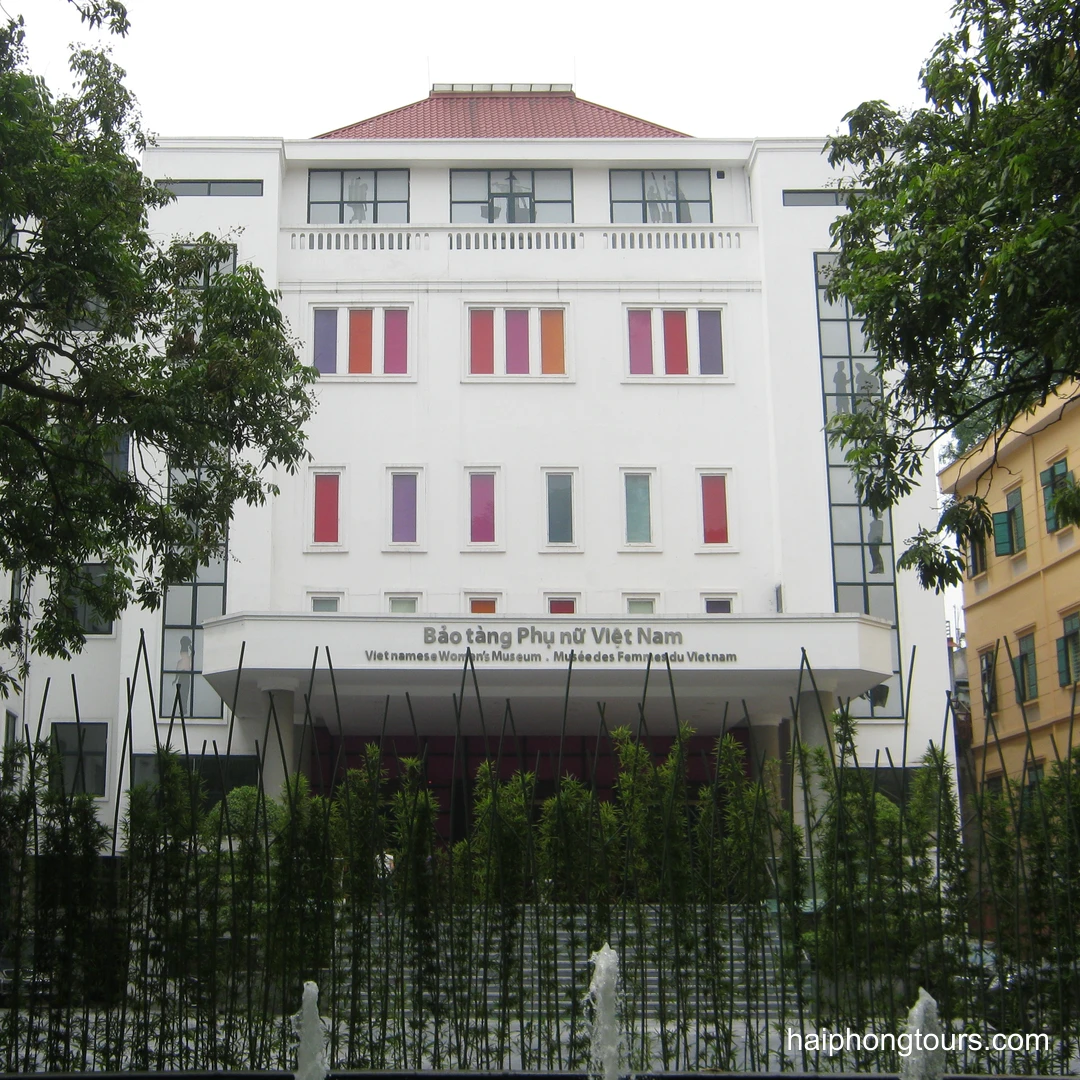
The address and numbers to use
| Detail | What to use |
|---|---|
| Museum | Bảo tàng Phụ nữ Việt Nam, Vietnamese Women’s Museum |
| Address | 36 Lý Thường Kiệt, Cửa Nam, Hanoi |
| Main telephone | 024 3936 5973 within Vietnam; +84 24 3936 5973 from abroad |
| Group guiding enquiries | 024 3936 5973 or 024 3936 1869 |
| info@baotangphunu.org.vn | |
| Regular hours | 8 am to 5 pm, every day including Monday |
The national tourism website lists admission at 40,000 VND. Treat that as a planning figure and confirm the current ticket category at the museum; the museum’s visitor page does not display a complete current tariff. Ask separately about an audio guide and any concession or companion arrangement. Having a wheelchair does not by itself establish what documentation a ticket concession requires.

Confirm the entrance before arranging the ride
Call the main number and explain whether you will arrive in your own manual chair, a powered chair or without a chair and need to borrow one. Give the chair’s overall width and whether you can transfer into a normal car seat. Ask staff which part of the entrance at number 36 leads to the dedicated wheelchair route and where a vehicle can legally stop closest to it.
The museum’s published facility list does not give the entrance gradient, lift doorway width, cabin dimensions or toilet transfer layout. If one of those determines whether the visit works, request a measurement or a current photograph before committing. A powered-chair user who cannot transfer needs confirmation that the whole entrance-to-gallery route can be completed while remaining seated.
A useful message is: “I use a wheelchair, overall width ___ cm. I can/cannot transfer. I would like to visit on ___. Which entrance should my driver use, and can I reach the displays and accessible toilet without steps?” This gives the museum something specific to answer.
For the driver, save: Bảo tàng Phụ nữ Việt Nam, số 36 Lý Thường Kiệt. From an Old Quarter hotel, agree the actual vehicle pickup point as well as the destination. The museum’s central location does not establish a continuous step-free pavement route from your accommodation. If you can transfer, check seat height, door opening and storage for your folded chair. If you must remain in the wheelchair, confirm suitable transport independently; an ordinary taxi booking is not confirmation of that equipment.
Your first ten minutes inside
- Identify the wheelchair route with entrance staff. Show the reply you received and ask to be directed to reception. Do not use a staircase simply because it is the busiest entrance.
- Locate the lift and toilet before starting the exhibitions. Ask staff to show them on the current floor plan and point out the return route. Check that the lift is operating that day.
- Inspect a loan chair before using it. Ask about availability, the return point and any identification or deposit procedure. Check the seat, brakes and footrests against your needs. The official page lists chairs but does not publish their dimensions, weight limit or a reservation guarantee.
- Choose interpretation and one priority. Sort out the audio device or arranged guide before leaving reception, so you do not have to repeat the route.
The Vietnamese phrases lối đi dành cho xe lăn, thang máy and nhà vệ sinh dành cho người khuyết tật mean wheelchair route, lift and accessible toilet. Showing the phrase can help staff understand exactly which facility you need.
A selective visit with room to pause
Allow around 90 minutes as a suggested plan, with additional time if you enjoy reading or need a slower transfer at arrival. Use the first ten minutes for facilities, about an hour for displays and the remaining time for a pause and departure. This is a planning allowance, not a fixed tour duration.
Choose two of the museum’s three permanent themes: women in family life, women in history and women’s fashion. Ask reception for the lift route to the chosen rooms, then follow a small number of objects closely. For a textiles-focused visit, prioritize the fashion displays and add a few family-life objects. For personal histories, give the history section more time. You can have a worthwhile visit without moving through every room.
The museum offers an audio guide with English among its languages. Try one recording before setting off and confirm the separate charge. If holding a device is awkward, decide how you will support it or whether a companion can operate it. English or Vietnamese group guiding can be arranged in advance using the numbers above; tell the booking staff that the route must use the lift and include pauses.
The visitor page also lists free lockers, Wi-Fi and a cafe. Keep essential belongings with you rather than placing everything in a locker. Before making the cafe your planned rest stop, ask whether its seating area is reached on the same usable route and whether a table works with your chair.
Check the toilet as a separate facility
The museum explicitly lists a toilet for disabled visitors. It does not publish the door clearance, side for transfer, rail arrangement or space for a companion. If those details matter, check them at the beginning of the visit, when you can still change the length of your stay. Ask staff whether the room is unlocked and available rather than leaving the question until you urgently need it.
A wheelchair symbol is useful for locating a facility; your own transfer method determines whether it is usable. There is no published confirmation here of an adult changing table or hoist.
Make departure part of the plan
Before leaving your driver, agree the legal collection point serving the same entrance. Save a photograph of the entrance or a nearby sign, and allow time to return a borrowed chair before the vehicle arrives. If you rely on the loan chair between reception and the car, arrange that final handover with staff first.
Keep the museum as the main outing if it is your first day testing Hanoi’s streets. Use our Hanoi limited-mobility guide to assess an additional stop rather than assuming that two nearby attractions share the same access arrangements.
Would you like help arranging the museum visit and transport? Contact us with your date, hotel, chair dimensions and whether you can transfer. Tell us which facilities are essential so we can help check the practical route before you book.